




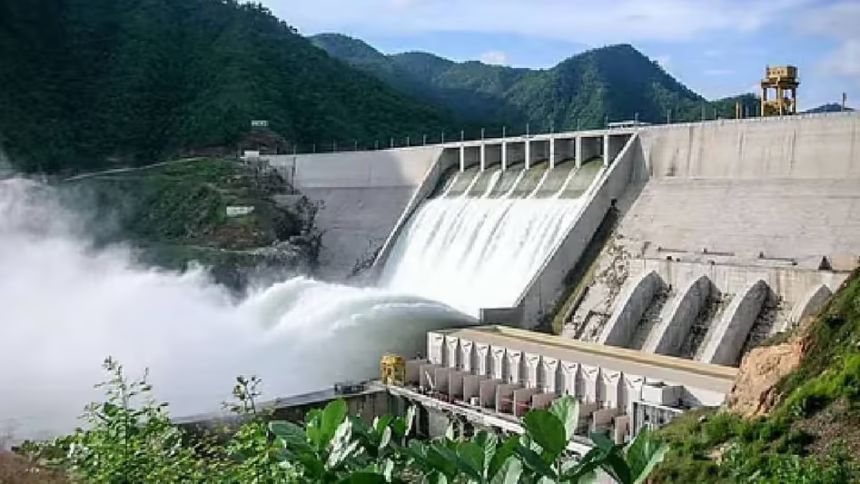
Mizoram Power Purchase Expenditure has crossed ₹1,620 crore between April 2024 and August 2026, according to data from the state Power and Electricity Department. The spending reflects Mizoram’s continued dependence on electricity procured from external grids to meet demand. Meanwhile, official power-sector documents show that power purchase remains one of the major expenditure components in the state’s electricity system.
Mizoram Areca Nut Seizure: 12,000 Kg Consignment Worth ₹1.32 Crore Recovered
Mizoram Power Purchase Expenditure Reaches Major Level
The reported expenditure of more than ₹1,620 crore covers nearly two and a half years. During this period, Mizoram relied heavily on electricity purchased from external sources. The purchases supplemented power from local generating assets and allocated supplies.
Moreover, the expenditure highlights the financial pressure of meeting electricity demand in a state with limited indigenous generation capacity. Mizoram receives power from Central Sector Generating Stations and Inter-State Generating Stations. The state also operates local generating facilities.
Therefore, external power procurement remains important for maintaining a reliable electricity supply. The need becomes greater when local generation cannot meet demand.
Official tariff documents from the Mizoram Electricity Regulatory Commission also show the scale of power procurement costs. For FY2024-25, the commission approved a power-purchase cost of ₹478.08 crore for the Power and Electricity Department. The figure followed an earlier annual revenue requirement review. That review had estimated substantially higher power-purchase costs.
The larger ₹1,620-crore expenditure reported from April 2024 to August 2026 covers multiple financial periods. It therefore does not represent a single-year power-purchase cost.
External Grid Dependence Shapes Mizoram Electricity Supply
Mizoram’s electricity system combines local generation with power obtained through the wider national grid. The state’s Economic Survey says its supply includes allocations from Central Sector Generating Stations and Inter-State Generating Stations. It also includes locally owned generation.
Furthermore, the state has several small hydropower and solar facilities. The 2024-25 Economic Survey lists hydropower projects and several solar installations. These include Tlungvel Solar Plant, Melriat Solar Plant, Khawiva Solar Plant, Sihhmui Solar Plant and Vankal Solar.
However, local generation does not remove the need for external electricity purchases. Consequently, the wider grid remains central to balancing supply and demand.
This dependence also makes electricity costs sensitive to procurement needs and market conditions. When demand rises, the department may need more external power. Similarly, lower local generation can increase procurement requirements.
Additionally, transmission costs form another part of Mizoram’s electricity expenditure. The FY2025-26 tariff order records approved Power Grid Corporation of India transmission charges. It lists these alongside power-purchase costs and other expenditure items.
Mizoram Power Purchase Expenditure Raises Financial Questions
The reported Mizoram Power Purchase Expenditure of more than ₹1,620 crore highlights the scale of the state’s electricity procurement needs. A large recurring procurement requirement can increase pressure on the power department’s finances.
Moreover, Mizoram must balance electricity affordability, reliability and financial sustainability. The department needs to maintain adequate supply while managing procurement and transmission costs.
The issue also connects with the state’s long-term generation strategy. Expanding dependable local generation could reduce some external purchases. However, the actual impact would depend on generation capacity, availability, transmission infrastructure and demand growth.
Meanwhile, renewable-energy projects can help diversify the state’s electricity mix. Mizoram’s Economic Survey already records several solar installations and hydropower projects among its generation resources.
Nevertheless, new generation alone cannot immediately eliminate external procurement. Power systems also need reliable transmission networks and sufficient capacity during periods of high demand.
Therefore, the ₹1,620-crore figure indicates the scale of Mizoram’s electricity procurement requirements. It also highlights the relationship between local generation, purchased power and overall sector expenditure.
Future Power Planning Could Influence Procurement Costs
Mizoram’s future electricity strategy will depend on how effectively the state balances local generation with external procurement. Stronger generation capacity could provide additional supply. At the same time, better transmission infrastructure could improve electricity flows.
Furthermore, accurate demand forecasting can help the department plan purchases more effectively. Such planning becomes increasingly important as electricity use changes across households, businesses and public services.
The state’s Economic Survey recorded 515.498 million units of electricity consumption in Mizoram during FY2023-24. It also recorded 82.30 million units sold outside the state through the Indian Energy Exchange.
This data shows that Mizoram’s electricity system involves both purchases and sales. The balance can change with generation levels and market conditions. Consequently, power management involves more than simply increasing generation capacity.
At the same time, consumer-side efficiency can help moderate demand. Better energy efficiency, improved distribution systems and accurate metering can support more efficient electricity use.
Recent developments also show that consumer electricity services remain an administrative focus. The Power and Electricity Department recently announced a special complaint-redressal drive in Aizawl. The drive addressed electricity-bill and smart-meter concerns.
Therefore, the reported external power expenditure comes amid wider efforts to improve the electricity system. Going forward, the balance between purchased power, local generation and consumer demand will remain important for Mizoram’s power-sector finances.
Conclusion
Mizoram Power Purchase Expenditure of more than ₹1,620 crore between April 2024 and August 2026 highlights the state’s substantial reliance on external electricity supplies. Official tariff and Economic Survey documents also show the importance of power purchases within the electricity sector.
The expenditure covers multiple financial periods. Therefore, it should not be treated as a single-year power-purchase cost. At the same time, the figure highlights the importance of generation planning, transmission capacity and demand management.
FAQs
1. How much did Mizoram reportedly spend on external electricity?
The Power and Electricity Department reported expenditure of more than ₹1,620 crore on electricity acquired from external sources between April 2024 and August 2026.
2. Why does Mizoram purchase electricity from external sources?
Mizoram combines local generation with electricity received from Central Sector and Inter-State Generating Stations. External procurement helps supplement available supply and meet demand.
3. Is power purchase a major component of Mizoram’s electricity expenditure?
Yes. The FY2025-26 tariff order shows an approved power-purchase cost of ₹478.08 crore for FY2024-25.
4. Does Mizoram have its own power-generation capacity?
Yes. The state has hydropower and solar facilities. It also receives electricity through Central and Inter-State generating sources.
5. What does Mizoram Power Purchase Expenditure indicate?
It indicates the significant role of externally procured electricity in maintaining Mizoram’s power supply. It also highlights the importance of long-term generation and power-sector planning.