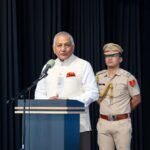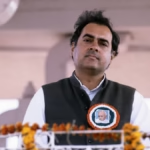



Political differences surfaced during Mizoram’s Remna Ni (Peace Day) celebrations on June 30 after opposition leader and former Chief Minister Zoramthanga accused the ruling Zoram People’s Movement (ZPM) government of compromising the constitutional protections guaranteed under Article 371G. Addressing public gatherings during the 40th anniversary observance of the Mizo Peace Accord, the Mizo National Front (MNF) leader alleged that the current administration’s policies could weaken safeguards protecting Mizo religious practices, social customs, and traditional laws. Moreover, the remarks have intensified political debate surrounding the preservation of Mizoram’s special constitutional status and cultural autonomy.
Mizoram Celebrates 40th Anniversary of the Mizo Peace Accord
Zoramthanga Launches Political Criticism During Peace Day Events
Former Chief Minister and senior MNF leader Zoramthanga used the Remna Ni celebrations to voice concerns regarding the state government’s approach toward constitutional protections guaranteed under Article 371G. Consequently, his remarks attracted significant political attention during the commemorative events.
According to Zoramthanga, the ruling ZPM administration must exercise greater caution in matters relating to the preservation of Mizoram’s constitutional safeguards. Moreover, he argued that protecting the state’s special provisions remains essential for safeguarding Mizo identity, customs, and governance traditions. Therefore, he urged citizens and policymakers to remain vigilant regarding issues affecting constitutional protections.
The opposition leader emphasized that Article 371G has historically played a crucial role in preserving Mizoram’s unique cultural and social framework. Furthermore, he called for broader public awareness regarding the importance of maintaining these constitutional provisions. As a result, the issue emerged as a significant topic of political discussion.
Meanwhile, political observers noted that constitutional protections continue to remain a sensitive and important issue in Mizoram’s political discourse. Consequently, debate surrounding the matter has intensified.
Article 371G Remains Central to Mizoram’s Constitutional Identity
Article 371G of the Constitution of India provides special protections for Mizoram regarding religious and social practices, customary laws, land ownership, and traditional administrative systems. Moreover, these constitutional provisions have long been regarded as fundamental to preserving the state’s distinct cultural identity. Therefore, any discussion regarding these protections often attracts considerable public and political attention.
Officials and constitutional experts have frequently emphasized the significance of Article 371G in safeguarding local traditions and institutional arrangements. Consequently, political parties across the state have historically expressed strong support for maintaining these protections. Such constitutional safeguards continue to influence governance and policymaking in Mizoram.
Furthermore, the provision remains closely associated with the historical and political developments that shaped the modern state. As a result, debates concerning Article 371G often carry broader social and cultural implications.
Meanwhile, public discussions regarding constitutional protections continue across political and civil society platforms. Similarly, policymakers remain attentive to issues concerning regional autonomy.
Political Debate Intensifies Between MNF and ZPM
The remarks made by Zoramthanga have added to the ongoing political rivalry between the opposition MNF and the ruling ZPM government. Moreover, constitutional and governance issues continue to feature prominently in political discourse within the state. Therefore, the latest criticism has generated renewed debate among political stakeholders.
Political analysts noted that opposition parties frequently raise concerns regarding constitutional safeguards and governance practices as part of broader political engagement. Consequently, such discussions often contribute to heightened public attention and political scrutiny. These debates remain a central aspect of democratic processes.
Furthermore, the ruling administration has consistently emphasized its commitment to protecting the state’s constitutional rights and cultural identity. As a result, political differences regarding governance priorities continue to shape public discussions.
Meanwhile, political parties remain engaged in discussions concerning development, governance, and constitutional protections. Similarly, public interest in these issues remains significant.
Preservation of Constitutional Safeguards Continues to Be a Major Public Concern
The renewed debate surrounding Article 371G highlights the continuing importance of constitutional protections in Mizoram’s political and social landscape. Moreover, preserving cultural identity, traditional institutions, and regional autonomy remains a shared concern among many stakeholders. Therefore, discussions surrounding these issues are expected to continue.
Experts observed that constitutional safeguards such as Article 371G play an important role in balancing national integration with regional identity and local governance traditions. Consequently, maintaining public confidence in these protections remains essential. Such discussions contribute to ongoing democratic and constitutional dialogue.
Furthermore, public awareness regarding constitutional provisions has increased in recent years. As a result, political leaders continue to emphasize the importance of preserving institutional and cultural protections.
Meanwhile, policymakers and political representatives remain engaged in broader discussions concerning governance and constitutional rights. Similarly, public debate on these issues is likely to continue.
Conclusion
The criticism leveled by former Chief Minister Zoramthanga during Mizoram’s Peace Day celebrations has brought renewed attention to the importance of Article 371G and the preservation of the state’s constitutional protections. Moreover, the political debate underscores the continued significance of cultural identity, regional autonomy, and constitutional safeguards in Mizoram’s public life.
The issue highlights the central role that constitutional protections play in shaping political discourse and governance priorities in the state. Therefore, discussions regarding Article 371G are expected to remain an important aspect of Mizoram’s political landscape.
As political parties continue to engage on issues of governance and constitutional rights, preserving public confidence and institutional stability will remain a key priority.
FAQs
1. Who raised concerns regarding Article 371G?
Former Chief Minister and MNF leader Zoramthanga raised the concerns.
2. When were the remarks made?
The remarks were made during Remna Ni (Peace Day) celebrations on June 30.
3. What is Article 371G?
Article 371G provides special constitutional protections for Mizoram’s religious practices, customary laws, and traditional institutions.
4. Which party currently governs Mizoram?
The Zoram People’s Movement (ZPM) currently leads the state government.
5. Why is Article 371G considered important?
It safeguards Mizoram’s unique cultural identity, social customs, and traditional governance systems.