





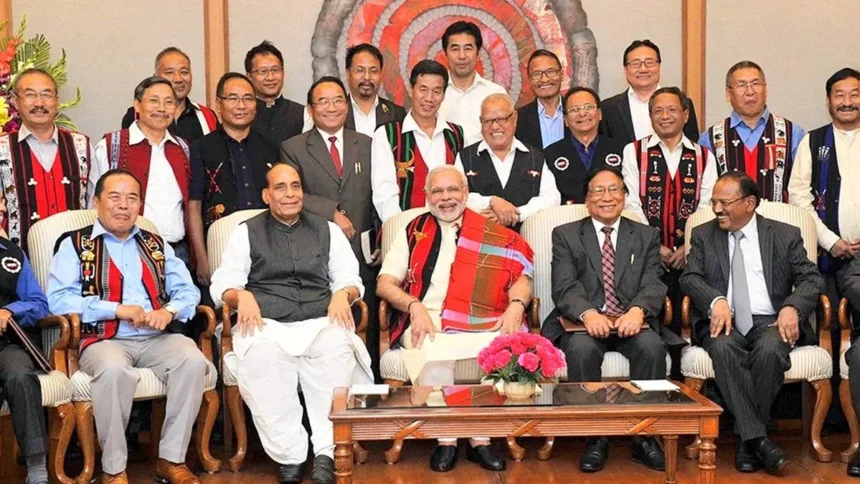
The NSCN (IM) has issued a public statement alleging that central intelligence agencies are using Kuki-linked proxy forces to undermine the Naga peace process. The accusation adds another layer of tension to an already sensitive political and security environment in the Northeast.
The group has raised concerns over what it describes as efforts to disrupt negotiations surrounding a political settlement for the Naga issue. Moreover, the allegation could intensify debate among Naga political organisations and other stakeholders about the direction of the peace process.
The claims remain allegations from the NSCN (IM) and would require independent verification. However, the statement highlights the continuing political sensitivities surrounding the Naga peace negotiations and relations among communities in the region.
Assam Flood Toll Reaches 85: Sivasagar Emerges as Ground Zero
NSCN (IM) Raises Fresh Allegations
The NSCN (IM) has publicly accused central intelligence agencies of attempting to interfere with the Naga peace process.
According to the group’s statement, alleged links between intelligence agencies and Kuki-linked proxy forces could weaken efforts toward a negotiated settlement. Furthermore, the organisation has presented the issue as part of broader concerns about political and security developments in the Northeast.
The statement places renewed attention on the peace dialogue.
However, the allegations have not been independently established.
Naga Peace Process Faces New Tensions
The Naga peace process has involved prolonged negotiations between Naga representatives and the Government of India.
The dialogue seeks to address longstanding political and constitutional issues associated with Naga aspirations. Moreover, negotiations have involved multiple stakeholders and have developed over several years.
The latest statement could complicate an already delicate environment.
However, public accusations do not necessarily indicate a breakdown in negotiations.
Intelligence Agency Allegations Remain Contested
The NSCN (IM) has specifically alleged that central intelligence agencies support proxy forces to disrupt the peace process.
Such claims carry significant political implications because they involve national security institutions and inter-community relations. Additionally, allegations involving covert support require substantial independent evidence before authorities or observers can establish their accuracy.
No such independent verification has been presented here.
Therefore, the claims should be treated as allegations rather than established facts.
Kuki-Naga Relations Add Complexity
Relations between Naga and Kuki communities remain an important factor in the broader political landscape of the Northeast.
Competition over political representation, territory, identity, and administrative arrangements can create complex tensions. Furthermore, developments in one state can influence political discussions in neighbouring areas.
The NSCN (IM)’s latest statement brings these wider concerns into the peace-process debate.
However, community-level relationships vary across districts and cannot be reduced to a single political position.
Peace Negotiations Require Multiple Stakeholders
A durable political settlement requires engagement among relevant stakeholders.
Government representatives, Naga political organisations, civil society groups, and community leaders all have interests in the outcome. Moreover, maintaining communication between stakeholders can help prevent disagreements from escalating.
The latest allegations could make such engagement more challenging.
However, continued dialogue remains important for addressing political differences through peaceful mechanisms.
Central Government’s Role Remains Important
The Government of India remains a key participant in the Naga peace negotiations.
Any long-term settlement would require political engagement between central authorities and Naga representatives. Additionally, confidence between negotiating parties can influence the pace and stability of the dialogue.
Public allegations can therefore affect perceptions surrounding the negotiations.
However, only formal statements and verified developments can establish changes in the government’s negotiating position.
Security Concerns Influence the Process
Security conditions have historically affected political negotiations in the Northeast.
Militant activity, armed-group rivalries, and community tensions can create obstacles for dialogue. Furthermore, security-related allegations can increase mistrust among negotiating parties.
The NSCN (IM)’s statement reflects these continuing concerns.
However, political negotiations and security operations involve separate institutional processes, even when developments in one area affect the other.
Need for Verified Information
The latest claims involve sensitive allegations about intelligence agencies and proxy forces.
Such claims can influence public opinion quickly, particularly when they involve inter-community relations. Moreover, unverified information can increase tensions if different groups interpret allegations as established facts.
Independent verification therefore remains essential.
However, official responses, documentary evidence, and credible investigations would be necessary to establish the substance of the allegations.
Political Reactions Could Follow
The statement could prompt responses from government authorities, other Naga organisations, and Kuki representatives.
Different stakeholders may interpret the allegations differently depending on their political positions and experiences. Additionally, public responses could shape discussions about the future of the peace process.
The issue may therefore remain politically significant.
However, any response should distinguish verified information from political allegations.
Dialogue Remains Central
Despite disagreements, negotiations remain a key mechanism for addressing the Naga political issue.
Peace talks can provide a structured platform for discussing political demands, constitutional arrangements, and regional concerns. Furthermore, sustained dialogue can reduce the risk that political disagreements turn into wider confrontation.
This makes continued engagement important.
However, meaningful progress requires trust, transparency, and participation from relevant stakeholders.
Civil Society Can Influence Peace Efforts
Civil society organisations have historically played an important role in peace discussions across the Northeast.
Community leaders, tribal organisations, churches, and other civil society groups can encourage dialogue and communicate local concerns. Moreover, their involvement can help build confidence between communities and political actors.
Such engagement could become particularly important during periods of political tension.
However, civil society participation must remain focused on peaceful and lawful engagement.
Regional Implications
Developments in the Naga peace process can have consequences beyond Nagaland.
Naga-inhabited areas extend across parts of neighbouring northeastern states, making political developments relevant to a wider regional audience. Furthermore, relationships among different ethnic and political groups can influence security and governance across state boundaries.
The latest allegations therefore carry broader regional significance.
However, the long-term implications will depend on subsequent political and official responses.
What Happens Next?
The immediate focus will likely remain on responses to the NSCN (IM)’s allegations and the broader state of the peace dialogue.
Government authorities and other stakeholders may clarify their positions as discussions continue. Additionally, Naga civil society organisations and other regional actors could weigh in on the claims.
The future direction of the peace process will depend on how stakeholders manage the latest disagreement.
However, verified information and continued dialogue will remain crucial.
Conclusion
The NSCN (IM)’s allegations of intelligence interference have introduced fresh political friction into the Naga peace process. The organisation claims that central intelligence agencies have used Kuki-linked proxy forces to undermine negotiations, but these claims remain allegations and require independent verification.
Moreover, the controversy highlights the complex relationship between peace negotiations, regional security, and inter-community political concerns. At the same time, continued dialogue among the Government of India, Naga representatives, civil society organisations, and other stakeholders remains important.
Overall, the latest statement underscores the fragility of the peace environment and the importance of verified information, political engagement, and peaceful mechanisms for resolving longstanding regional disputes.
FAQs
1. What did the NSCN (IM) allege?
The NSCN (IM) alleged that central intelligence agencies were using Kuki-linked proxy forces to disrupt the Naga peace process.
2. Are the allegations independently verified?
No independent verification has been established in the information provided. The claims should therefore be treated as allegations.
3. Why is the statement significant?
It raises fresh concerns about trust, security, and political interference in the long-running Naga peace negotiations.
4. Why do Kuki-Naga relations matter?
Political and community relations between Naga and Kuki groups form part of the wider political and security environment in the Northeast.
5. What could happen next?
Government authorities, Naga organisations, and other stakeholders may respond to the allegations while negotiations and broader political discussions continue.