





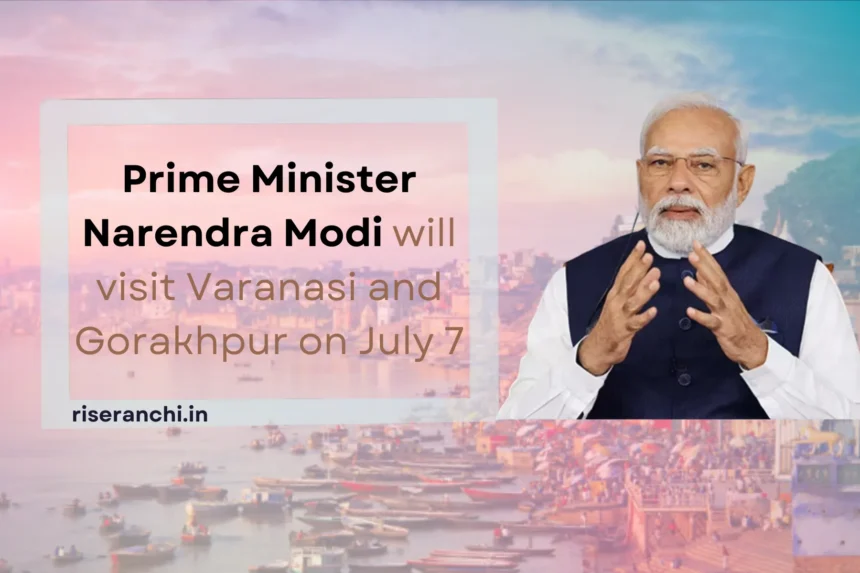
Prime Minister Narendra Modi’s recent visit to Gorakhpur served as a testament to his government’s commitment to blending development with heritage. The trip included a visit to the renowned Gita Press and the launch of modern trains, both of which symbolized the fusion of preserving cultural legacy and advancing progress.
The highlight of the visit was the closing ceremony of the centenary celebrations of Gita Press. Gita Press, located in Gorakhpur, is one of the world’s largest publishers of Hindu religious texts, particularly the Bhagavad Gita. It has played a significant role in disseminating spiritual and philosophical knowledge to the masses. The Prime Minister’s presence at the centenary celebrations emphasized the importance of preserving India’s rich spiritual and literary heritage.
During his speech at the ceremony, Modi lauded the unique combination of “Virasat bhi, Vikas bhi” (heritage and development) that his government embodies. He reiterated the belief that progress should not come at the expense of neglecting or forgetting one’s roots. Instead, heritage should be celebrated and integrated into the development process.
Gorakhpur, situated in the eastern part of Uttar Pradesh, holds historical and cultural significance. It is the birthplace of the revered saint and philosopher, Gorakhnath, and is renowned for its ancient temples and religious sites. By choosing Gorakhpur for his visit, Modi aimed to showcase the city’s heritage and highlight the importance of preserving such historical treasures.
Additionally, the Prime Minister inaugurated the launch of modern trains during his Gorakhpur trip. This development initiative aligns with his government’s focus on improving infrastructure and transportation across the country. The introduction of modern trains not only facilitates smoother and faster travel but also represents the integration of contemporary advancements with traditional roots.
Modi’s emphasis on combining heritage with development reflects his administration’s broader approach to governance. Throughout his tenure, he has consistently advocated for progress without losing sight of the country’s cultural heritage. By doing so, he seeks to strike a balance that enables India to advance technologically while retaining its deep-rooted traditions.
The Prime Minister’s visit to Gita Press and the launch of modern trains in Gorakhpur garnered widespread attention and appreciation. It showcased the government’s commitment to preserving cultural heritage and promoting inclusive development. This visit also highlighted the administration’s recognition of the importance of spirituality and literature in shaping the nation’s ethos.
Moreover, Modi’s presence at the closing ceremony of Gita Press’ centenary celebrations bolstered the morale of the publishing house and its efforts to propagate ancient wisdom. It served as an acknowledgment of Gita Press’ contributions to society and a reminder of the need to preserve and propagate India’s rich spiritual heritage.
As the Gorakhpur visit concluded, it left a lasting impact on the city and its residents. The combination of heritage and development initiatives showcased by the Prime Minister serves as an inspiration for other regions in India. It highlights the possibilities of embracing progress while staying connected to cultural roots and traditions.
Prime Minister Narendra Modi’s trip to Gorakhpur, with its visit to Gita Press and the launch of modern trains, exemplified his government’s policy of harmonizing development with heritage. By recognizing the significance of preserving cultural legacy and integrating it into the progress of the nation, Modi showcases a vision that balances tradition and innovation for a stronger and more inclusive India.