





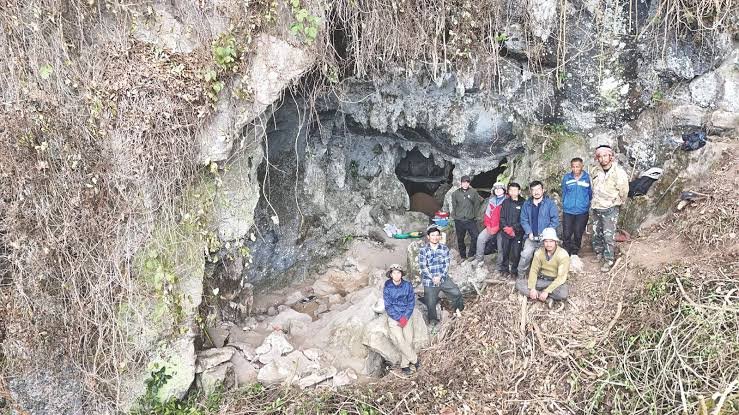
Advanced archaeological excavations in Noklak district, Nagaland, have provided evidence of continuous human use of a rock shelter stretching back thousands of years. The findings could add valuable information to the prehistoric record of Northeast India and improve understanding of how early communities used natural shelters across the region.
The excavation focuses on archaeological layers that preserve traces of human activity from different periods. Moreover, studying these layers can help researchers reconstruct changes in settlement patterns, technology, food practices, and interactions with the surrounding environment.
The discovery also highlights the archaeological potential of Nagaland’s eastern landscape. However, establishing a detailed chronology requires careful analysis of artefacts, sediments, biological remains, and dating evidence from individual layers.
Equal Development Policy: Kipgen Announces Balanced Funding
Noklak Excavation Reveals Long-Term Use
Researchers working in Noklak have examined archaeological deposits inside a rock shelter that appears to have supported human activity over an extended period.
Rock shelters can preserve evidence of repeated occupation because they provide protection from weather and can accumulate cultural deposits over time. Furthermore, successive layers can record different phases of human activity.
The Noklak findings could therefore help researchers understand how communities returned to and used the same landscape across generations.
However, archaeologists must carefully separate individual occupation layers to establish a reliable sequence.
Rock Shelters Preserve Archaeological Evidence
Natural shelters can provide important archaeological records.
People may have used these locations for temporary stays, food preparation, tool production, storage, or other activities. Additionally, sediments can preserve charcoal, stone tools, animal remains, pottery, and other traces of human behaviour.
Such evidence allows archaeologists to reconstruct aspects of everyday life.
However, preservation varies between sites, and not every archaeological layer contains the same types of evidence.
Thousands of Years of Activity
The reported findings indicate that humans used the Noklak shelter across a long period.
A long sequence of occupation can help researchers examine how communities responded to changes in climate, resources, technology, and social organisation. Moreover, researchers can compare different layers to identify changes in material culture.
This creates an opportunity to study continuity as well as change.
However, the exact duration and timing of occupation depend on laboratory dating and stratigraphic analysis.
Stratigraphy Helps Establish Chronology
Archaeologists rely heavily on stratigraphy when studying layered deposits.
Older materials generally occur beneath younger deposits when geological layers remain undisturbed. Furthermore, researchers can compare the position of artefacts and organic remains within individual layers to reconstruct a sequence of activity.
This approach can reveal how the shelter developed over time.
However, natural disturbances such as water movement, animal activity, or erosion can alter archaeological layers and complicate interpretation.
Artefacts Can Reveal Daily Life
Objects recovered during excavation can provide clues about the people who used the shelter.
Stone tools can reveal technological practices, while pottery or other manufactured objects can provide information about changing cultural traditions. Additionally, production waste can indicate activities carried out inside or near the shelter.
Together, these materials can create a more detailed picture of past communities.
However, archaeologists must interpret artefacts within their original archaeological context.
Food Remains Could Add Evidence
Organic remains can provide another source of information.
Animal bones, plant remains, charcoal, and other materials can reveal what people ate and how they interacted with their environment. Moreover, microscopic analysis can sometimes identify plant-processing or cooking activities.
This can help reconstruct subsistence practices.
However, organic material often deteriorates over time, particularly in warm and humid environments.
Northeast India’s Prehistory Gains New Evidence
The Noklak research can contribute to a broader understanding of prehistoric Northeast India.
The region occupies an important geographical position between the Indian subcontinent and Southeast Asia. Furthermore, archaeological sites across the Northeast can help researchers investigate ancient population movements and cultural exchanges.
Evidence from Noklak can therefore be compared with discoveries from neighbouring regions.
However, researchers need evidence from multiple sites before establishing wider regional patterns.
Possible Links to Southeast Asia
Noklak’s location makes the site particularly relevant to research into prehistoric connections between Northeast India and Southeast Asia.
Archaeologists can compare tools, pottery traditions, settlement patterns, and other material evidence across geographic boundaries. Additionally, similarities may provide clues about interaction, movement, or shared technological traditions.
This can contribute to wider debates about prehistoric mobility.
However, similar artefacts do not automatically prove direct population movement. Researchers must consider multiple explanations.
Environmental Change Shaped Human Activity
People living in the region would have responded to changes in their surroundings.
Climate fluctuations could affect forests, water availability, animal populations, and plant resources. Moreover, changes in these resources could influence where communities lived and how they used shelters.
Archaeological deposits can preserve evidence of these relationships.
However, researchers need environmental data alongside archaeological evidence to reconstruct such changes accurately.
Dating Will Strengthen the Findings
Establishing reliable dates remains central to the study.
Researchers can use appropriate dating techniques on suitable organic or geological materials. Furthermore, comparing multiple dates with stratigraphic information can help establish a more secure chronology.
A detailed timeline can reveal when people first entered the shelter and how frequently they returned.
However, dating results can have uncertainties, so researchers must interpret them within their archaeological context.
Excavation Requires Careful Documentation
Archaeological excavation permanently changes a site’s deposits.
Researchers therefore need detailed records of the position, depth, and relationships between artefacts and sediments. Additionally, photographs, maps, samples, and digital records can preserve information that future researchers may use.
Proper documentation increases the long-term scientific value of the excavation.
However, excavation teams must also follow conservation and heritage-management standards.
Local Communities Can Support Research
Local knowledge can contribute to archaeological investigations.
Communities may possess information about traditional uses of landscapes, local place names, caves, shelters, and environmental changes. Furthermore, community involvement can strengthen awareness of archaeological heritage.
This can support both research and site protection.
However, researchers should conduct fieldwork with appropriate permissions and respect local cultural interests.
Archaeology Can Support Heritage Awareness
The findings can increase recognition of Nagaland’s archaeological heritage.
Public awareness can encourage communities and authorities to protect significant sites from damage. Moreover, museums, educational programmes, and responsible heritage tourism can help communicate archaeological discoveries.
This can connect scientific research with public education.
However, increased attention must not lead to uncontrolled access or disturbance of fragile archaeological deposits.
Further Excavation Could Expand the Record
The current findings may represent only part of the site’s archaeological sequence.
Additional excavation could reveal deeper layers or previously unidentified activity areas. Furthermore, laboratory analysis of recovered materials could provide new information about diet, technology, environment, and chronology.
Researchers could then compare these findings with other sites across Northeast India.
However, further excavation should proceed gradually and follow evidence from the existing stratigraphic record.
Multidisciplinary Research Can Help
Understanding long-term shelter use requires more than archaeology alone.
Geologists can study sediments, specialists can analyse plant and animal remains, and dating experts can establish chronological frameworks. Additionally, genetic or isotopic research may provide further information when suitable materials survive and ethical requirements permit their analysis.
Such collaboration can produce a more complete interpretation.
However, each analytical method has limitations that researchers must acknowledge.
What Happens Next?
The next stage will involve detailed analysis of the materials recovered from the Noklak rock shelter.
Researchers can examine artefacts, sediments, organic remains, and dating samples to establish the sequence of human activity. Furthermore, comparisons with archaeological sites in Nagaland and neighbouring regions could help determine the wider significance of the findings.
The resulting research could contribute to studies of prehistoric settlement and mobility across Northeast India.
However, researchers should await full laboratory and stratigraphic analysis before assigning precise dates or drawing broader conclusions.
Conclusion
The Noklak Rock Shelter Studies provide important evidence for long-term human use of a natural shelter in Nagaland’s Noklak district. Advanced excavation can reveal successive layers of activity and help researchers investigate how communities used the landscape across thousands of years.
Moreover, the findings could contribute to wider research into Northeast India’s prehistoric settlement patterns and potential connections with Southeast Asia. At the same time, reliable dating, careful stratigraphic analysis, multidisciplinary research, and responsible heritage management will remain essential.
Overall, the Noklak excavation could become an important source of evidence for understanding the region’s deep human history and the ways communities adapted to changing environments over long periods.
FAQs
1. Where is the archaeological site located?
The rock shelter is located in Noklak district, Nagaland, in Northeast India.
2. What did the excavation reveal?
Researchers found evidence indicating that humans used the rock shelter repeatedly over a period spanning thousands of years.
3. Why are rock shelters important to archaeology?
Rock shelters can preserve layered deposits containing artefacts, organic remains, sediments, and other evidence of past human activity.
4. How will researchers determine the site’s age?
Researchers can combine stratigraphic evidence with appropriate dating methods applied to suitable archaeological or organic materials.
5. Why is the Noklak site significant?
The site can provide new evidence about prehistoric settlement, technology, environmental adaptation, and possible connections between Northeast India and Southeast Asia.