



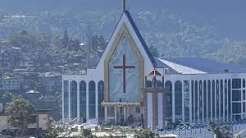
The Vande Mataram mandate has drawn strong opposition from church organisations in Nagaland, with the Nagaland Baptist Church Council (NBCC) among the groups questioning the compulsory singing or playing of the national song at official events.
The controversy began after a Ministry of Home Affairs (MHA) directive asked that Vande Mataram be played or sung before the National Anthem at specified official functions. Church bodies in Nagaland have raised concerns about religious freedom, constitutional safeguards and the state’s distinct social and religious context.
Vande Mataram mandate raises religious concerns
The NBCC and Nagaland Christian Revival Church Council (NCRC) opposed the directive in March 2026. Said it supported concerns raised by members of the Nagaland Legislative Assembly and pointed to Articles 25 and 371A of the Constitution.
Article 25 protects freedom of conscience and the right to profess, practise and propagate religion. Meanwhile, Article 371A provides special constitutional protection to Nagaland in matters linked to religious or social practices and customary law.
The church council argued that making the song compulsory could create difficulties for people whose religious beliefs conflict with elements of its wording. The NCRC also said patriotism and religious faith should not be treated as the same issue.
Church council backs constitutional safeguards
The NBCC said several Nagaland legislators had questioned the directive during discussions in the state Assembly. Some lawmakers reportedly viewed compulsory observance as inconsistent with the protections available to Nagaland under Article 371A.
The council also referred to the Supreme Court’s 1986 judgment in Bijoe Emmanuel vs State of Kerala. In that case, the court held that students who respectfully stood during the National Anthem could not be punished for refusing to sing it because of their religious beliefs.
However, the legal debate surrounding that judgment and the present directive remains distinct. The 1986 ruling concerned the National Anthem and freedom of conscience. The current dispute involves government instructions concerning the National Song and the extent to which participation can be required.
Vande Mataram mandate sparks wider debate
The opposition has extended beyond the NBCC. The Nagaland Christian Revival Church Council, Chakhesang Baptist Church Council and other Christian organisations have also criticised compulsory observance.
The Nagaland Tribal Hohos Coordination Committee has also urged the state Assembly to protect Nagaland’s constitutional safeguards. It said compulsory rendering of Vande Mataram should be considered in the context of the state’s religious and cultural identity.
Meanwhile, the Naga Students’ Federation organised a mass rally in Kohima in March. Participants called for withdrawal of the MHA directive and later submitted a representation to the President seeking action.
National song debate gains legal dimension
The Vande Mataram mandate has also gained a new legal dimension at the national level. Parliament passed the Prevention of Insults to National Honour (Amendment) Bill, 2026, in July. The legislation seeks to extend statutory protection under the 1971 law to Vande Mataram.
The measure covers intentional prevention or disruption of the singing of the national song and provides penalties similar to those applicable to offences involving the National Anthem. It is important, however, to distinguish protection against deliberate disruption from a separate question about whether individuals can be compelled to sing.
That distinction is central to the concerns raised by church organisations in Nagaland. The groups have not presented their objections simply as opposition to national symbols. Instead, they have framed the issue around conscience, faith and constitutional protections.
Vande Mataram mandate tests balance and diversity
The debate over the Vande Mataram mandate highlights the challenge of balancing national symbols with India’s religious and cultural diversity. The national song has an established place in the country’s history and official protocol, while Nagaland’s church bodies argue that participation should not conflict with constitutional freedoms.
The MHA directive and subsequent legislative developments have therefore added urgency to a debate that involves both national symbolism and individual rights. For Nagaland, the issue also raises questions about how Article 371A should operate when national directives touch upon religious and social practices.
Ultimately, the continuing discussion is likely to focus on finding a balance between respect for the national song and protection of freedom of conscience. The objections from Nagaland’s church organisations show that any approach to the issue will need to account for the country’s constitutional commitment to religious pluralism.