





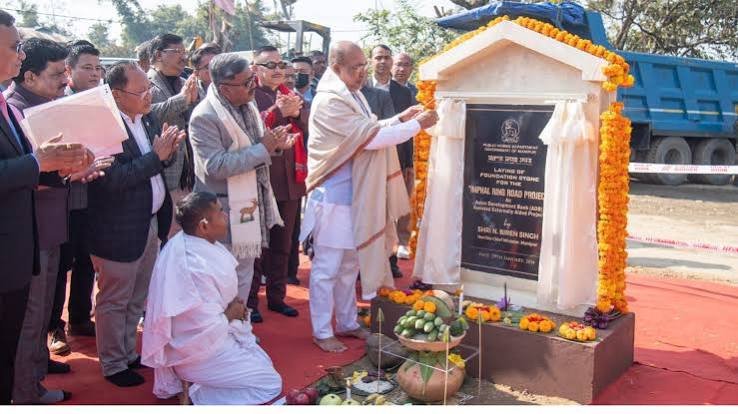
The Manipur government has reportedly spent ₹100 crore from its own treasury to settle contractor liabilities and support the independent completion of the Imphal Ring Road Project. The reported expenditure marks a significant shift toward state-funded infrastructure development after earlier plans involving external financing.
The move highlights the government’s effort to keep the major road project moving despite financing challenges. Moreover, using state resources could allow authorities to address pending contractor payments and maintain project activity without waiting for external funding arrangements.
The ring road remains an important infrastructure project for improving connectivity around Imphal. However, the exact expenditure breakdown, remaining project cost, and completion timeline require confirmation from official financial and project records.
LiDAR Mapping Initiated: Airborne Survey Targets Dense Forests
Manipur Uses State Treasury
The state government has reportedly allocated ₹100 crore from its own treasury toward the ring road project.
The funds have reportedly helped settle contractor liabilities and support continued construction. Furthermore, the move demonstrates the government’s willingness to use state resources to prevent the project from stalling.
The decision could provide short-term financial stability for the project.
However, the government has not provided a detailed public breakdown of the reported ₹100-crore expenditure in the information available.
Ring Road Project Gets Funding Push
The Imphal Ring Road Project represents a major infrastructure initiative for Manipur.
A ring road can help redirect traffic away from congested urban areas while improving connections between surrounding communities. Additionally, better road connectivity can support commercial transportation and reduce travel pressure on existing city routes.
The reported state funding could therefore help maintain momentum on the project.
However, the final impact will depend on the project’s overall construction progress and completion.
Contractor Liabilities Addressed
A significant portion of the reported expenditure has gone toward contractor liabilities.
Contractors depend on timely payments to maintain labour, equipment, materials, and other project requirements. Moreover, delayed payments can slow construction and create financial pressure across the infrastructure supply chain.
Settling outstanding liabilities could therefore help restore project activity.
However, the exact number of contractors and amount owed to each contractor has not been provided.
Shift Away From External Financing
The reported state expenditure follows the government’s decision to pursue the project independently.
Earlier financing arrangements had reportedly involved external funding discussions. Additionally, delays in securing or implementing external financing can affect the pace of major infrastructure projects.
State funding offers an alternative route for maintaining construction.
However, relying on the state treasury can also place greater pressure on public finances.
Budgetary Pressure Remains
Infrastructure projects require substantial and sustained financial commitments.
Spending ₹100 crore from the state treasury means the government must balance ring road expenditure against other public priorities. Furthermore, future construction costs could require additional allocations if external financing does not materialise.
Budget planning will therefore remain important.
However, the available information does not indicate how the government plans to finance the project’s remaining costs.
Independent Execution Could Reduce Delays
State-funded execution can give the government greater control over project financing.
Officials may be able to release funds according to immediate project requirements rather than waiting for external financing procedures. Moreover, direct funding can help address urgent liabilities and reduce uncertainty for contractors.
This could support continuity.
However, independent financing does not automatically eliminate construction, procurement, or administrative delays.
Infrastructure Could Improve Connectivity
The Imphal Ring Road could provide important transportation benefits once completed.
A functional ring road can help divert through-traffic and improve movement between different parts of a metropolitan area. Additionally, improved connectivity can support businesses, logistics operators, and residents.
The project could therefore contribute to broader urban development.
However, these benefits will depend on the final design, road capacity, and completion of all associated infrastructure.
Contractor Payments Support Project Activity
Timely payments can help contractors maintain construction operations.
Companies can use cleared liabilities to pay workers, suppliers, equipment operators, and other project-related expenses. Furthermore, resolving financial disputes can improve coordination between government agencies and contractors.
This can contribute to smoother project execution.
However, payment settlements alone cannot resolve technical or land-related challenges.
Financial Oversight Will Be Important
Using public funds for a major infrastructure project requires strong financial oversight.
Authorities need to track expenditure, verify completed work, and ensure that payments follow contractual requirements. Moreover, transparent financial reporting can help demonstrate that public resources are being used efficiently.
Such oversight can strengthen confidence in the project.
However, no independent audit findings concerning the reported ₹100 crore have been provided.
Completion Timeline Remains Key
The ultimate measure of the funding shift will be whether it helps complete the ring road.
Officials will need to coordinate construction schedules, contractor payments, land requirements, materials, and other project components. Additionally, regular progress reviews can help identify obstacles before they cause major delays.
A clear completion roadmap could improve public understanding.
However, a confirmed completion date has not been provided in the information available.
Economic Effects Could Extend Beyond Imphal
Improved road infrastructure can generate benefits beyond transportation.
Better connectivity can reduce travel times, support local commerce, and improve access to markets. Furthermore, construction activity itself can create demand for labour, materials, transport services, and related businesses.
The ring road could therefore contribute to wider economic activity.
However, the scale of these benefits will depend on successful project completion and long-term maintenance.
What Happens Next?
The Manipur government is expected to continue using available state resources to keep the ring road project moving.
Officials may focus on settling outstanding liabilities, maintaining construction schedules, and securing funds for remaining project components. Moreover, regular monitoring will be important as the government takes greater responsibility for project financing.
Further budgetary decisions could determine the project’s future pace.
However, the total additional funding required remains unclear.
Conclusion
The reported ₹100-crore self-funding shift marks a significant move by the Manipur government toward independently financing the Imphal Ring Road Project. State treasury funds have reportedly helped settle contractor liabilities and support continued work on the major infrastructure initiative.
Moreover, direct funding could help reduce dependence on external financing and maintain construction momentum. At the same time, the approach places greater responsibility on the state treasury and requires careful financial oversight to ensure sustainable project execution.
Overall, the self-funding shift could help keep the Imphal Ring Road Project on track, provided the government maintains transparent spending, timely contractor payments, and a clear plan for financing the remaining construction work.
FAQs
1. How much has Manipur reportedly spent?
The government has reportedly spent ₹100 crore from its own treasury on the project.
2. What was the money used for?
The reported expenditure helped settle contractor liabilities and support continued ring road construction.
3. Why is the government using its own funds?
The shift reportedly aims to maintain project progress independently rather than relying entirely on external financing arrangements.
4. Could the approach put pressure on the state budget?
Yes. Continued state funding would require the government to balance infrastructure expenditure with other public priorities.
5. When will the ring road be completed?
The available information does not provide a confirmed completion date.