



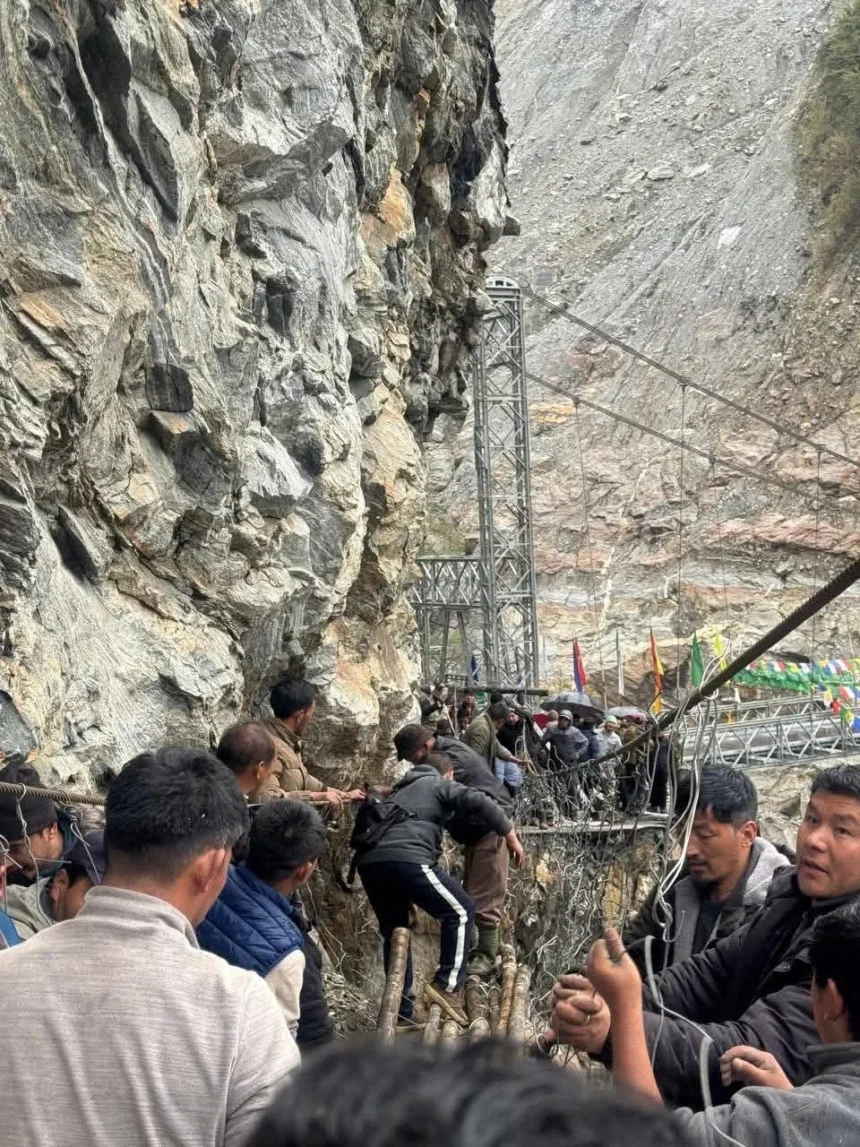
The Indian Army, along with the Border Roads Organisation and district authorities, cleared the Dongkya La route to evacuate stranded tourists from Lachen in Sikkim. As a result, officials safely began moving tourists in batches through a designated route. Meanwhile, local community groups actively supported the operation. Importantly, authorities coordinated efforts to manage risks in the high-altitude terrain. Overall, the mission highlights swift action and strong collaboration.
Read More: Mizoram Launches ₹84.7 Cr Projects in Champhai
Key Facts
- Location: Lachen, Mangan district, Sikkim
- Route Cleared: Dongkya La
- Agencies Involved: Indian Army, Border Roads Organisation, District Administration
- Evacuation Route: Dongkya La – Shiv Mandir – Zero Point – Yumthang – Lachung
- Support Groups: Lachen Dzumsa, local leaders, tourism bodies, community organizations
- Officials Present: Anant Jain (DC), LB Chettri (SP), Arun Chettri (SDM), Chandan Chhetri (SDPO)
Route Cleared for Immediate Action
First, the Indian Army and the Border Roads Organisation cleared the crucial Dongkya La route. As a result, connectivity to remote areas improved significantly.
Moreover, teams worked quickly despite harsh weather and difficult terrain. Therefore, authorities restored access without delay and ensured safe movement.
Phased Evacuation Ensures Safety
Next, officials moved tourists in batches to avoid congestion. In addition, they followed a planned route through Shiv Mandir, Zero Point, Yumthang, and Lachung.
This approach reduced risks and improved coordination. Consequently, teams managed traffic flow effectively in narrow mountain roads.
Community Plays a Key Role
At the same time, local organizations actively supported the evacuation. For instance, Lachen Dzumsa and community leaders assisted authorities on the ground.
Furthermore, groups like the Lachen Youth Development Committee and local drivers contributed resources. As a result, the operation progressed smoothly with strong local participation.
Officials Monitor the Situation Closely
Meanwhile, senior officials remained present at the site to oversee operations. They coordinated between agencies and ensured proper communication.
Because of their supervision, teams responded quickly to challenges. Thus, authorities maintained order throughout the process.
Coordinated Effort in Tough Conditions
Overall, the operation shows strong coordination between the Army, BRO, civil administration, and local communities. In addition, teams maintained constant communication to handle challenges.
Therefore, the joint response ensured safety and efficiency. Importantly, such coordination remains crucial in remote Himalayan regions.
Importance of the Region
Sikkim is a major tourist destination in Northeast India. Hence, ensuring safe travel routes remains essential for the local economy. Moreover, quick response systems help maintain tourist confidence and regional stability.
Q&A Section
What happened?
Authorities cleared the Dongkya La route and started evacuating stranded tourists.
Who led the operation?
The Indian Army and Border Roads Organisation led the mission with local support.
How are tourists being evacuated?
Officials are moving them in batches along a designated safe route.
Who supported the effort?
Local leaders, community groups, and tourism officials assisted authorities.
Why is this important?
It ensures tourist safety and shows effective coordination in a difficult region.
Also Read: Inspiring Mizoram Governor Census Participation Drive Gains Momentum – Prime 24 Seven