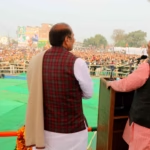

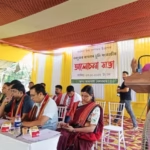

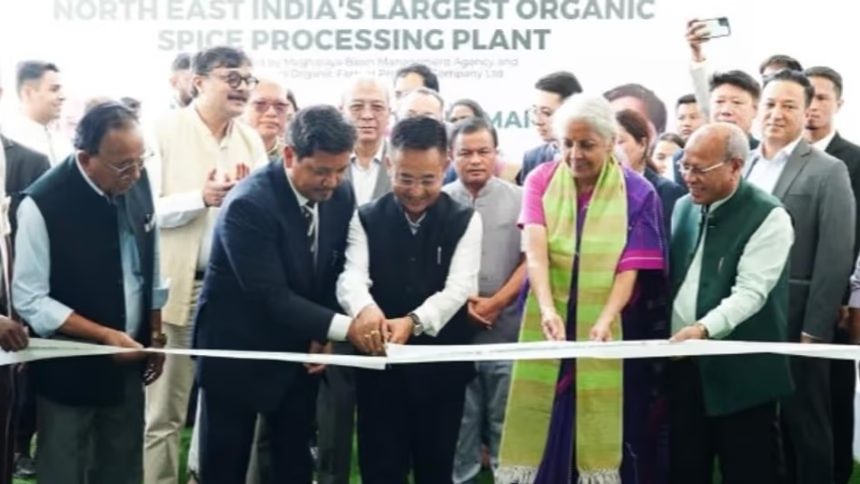
Sikkim Chief Minister Prem Singh Tamang has urged the Central Government to introduce a more equitable funding mechanism for Externally Aided Projects (EAPs) in northeastern and Himalayan states. Speaking at a seminar on EAPs in Shillong on June 19, attended by Union Finance Minister Nirmala Sitharaman, Tamang said the current funding model places a heavy financial burden on smaller states with limited resources.
He proposed a 90:10 funding pattern, similar to Centrally Sponsored Schemes, where the Centre provides 90 percent grant support and states contribute only 10 percent through loans. The Chief Minister also called for faster project approvals, greater transparency, and exemptions for EAP loans from fiscal deficit calculations to accelerate development in the region.
Read More: Northeast EAP Funding Rises Seven-Fold, Says Sitharaman
Key Facts
- Event: Seminar on Externally Aided Projects (EAPs)
- Location: Shillong, Meghalaya
- Date: June 19
- Speaker: Sikkim Chief Minister Prem Singh Tamang
- Chair: Union Finance Minister Nirmala Sitharaman
- Main Demand: 90:10 funding model for northeastern and Himalayan states
- Key Concern: High counterpart funding burden on states
- Additional Requests: Faster approvals, capacity building, and fiscal deficit exemptions
Sikkim CM Calls for Reform in EAP Funding Structure
Sikkim Chief Minister Prem Singh Tamang has called on the Centre to revise the funding framework for Externally Aided Projects. Addressing a high-level seminar in Shillong, he argued that the current financing structure creates significant challenges for northeastern and Himalayan states.
While thanking the Central Government for its continued support, Tamang emphasized that many smaller states struggle to provide the required counterpart funding for externally funded projects. Consequently, this limits their ability to undertake large-scale development initiatives.
Proposal for a 90:10 Funding Pattern
To address the issue, Tamang proposed that Externally Aided Projects should follow the same funding pattern as Centrally Sponsored Schemes in special category states.
Under this model, the Government of India would provide 90 percent of the project cost as grant assistance, while states would contribute only 10 percent through loans.
According to the Chief Minister, such a system would reduce financial stress on states and encourage greater participation in infrastructure and development projects funded by international agencies.
EAP Loans Should Not Affect Fiscal Deficit Limits
Tamang also urged the Centre to keep the loan component of externally aided projects outside prescribed fiscal deficit limits.
He argued that EAP-funded initiatives create productive assets, strengthen infrastructure, and generate long-term economic benefits. Therefore, treating these loans as part of fiscal deficit calculations may discourage states from investing in critical development projects.
Furthermore, he said that northeastern and Himalayan states require additional flexibility to meet their infrastructure and growth needs.
Concerns Over Delayed Project Approvals
Another major issue highlighted by the Chief Minister was the lengthy approval process for externally aided projects.
According to Tamang, many projects require two to three years to secure necessary approvals. As a result, delays often lead to cost escalations, changes in project scope, and repeated revisions to proposals.
To improve efficiency, he recommended a fixed appraisal and approval timeline that would ensure all clearances are completed within a single financial year.
He stated that quicker approvals would help states implement projects on schedule and maximize development benefits.
Demand for Greater Transparency and Capacity Building
The Sikkim Chief Minister also called for enhanced transparency in project approval mechanisms.
In addition, he requested regular capacity-building programmes for government officials involved in planning and implementing externally aided projects. Such training, he said, would improve project management, execution standards, and overall efficiency.
Tamang further suggested that the Centre should recognize land, right-of-way permissions, and enabling infrastructure provided by states as part of their contribution to project implementation.
According to him, these contributions represent substantial investments by state governments and should receive formal recognition under funding frameworks.
Sikkim’s Success with Externally Aided Projects
Highlighting Sikkim’s development experience, Tamang said the state has successfully implemented several externally aided projects across different sectors.
These projects include initiatives in power generation, forestry conservation, road connectivity, and welfare programmes for women and youth.
He noted that such investments have significantly contributed to Sikkim’s socio-economic development and improved the quality of life for residents.
Moreover, the successful implementation of these projects demonstrates the state’s ability to effectively utilize international development assistance.
Focus on Sustainable Development
The Chief Minister stressed that externally aided projects play a crucial role in achieving sustainable development goals in mountainous and geographically challenging regions.
Improved infrastructure, environmental conservation, and social welfare programmes can help create long-term economic opportunities while addressing regional development gaps.
Therefore, he urged policymakers to adopt a more flexible and supportive funding model for states facing unique geographical and financial challenges.
Question & Answer Section
What did Sikkim Chief Minister Prem Singh Tamang propose?
He proposed a 90:10 funding model for Externally Aided Projects, with 90 percent grant support from the Centre and 10 percent loan assistance from states.
Why does Sikkim want changes to EAP funding?
The state believes the current funding system places a heavy financial burden on northeastern and Himalayan states with limited resources.
What concern did Tamang raise about project approvals?
He said approval processes often take two to three years, causing delays and increasing project costs.
What did the Chief Minister say about fiscal deficit limits?
He requested that EAP loan components be excluded from fiscal deficit calculations because such projects create productive assets and infrastructure.
Which sectors in Sikkim have benefited from EAPs?
Power, forestry, connectivity, and welfare programmes for women and youth have benefited from externally aided projects.
Where was the seminar held?
The seminar on Externally Aided Projects was held in Shillong, Meghalaya.
Location Context
Shillong, the capital of Meghalaya, serves as an important administrative and policy hub for Northeast India. Discussions on development financing held in the city often influence infrastructure, connectivity, and economic growth strategies across the northeastern and Himalayan regions.
Conclusion
Sikkim Chief Minister Prem Singh Tamang’s appeal for a fairer Externally Aided Project funding framework highlights the financial challenges faced by northeastern and Himalayan states. By proposing a 90:10 funding model, faster approvals, and greater fiscal flexibility, he has called for reforms that could help states accelerate infrastructure development, strengthen public services, and achieve long-term economic growth.