





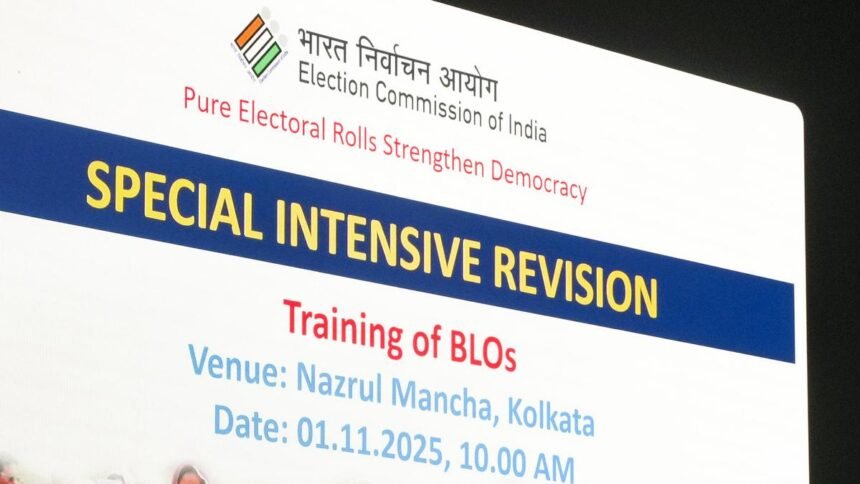
The Special Intensive Revision (SIR) 2026 exercise has expanded the Election Commission of India’s voter-roll verification programme across 12 states and Union Territories. The exercise aims to update electoral rolls by verifying voter details, identifying eligible electors, and addressing records that may require correction or removal under established procedures.
Special Delimitation Session: August 16–18 Plan Faces Government Clarification
The Election Commission has also adjusted timelines connected with document submission and electoral-roll revision in different areas. Moreover, the changes have increased attention on how voters can verify their details and submit claims or objections within the applicable deadlines.
The large-scale exercise has generated political and public debate because electoral-roll changes can directly affect citizens’ ability to vote. Therefore, transparency, accessible verification procedures, and adequate opportunities to raise claims remain important throughout the process.
SIR 2026 Expands Across 12 States and UTs
The Election Commission has taken the SIR 2026 exercise beyond its initial areas as part of a broader effort to review electoral rolls.
The process involves verification of voter information and efforts to identify discrepancies in electoral records. Additionally, election officials can update details where voters provide appropriate information or documentation.
The scale of the exercise makes coordination between the Election Commission, state election machinery, and local officials particularly important.
However, voters should follow the specific instructions and deadlines applicable to their constituency.
Document Submission Deadlines Receive Attention
Changes to document-submission timelines have become a major focus of the revision exercise.
Voters who need to provide supporting documents may have to submit them within the deadline announced by the relevant election authorities. Furthermore, extensions can vary depending on the state, Union Territory, or stage of the revision process.
Therefore, citizens should check official election notifications rather than rely on general deadlines circulated online.
The Election Commission’s objective remains to provide a structured process for updating electoral information.
Why Electoral Roll Verification Matters
Accurate electoral rolls form an important part of the election process.
An updated roll can help ensure that eligible citizens remain registered while authorities identify duplicate, outdated, or otherwise incorrect records. Moreover, accurate voter information can help election officials manage polling arrangements more effectively.
However, the removal or modification of voter records can also create concerns if eligible citizens cannot easily verify their status.
Therefore, accessible claims and objection procedures remain essential.
Voters Can Check Their Electoral Details
The revision process makes voter verification particularly important.
Citizens should check whether their names and relevant details appear correctly in the electoral roll. Additionally, voters who find errors can use the procedures established by election authorities to submit claims or corrections.
Early verification can help voters avoid last-minute difficulties.
However, the exact documents and procedures can differ according to the applicable election rules and instructions.
Claims and Objections Remain Important
Electoral-roll revision generally provides mechanisms through which citizens can raise concerns.
A voter who believes that their name has been incorrectly omitted or that their information contains an error can use the designated claims process. Furthermore, other eligible stakeholders may raise objections according to applicable election rules.
These mechanisms provide an important safeguard during large-scale revisions.
However, applicants must follow the prescribed procedure and submit information within the relevant timeframe.
Political Parties Closely Monitor SIR 2026
The scale of SIR 2026 has also attracted political attention.
Political parties may monitor voter-roll changes because electoral rolls directly affect constituency-level election preparations. Moreover, parties can raise concerns if they believe eligible voters face difficulties during verification.
Such scrutiny can encourage greater transparency.
However, political allegations about voter deletions require verification through official electoral records and established review mechanisms.
Concerns Over Voter Deletions
One of the most sensitive aspects of electoral-roll revision involves records that authorities remove or flag.
Election officials may identify records associated with deceased voters, duplicate entries, changes of residence, or other issues. Additionally, voters can face problems if their records contain outdated information or documentation gaps.
The challenge lies in distinguishing legitimate corrections from cases where eligible voters could be incorrectly affected.
Therefore, verification and accessible appeals remain essential safeguards.
Different States Face Different Challenges
The SIR exercise covers multiple states and Union Territories with different population patterns and electoral conditions.
Urban areas may face frequent changes of residence, while rural and remote communities can experience difficulties accessing administrative services. Furthermore, language, documentation, connectivity, and geographical challenges can affect how easily citizens complete verification.
Election officials therefore need state-specific implementation strategies.
However, the underlying objective remains the maintenance of accurate and reliable electoral rolls.
Administrative Machinery Faces Heavy Workload
Implementing a large voter-roll revision requires extensive coordination.
Booth-level officials and other election personnel may have to verify records, assist voters, process claims, and update databases. Moreover, political parties and their representatives may participate in the verification process under applicable rules.
The workload can increase significantly when deadlines are extended.
However, additional time can also provide officials and voters with greater opportunity to resolve discrepancies.
Documentation Becomes Increasingly Important
Voters participating in the revision process may need to provide supporting information depending on their circumstances.
The relevant documentation can vary according to the claim or correction being requested. Therefore, citizens should consult official instructions before submitting documents.
Submitting accurate information can help prevent delays.
However, authorities should also ensure that legitimate voters do not face unnecessary barriers because of documentation difficulties.
Digital Systems Could Improve Access
Technology plays an increasingly important role in electoral administration.
Online voter services can allow citizens to check registration details, submit applications, and track certain requests. Additionally, digital databases can help election officials identify inconsistencies more efficiently.
However, digital access cannot fully replace local assistance, particularly in communities with limited internet connectivity.
Therefore, both online and offline mechanisms remain important.
Transparency Will Shape Public Confidence
Public confidence in SIR 2026 will depend heavily on transparency.
The Election Commission and local election authorities can strengthen confidence by clearly explaining deadlines, documentation requirements, verification procedures, and appeal mechanisms. Moreover, timely publication of relevant electoral information can help voters understand changes to the rolls.
Political parties and civil-society groups may also play a role in informing voters.
However, public communication must rely on accurate and officially verified information.
Deadline Extensions Could Help Voters
Where authorities extend deadlines, voters may receive additional time to verify records and submit documents.
Such extensions can benefit citizens who face difficulties obtaining paperwork or accessing election offices. Furthermore, additional time can help officials process large volumes of applications.
However, voters should not assume that one extended deadline applies uniformly across all states and Union Territories.
The applicable date should always come from the relevant election authority.
SIR 2026 Could Influence Future Elections
The revised electoral rolls will have significance for upcoming elections in the affected areas.
Accurate voter lists help election authorities determine eligible electors and prepare polling arrangements. Moreover, political parties rely on electoral rolls for campaign planning and booth-level organisation.
The exercise could therefore have consequences extending beyond administrative recordkeeping.
However, the revision process itself should remain focused on electoral accuracy rather than political advantage.
What Voters Should Do
Voters should verify their names and details in the electoral roll as early as possible.
If they identify an error or omission, they should use the official claims or correction process and follow the applicable documentation requirements. Additionally, citizens should keep records of applications and submissions where appropriate.
Checking official Election Commission information can help voters avoid misinformation.
However, citizens should not rely solely on social-media posts or unofficial messages for deadline information.
Conclusion
The Special Intensive Revision (SIR) 2026 has expanded the Election Commission’s voter-roll verification exercise across 12 states and Union Territories, bringing renewed attention to electoral-record accuracy, document submission, and deadline management.
Moreover, changes to submission timelines could give voters and election officials additional time to resolve discrepancies. At the same time, the large scale of the exercise makes transparency, accessible verification, and effective claims and objection procedures essential.
Overall, voters should verify their electoral details, monitor official announcements, and follow the deadlines applicable to their constituency. As SIR 2026 progresses, the Election Commission’s ability to balance accurate voter records with accessible safeguards for eligible citizens will remain closely watched.
FAQs
1. What is SIR 2026?
Special Intensive Revision 2026 is an Election Commission exercise aimed at reviewing and updating electoral rolls through voter verification and related procedures.
2. How many states and Union Territories are covered?
The expanded exercise covers 12 states and Union Territories, according to the information provided for this report.
3. Why are document-submission deadlines important?
Deadlines determine how much time voters have to provide information or documents needed to verify or correct their electoral records.
4. What should voters do if their names are missing?
They should check the official electoral-roll information and use the applicable claims or correction procedure within the announced deadline.
5. Why is SIR 2026 politically significant?
Electoral rolls determine who can participate in elections, so large-scale revisions can attract political scrutiny and public concern over voter inclusion and accuracy.