




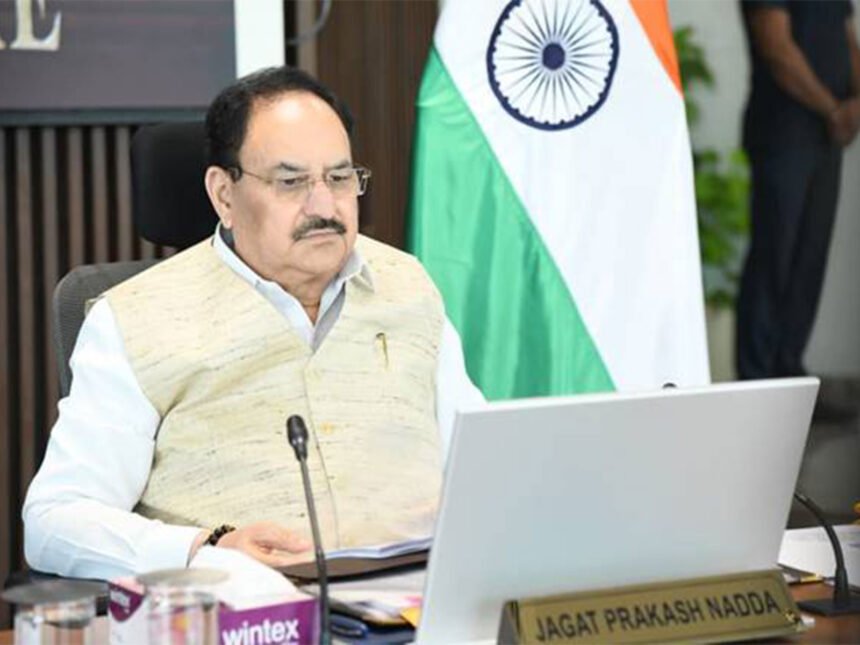
Union Health Minister J.P. Nadda has reportedly conducted emergency containment evaluations in coordination with medical boards in Guwahati. The reported review comes as health authorities assess public-health preparedness and containment measures following concerns linked to the wider emergency situation in the region.
The assessment brings senior central leadership into discussions with medical professionals and local health authorities. Moreover, direct reviews can help identify gaps in surveillance, emergency response, healthcare capacity, and disease-control measures.
The reported evaluation highlights the importance of coordination between central and regional health authorities. However, the available information does not specify the medical boards involved, the exact facilities inspected, or any new containment measures announced during the review.
Assam Reviews Flood Mapping After Worst-Hit Districts
Nadda Conducts Emergency Review
Union Health Minister J.P. Nadda has reportedly reviewed emergency containment arrangements in Guwahati.
Such assessments can help authorities evaluate whether existing health systems can respond effectively to emerging risks. Furthermore, direct engagement with medical professionals can provide central officials with information about conditions on the ground.
The review therefore carries significance for regional health preparedness.
However, details about the minister’s complete schedule have not been provided.
Guwahati Medical Boards Participate
Medical boards in Guwahati have reportedly taken part in the emergency evaluation.
Medical professionals can provide information about patient trends, hospital preparedness, laboratory capacity, and public-health concerns. Additionally, their assessments can help authorities identify areas requiring additional resources.
Their involvement supports a more evidence-based response.
However, the available information does not identify the individual boards or institutions involved.
Emergency Containment Measures Under Review
Containment evaluations can cover several aspects of public-health preparedness.
Authorities may examine disease surveillance, testing capacity, isolation arrangements, infection-control procedures, and emergency staffing. Moreover, reviewing these systems can help identify weaknesses before health risks escalate.
The assessment could therefore support preventive planning.
However, no specific containment gaps have been publicly identified in the information provided.
Health Infrastructure Remains Important
Strong healthcare infrastructure is essential during emergencies.
Hospitals need adequate personnel, medicines, equipment, beds, and infection-control facilities to manage sudden increases in demand. Furthermore, laboratories and surveillance systems need sufficient capacity to detect potential health threats quickly.
The reported review could help assess these requirements.
However, no new infrastructure allocation has been announced in the available information.
Coordination Between Centre and State
Emergency health responses often require cooperation between different levels of government.
Central health authorities can provide technical guidance and resources, while state and local agencies manage implementation on the ground. Additionally, coordination with hospitals and medical experts can help ensure that response measures reflect local conditions.
The Guwahati review reportedly brings these elements together.
However, the exact coordination mechanism has not been disclosed.
Disease Surveillance Gets Attention
Effective surveillance can help authorities identify emerging health threats early.
Medical teams can monitor unusual disease patterns, hospital admissions, and other indicators that may require investigation. Moreover, timely information allows health authorities to respond before a local health concern becomes more widespread.
The reported evaluation may therefore include surveillance preparedness.
However, no specific disease trend has been identified in the information available.
Emergency Preparedness Remains Essential
Health emergencies can place sudden pressure on hospitals and medical personnel.
Preparedness planning helps authorities determine how quickly they can expand capacity and respond to changing conditions. Furthermore, emergency plans can clarify responsibilities among hospitals, laboratories, public-health departments, and local administrations.
The minister’s reported assessment could support this planning.
However, the available information does not provide details about any changes to existing emergency protocols.
Medical Experts Provide Ground-Level Input
Medical boards can provide practical assessments based on healthcare conditions in the city.
Their input can help authorities understand challenges related to staffing, patient management, diagnostic capacity, and infection control. Additionally, medical professionals can identify operational issues that may not appear in administrative reports.
Such ground-level information can strengthen emergency decision-making.
However, no specific recommendations from the medical boards have been disclosed.
Guwahati’s Regional Importance
Guwahati serves as a major healthcare and transportation centre for Assam and the wider Northeast.
Medical facilities in the city often serve patients from neighbouring areas as well. Moreover, any major public-health emergency affecting the region can place additional demand on Guwahati’s hospitals.
Assessing preparedness in the city therefore has wider regional relevance.
However, the scale of any additional healthcare demand has not been specified.
Public Health Communication Matters
Containment efforts also depend on clear communication with residents.
Authorities can provide guidance about symptoms, prevention, healthcare access, and emergency procedures when necessary. Furthermore, accurate communication can help reduce confusion and prevent the spread of misinformation during health emergencies.
Public messaging can therefore complement medical interventions.
However, the available information does not indicate whether the review produced new public-health advisories.
Emergency Response Requires Continuous Monitoring
Containment assessments provide only one stage of emergency preparedness.
Health authorities need to continue monitoring conditions and adjust their response when new information emerges. Additionally, hospitals and medical boards may need to update their preparedness plans according to changing risks.
Continuous monitoring can improve response effectiveness.
However, no timeline for follow-up evaluations has been provided.
What Happens Next?
Health authorities are expected to continue assessing preparedness and containment arrangements in Guwahati.
Officials may review hospital capacity, surveillance systems, laboratory readiness, and emergency response procedures. Moreover, additional measures could follow if medical assessments identify specific gaps.
Further announcements will clarify the next stage of the response.
However, no additional containment measures have been confirmed in the information available.
Conclusion
The reported Nadda emergency health review in Guwahati highlights an effort to assess containment preparedness alongside local medical boards. Union Health Minister J.P. Nadda’s reported involvement brings central attention to the region’s healthcare readiness during a period of heightened concern.
Moreover, cooperation between central officials, medical experts, hospitals, and state authorities can strengthen surveillance and emergency response. At the same time, continued monitoring remains necessary to identify emerging risks and ensure that healthcare facilities can respond effectively.
Overall, the Guwahati containment assessment underscores the importance of coordinated health preparedness across Assam and the wider Northeast.
FAQs
1. Who conducted the reported health review?
Union Health Minister J.P. Nadda reportedly conducted the emergency containment evaluation.
2. Where did the assessment take place?
The reported assessment took place in Guwahati, Assam.
3. Who participated in the evaluation?
Guwahati medical boards reportedly participated alongside the Union Health Minister.
4. What does an emergency containment evaluation examine?
It can assess areas such as disease surveillance, hospital preparedness, laboratory capacity, infection control, and emergency response systems.
5. Were new containment measures announced?
The available information does not specify any new containment measures resulting from the reported evaluation.