





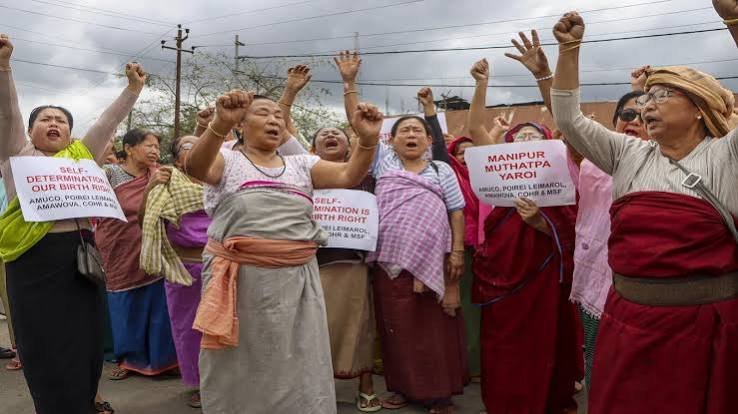
The Assembly Gate Protest has intensified public pressure as women-led civil society groups reportedly locked the Legislative Assembly gate while demanding faster resolutions to pending issues. The demonstration highlights growing calls for authorities to address public concerns through quicker administrative and political action.
CAA Narrative: Assembly Campaign Strategies Intensify
The Assembly Gate Protest reflects the role of women-led civil society organizations in Manipur’s public discourse. Moreover, the action has brought renewed attention to demands for timely decision-making and stronger government responses.
Protests involving public institutions can create significant political pressure, particularly when groups seek urgent action on unresolved matters. Therefore, authorities may face increased demands to engage with representatives and clarify their response.
The reported demonstration also highlights the importance of peaceful civic participation and institutional dialogue. Additionally, sustained engagement between civil society groups and government representatives can help identify possible pathways toward resolution.
Assembly Gate Protest Raises Pressure for Faster Action
The Assembly Gate Protest reportedly involved women-led civil society groups locking the Legislative Assembly gate to press their demands. According to the available information, the groups sought fast-track resolutions to pending issues.
Moreover, civil society organizations often use public demonstrations to draw attention to concerns that they believe require urgent government action. Consequently, the protest has increased visibility around the issues raised by the participating groups.
Women-led organizations have played an important role in community mobilization across Manipur. Furthermore, their participation can bring broader public attention to demands concerning governance, security, rehabilitation, and social welfare.
The available information does not identify the specific resolutions sought, the number of participants, or the duration of the gate blockade. Therefore, the current development focuses on the reported protest and its demand for faster action.
Assembly Gate Protest Highlights Role of Civil Society
The Assembly Gate Protest demonstrates how civil society groups can place pressure on public institutions through collective action. The reported participation of women-led organizations adds significance to the demonstration.
Additionally, protests can provide communities with a platform to communicate concerns directly to policymakers. This process can encourage authorities to examine unresolved issues and consider appropriate responses.
However, access to legislative institutions and public facilities remains subject to applicable laws and administrative procedures. Meanwhile, dialogue between demonstrators and authorities can help prevent disagreements from escalating.
The available information does not indicate whether authorities held formal discussions with the protesting groups or announced any immediate measures. Therefore, further developments will determine whether the demands lead to specific government action.
Assembly Gate Protest Tests Government Response
The Assembly Gate Protest places attention on how authorities respond to demands for accelerated decision-making. Government engagement with civil society groups can help clarify outstanding issues and establish realistic timelines.
Moreover, transparent communication can reduce uncertainty surrounding pending matters. Consequently, authorities may need to explain the status of relevant decisions and outline the next steps where appropriate.
The protest also illustrates the importance of balancing civic expression with uninterrupted functioning of public institutions. Similarly, peaceful dialogue can provide a constructive path for addressing disagreements.
Resolving complex public issues often requires sustained consultation. Therefore, the Assembly Gate Protest highlights the importance of responsive governance, institutional dialogue, and timely decision-making.
Conclusion
The Assembly Gate Protest has intensified public pressure after women-led civil society groups reportedly locked the Legislative Assembly gate while demanding fast-track resolutions.
Furthermore, continued dialogue between the government and civil society representatives will remain important for addressing the concerns behind the demonstration. Clear communication and lawful engagement can help move unresolved issues toward practical solutions.
Overall, the Assembly Gate Protest underscores the influence of women-led civic organizations and the growing demand for faster government action on pending public concerns in Manipur.
FAQs
1. What is the latest Assembly Gate Protest update?
The Assembly Gate Protest involves women-led civil society groups demanding faster resolutions to pending issues at the Legislative Assembly.
2. What are the protesters demanding?
According to the available information, the groups are demanding fast-track resolutions, although the specific issues have not been identified.
3. Who organized the reported protest?
The demonstration reportedly involved women-led civil society groups.
4. Why has the protest attracted attention?
The reported locking of the Assembly gate has increased public and political pressure for faster action on unresolved matters.
5. What could help resolve the dispute?
Constructive dialogue, clear communication, and engagement between government representatives and civil society groups could help address the concerns.