

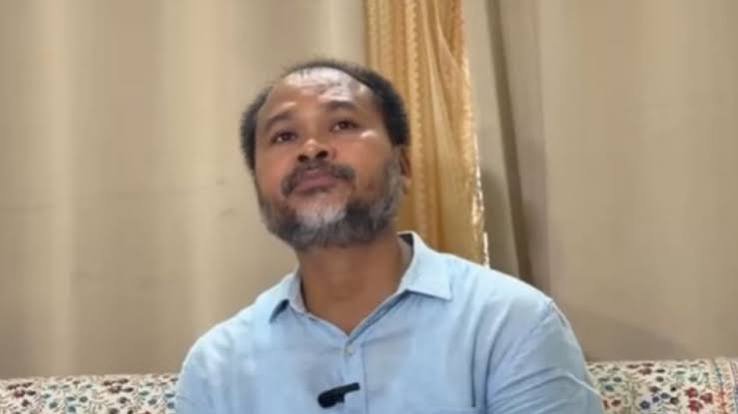
Akhil Gogoi has alleged that a coal-mining syndicate involving Assam politicians contributed to the severe floods in Sivasagar. The Raijor Dal MLA made the allegation while questioning the government’s explanation of the disaster.
Gogoi named Water Resources Minister Susanta Borgohain, Sonari MLA Dharmeswar Konwar and Nazira MLA Mayur Borgohain. He alleged that the three were linked to a syndicate involved in mining activity and claimed that such activity weakened river protection systems.
Akhil Gogoi questions flood cause
Speaking in a Facebook Live on August 22, Gogoi rejected the explanation that a cloudburst alone caused the flooding. He argued that mining and damage to river protection structures along the Dikhow River also played a role.
The allegation comes after one of Assam’s worst flood disasters in decades. The Dikhow and other rivers in Upper Assam rose sharply during the July floods, leaving large areas of Sivasagar and neighbouring districts inundated.
The Indian Express reported that the Assam government initially attributed the flooding to a cloudburst in Nagaland’s Mon district. However, a meteorological scientist said the area recorded 137 mm of rain over eight to nine hours, rather than the rainfall rate used to define a cloudburst.
Akhil Gogoi has therefore called for the causes of the flooding to be examined beyond extreme rainfall. His claims, however, remain allegations and have not been established by an independent investigation.
Akhil Gogoi links mining activity
Akhil Gogoi alleged that mining activity damaged river safeguards and increased the vulnerability of communities along the Dikhow. He also demanded an inquiry into the alleged role of the three political leaders.
The issue of riverbank excavation had already drawn scrutiny before the latest floods. A Times of India report said the Water Resources Department had warned years earlier that unchecked sand and stone excavation could alter river channels and raise flood risks.
Separately, environmental reporting has pointed to several factors behind Assam’s severe flooding, including intense rainfall, deforestation, wetland degradation, disrupted drainage and unregulated mining. Experts have stressed that the disaster cannot necessarily be linked to one cause.
The dispute has also intensified scrutiny of how authorities monitor extraction near rivers and whether existing safeguards are strong enough. Akhil Gogoi said accountability should cover both those allegedly involved in illegal activity and officials responsible for preventing environmental damage.
Government relief efforts continue
The allegations come as the Assam government continues relief and rehabilitation work in the worst-hit districts. Chief Minister Himanta Biswa Sarma said on August 17 that interim assistance of Rs 15,000 had been released for nearly one lakh affected families in Sivasagar, Charaideo, Jorhat and Golaghat.
The government has also started a rapid assessment of flood damage. According to the Chief Minister, about 36,000 families had been assessed by August 17, with direct losses estimated at nearly Rs 450 crore. The survey was expected to continue until August 31.
The Water Resources Department has also been involved in restoration work. Recent reports said repair work was underway on the Dikhow Bund in Sivasagar, a key flood-protection structure.
Akhil Gogoi seeks formal probe
Akhil Gogoi has urged the Assam government to order a formal investigation into the allegations involving Susanta Borgohain, Dharmeswar Konwar and Mayur Borgohain. He said action should follow if an inquiry finds anyone responsible for activities that worsened the floods.
The three named politicians are members of the BJP and won their respective Assembly constituencies in the 2026 Assam election. Susanta Borgohain represents Demow, Dharmeswar Konwar represents Sonari and Mayur Borgohain represents Nazira.
The allegations add a political dimension to the continuing debate over the causes of the Sivasagar floods. They also raise questions about mining regulation, river protection and disaster preparedness.
For now, there is no independent finding establishing that the three politicians ran a coal syndicate or that their alleged activities caused the floods. Further investigation and evidence will be needed to determine whether the claims have any factual basis.
As floodwaters recede, the focus is shifting toward recovery and accountability. The debate over the Dikhow River also highlights the need to examine both natural hazards and human activity when assessing flood risks in vulnerable parts of Assam.