







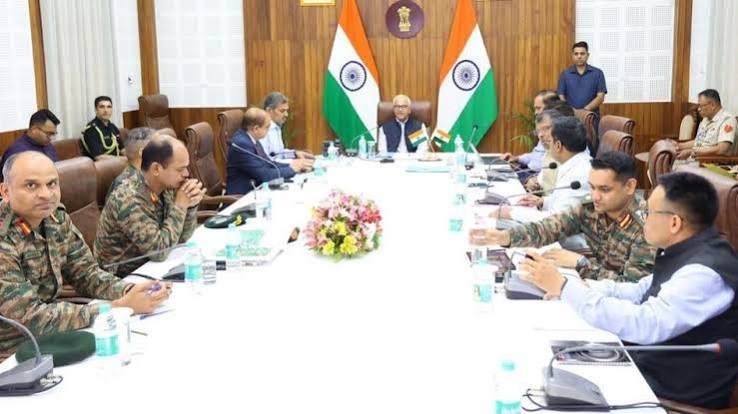
India-Myanmar border fencing remains a key security priority as Manipur Governor Ajay Kumar Bhalla reviews construction progress and challenges along the international boundary. The project aims to strengthen border management and address security concerns in the northeastern state.
During a review meeting at Raj Bhavan in Imphal on November 18, 2025, senior Border Roads Organisation (BRO) officials briefed the Governor on construction work, operational difficulties and measures to accelerate the remaining fencing. The project has since recorded further progress, although much of Manipur’s border remains unfenced.
India-Myanmar Border Fencing: Governor Reviews Progress
Governor Ajay Kumar Bhalla chaired the review meeting to assess the overall status of fencing along Manipur’s 398-kilometre international boundary with Myanmar. Senior BRO officers presented details of the work completed and the difficulties affecting construction.
The briefing included inputs from the Additional Director General, Border Roads (East), and the Commandant of the 25 Border Roads Task Force. Officials discussed operational issues and recommendations to ensure faster and smoother execution of the remaining work.
Moreover, representatives highlighted security and communication concerns that could affect construction activities. The Governor acknowledged the progress achieved and conveyed that the government would extend necessary support to address the issues raised by the implementing agency.
The meeting brought together senior state officials and security representatives. These consultations aimed to improve coordination between departments responsible for infrastructure development and border security.
India-Myanmar Border Fencing Faces Construction Challenges
The fencing project faces several practical hurdles, including difficult terrain, transportation constraints and the need to develop suitable access roads. These factors can slow the movement of construction materials and affect work schedules in remote border areas.
Land acquisition, manpower availability and security arrangements also require attention. Therefore, coordination between the BRO, state administration and security agencies remains important for completing the project efficiently.
The Border Roads Organisation is responsible for executing the fencing work through its Project Sewak, which operates in the region. Construction has been undertaken in phases, with work reported near Moreh in Tengnoupal district.
However, completing the entire stretch requires sustained logistical support and careful planning. Officials must also address local conditions along the border to ensure that construction proceeds without unnecessary delays.
India-Myanmar Border Fencing: Latest Progress
An important update came on September 2, 2026, when Manipur Home Minister Govindas Konthoujam informed the state Assembly that approximately 55 kilometres of the state’s 398-kilometre border with Myanmar had been fenced.
The minister said the state government was targeting completion of the entire fencing project by 2028. He also identified difficulties in transporting construction materials as a factor behind delays.
Additionally, the government has been working to identify and demarcate sections of the international boundary that remain unsettled. This process is important because construction must follow the recognised international boundary.
The progress figures indicate that substantial work remains. Based on the latest Assembly update, roughly 343 kilometres of the Manipur stretch had yet to be fenced. The actual pace of construction will depend on site conditions, material supplies and coordination among the agencies involved.
Security Importance of the Border Project
India shares a 1,643-kilometre international border with Myanmar, passing through four northeastern states: Arunachal Pradesh, Nagaland, Manipur and Mizoram. Manipur accounts for 398 kilometres of this boundary.
The region’s border security challenges have kept fencing and surveillance in focus. Authorities have raised concerns about the movement of illegal arms, narcotics and other unlawful cross-border activities.
Furthermore, the continuing conflict in Myanmar has added pressure to border management. Indian authorities must monitor security risks while responding to developments across the frontier.
The proposed fencing is part of a wider effort to improve surveillance and strengthen control over cross-border movement. However, physical barriers alone cannot address every challenge. Effective monitoring, coordination between agencies and suitable infrastructure remain necessary.
India-Myanmar Border Fencing and Local Concerns
Border infrastructure also affects communities living near the international boundary. Residents in border districts depend on roads, local markets and established social connections, making communication with affected communities an important part of project implementation.
Consequently, authorities must balance security requirements with local needs. Clear information about construction plans and boundary demarcation can help address concerns among residents.
Manipur’s border areas include remote locations where transport and access remain difficult. Better infrastructure may support construction and improve connectivity, although the benefits will depend on how projects are implemented.
The government must also ensure that fencing work respects the recognised international boundary. Accurate demarcation and communication between relevant authorities will remain important as construction advances.
Work Must Accelerate to Meet the 2028 Target
The Governor’s review highlighted the need for continued coordination and practical solutions to construction delays. Meanwhile, the September 2026 Assembly update provided a clearer picture of the progress achieved along Manipur’s border.
With approximately 55 kilometres completed out of 398 kilometres, meeting the 2028 target will require sustained construction efforts. Transport arrangements, manpower, security and access roads will remain important factors.
Overall, India-Myanmar border fencing remains a significant infrastructure and security project for Manipur. The coming months will show whether agencies can overcome existing hurdles and accelerate construction while addressing local concerns and maintaining accurate boundary demarcation.
Sikkim NH-10 Route Clear at Mile and Bardang, Road Situation Updated