



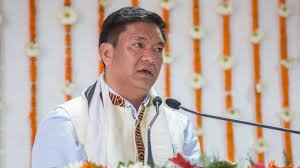
The Arunachal Hydro Power Boost Scheme has received cabinet approval, aiming to strengthen rural development in Arunachal Pradesh. Moreover, Chief Minister Pema Khandu stated that the initiative will generate employment, improve energy access, and accelerate economic growth in remote areas.
Dipankar Sen Assembly Debate: Fiery Questions Rock Tripura House
Key Facts
- Focus Keyphrase: Arunachal Hydro Power Boost
- State: Arunachal Pradesh
- Leader: Pema Khandu
- Decision: Cabinet approval of small hydro power scheme
- Objective: Rural development and energy access
- Impact: Jobs, infrastructure, economic growth
Arunachal Hydro Power Boost Gains Momentum
The renewable power plan initiative marks a major step toward rural transformation in Arunachal Pradesh. The state cabinet has approved a small hydro power scheme aimed at harnessing local water resources.
Moreover, the decision reflects the government’s focus on sustainable energy solutions. As a result, remote areas are expected to benefit significantly.
Cabinet Nod to Strengthen Rural Economy
The hydro power scheme in Arunachal Pradesh is designed to uplift rural communities. Chief Minister Pema Khandu emphasised that the scheme will drive economic growth.
Furthermore, small hydro projects are easier to implement in hilly terrains. In addition, they require lower investment compared to large dams.
Therefore, the initiative offers a practical solution for rural electrification.
Tripura Drug Trafficking Surge: Delivery Racket Exposed, Assembly Silent
Employment and Local Opportunities
The Arunachal Hydro Power Boost is expected to generate employment at multiple levels. Construction, maintenance, and operation of hydro projects will create jobs.
Moreover, local communities will gain direct and indirect economic benefits. As a result, the scheme can reduce migration from rural areas.
In addition, skill development opportunities may emerge.
Sustainable Energy Development
The Arunachal Hydro Power Boost aligns with clean energy goals. Small hydro power projects have minimal environmental impact compared to larger alternatives.
Furthermore, renewable energy helps reduce dependence on fossil fuels. As a result, the state can move toward sustainable development.
Therefore, the initiative supports both economic and environmental objectives.
Nagaland AFSPA Disturbed Areas Status Extended
Infrastructure and Connectivity Benefits
The Arunachal Hydro Power Boost will also improve infrastructure in remote regions. Development of hydro projects often leads to better roads and connectivity.
Moreover, improved infrastructure supports other sectors such as healthcare and education. As a result, overall quality of life improves.
In addition, reliable electricity supply enhances daily living conditions.
Challenges and Implementation
Despite its potential, the Arunachal Hydro Power Boost may face challenges such as terrain constraints and logistical issues. However, the government plans to address these through careful planning.
Furthermore, coordination between departments will ensure smooth execution. Therefore, the project is expected to progress steadily.
Cyber Fraud Complaints Surge in 2025–26, Losses Near ₹38.09 Crore
Future Outlook
The state hydro scheme is likely to play a key role in the state’s long-term development strategy. Moreover, expanding renewable energy capacity can attract investments.
In addition, the success of this scheme may encourage similar initiatives. Consequently, Arunachal Pradesh could emerge as a leader in small hydro power.
Location Context
Arunachal Pradesh is rich in water resources and has immense potential for hydro power generation. Therefore, the small hydro initiative is crucial for unlocking this potential.
Manipur Ambush Case: NIA Chargesheets Three PLA Militants
FAQs
What is the Arunachal Hydro Power Boost?
It is a small hydro power scheme approved by the state cabinet to promote rural development.
Who announced the scheme?
Chief Minister Pema Khandu highlighted its benefits.
How will it help the rural economy?
It will create jobs, improve infrastructure, and ensure reliable electricity.
Why focus on small hydro projects?
They are cost-effective, sustainable, and suitable for hilly regions.