





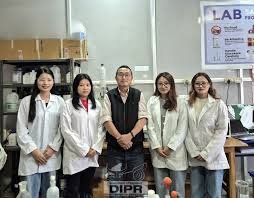
The Nagaland Weed Drug Breakthrough marks a remarkable scientific achievement as researchers at Nagaland University successfully transformed an invasive weed into a potential drug-making resource. This innovation highlights sustainable research and opens new possibilities in pharmaceutical development.
Alarming Assam Gibbon Habitat Loss: Shrinking Forest Canopies Threaten Survival
A Game-Changing Scientific Achievement
Researchers at Nagaland University have achieved a significant milestone by converting an invasive weed into a valuable resource for drug production. This development showcases how scientific innovation can address environmental challenges while contributing to healthcare. As a result, the Nagaland Weed Drug Breakthrough has gained attention in the scientific community.
The study demonstrates the potential of turning ecological problems into useful solutions. Moreover, it highlights the importance of research in unlocking hidden value in natural resources.
Understanding the Invasive Weed Problem
Invasive weeds pose a serious threat to ecosystems by spreading rapidly and disrupting native plant species. They often reduce biodiversity and affect agricultural productivity. Therefore, managing these plants remains a major challenge.
By utilizing such weeds for beneficial purposes, researchers can reduce their negative impact. This approach offers a sustainable way to tackle environmental issues while creating economic value.
How Researchers Achieved the Breakthrough
Scientists at Nagaland University conducted detailed studies to identify useful compounds within the invasive plant. They developed methods to extract and process these compounds for potential pharmaceutical use. Consequently, the Nagaland Weed Drug Breakthrough represents a blend of environmental science and biotechnology.
The research involved careful experimentation and validation. Additionally, the team ensured that the process remains efficient and scalable for future applications.
Potential Applications in Medicine
The discovery opens new avenues in drug development. Compounds derived from the weed may contribute to the creation of medicines for various health conditions. Furthermore, this approach can reduce reliance on traditional raw materials.
The Nagaland Weed Drug Breakthrough also encourages exploration of other plants with untapped potential. As a result, it can expand the scope of natural product research in the pharmaceutical industry.
Environmental and Economic Benefits
This innovation offers dual benefits by addressing both environmental and economic concerns. Removing invasive weeds helps restore ecosystems and improve biodiversity. At the same time, converting them into useful products creates new opportunities for research and industry.
Additionally, the approach supports sustainable practices by reducing waste and promoting resource efficiency. Therefore, the Nagaland Weed Drug Breakthrough stands as a model for eco-friendly innovation.
Challenges and Future Research
Despite its promise, the breakthrough faces challenges such as large-scale production and regulatory approvals. Researchers must ensure safety, effectiveness, and consistency before commercial use.
Future studies will likely focus on refining extraction techniques and exploring additional applications. Collaboration with pharmaceutical companies can also accelerate development.
Impact on Scientific Innovation in India
This achievement highlights the growing strength of scientific research in India, particularly in the northeastern region. It showcases how local institutions can contribute to global innovation.
The Nagaland Weed Drug Breakthrough inspires further investment in research and development. Moreover, it encourages young scientists to explore creative solutions to real-world problems.
FAQs
What is the Nagaland Weed Drug Breakthrough?
It is a scientific achievement where researchers converted an invasive weed into a resource for drug development.
Why is this discovery important?
It offers a sustainable solution to environmental problems while contributing to medical research.
What are invasive weeds?
They are plants that spread rapidly and disrupt natural ecosystems and biodiversity.
Can this lead to new medicines?
Yes, the compounds extracted from the weed may help develop new pharmaceutical products.
What challenges remain?
Challenges include scaling production, ensuring safety, and obtaining regulatory approvals.