





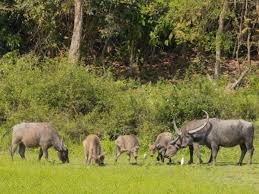
The Wildlife Rewilding Debate India has intensified after authorities translocated wild buffaloes from Kaziranga National Park in Assam to Kanha National Park in Madhya Pradesh. This move has triggered discussions among conservationists, policymakers, and environmentalists about ecological balance, species preservation, and the long-term impact of rewilding initiatives in India.
Urgent Agartala Flyover Safety Concerns Trigger Repair Demands
High School Results Assam Reveal 81.54 Percent Pass Rate
Wildlife Rewilding Debate India Gains Momentum
The recent translocation of wild buffaloes from Kaziranga to Kanha has sparked widespread discussion. The Wildlife Rewilding Debate India now focuses on whether such conservation strategies benefit biodiversity or create new ecological challenges.
Authorities initiated this move to expand the habitat of endangered species and reduce risks associated with limited geographical distribution. However, experts continue to evaluate the long-term outcomes of this decision.
Purpose Behind Buffalo Translocation
Wildlife officials designed the translocation to support species conservation. By relocating buffaloes, authorities aim to establish a secondary population in a different region.
This approach reduces the risk of extinction caused by disease outbreaks, natural disasters, or habitat loss in a single area. Therefore, the Wildlife Rewilding Debate India includes arguments supporting diversification of wildlife populations.
Moreover, Kanha National Park offers a suitable habitat with adequate resources. This factor strengthens the case for relocation.
Concerns Raised by Conservation Experts
Despite the intended benefits, several experts have raised concerns. The Wildlife Rewilding Debate India highlights fears about ecological imbalance in the new habitat.
For instance, introducing a species into a different ecosystem may affect existing flora and fauna. Competition for resources could disrupt local biodiversity.
Additionally, experts question whether the relocated buffaloes will adapt successfully to their new environment. Adaptation challenges can impact survival rates and overall success of the initiative.
Ecological Impact on Kanha National Park
Kanha National Park already hosts diverse wildlife species. The introduction of Kaziranga buffaloes may influence the existing ecological structure.
The Wildlife Rewilding Debate India examines how these changes might affect food chains, grazing patterns, and habitat usage.
Furthermore, monitoring becomes essential to ensure that the new population integrates without causing harm. Authorities must track behavioral patterns and environmental impact closely.
Benefits of Rewilding and Species Expansion
Rewilding initiatives play a crucial role in modern conservation efforts. They help restore ecosystems and protect endangered species.
The Wildlife Rewilding Debate India acknowledges that creating multiple populations increases resilience against threats.
In addition, such efforts can enhance biodiversity and strengthen ecological systems. Successful rewilding projects have shown positive results in various parts of the world.
Challenges in Wildlife Translocation
Wildlife translocation involves complex planning and execution. Authorities must consider factors such as habitat suitability, climate conditions, and species behavior.
The Wildlife Rewilding Debate India also addresses logistical challenges, including transportation, monitoring, and long-term management.
Moreover, human-wildlife conflict may increase if animals move beyond designated areas. This risk requires careful management and community involvement.
Role of Government and Conservation Authorities
Government agencies and wildlife experts play a key role in ensuring the success of such initiatives. They must conduct detailed research and risk assessments before implementing translocation projects.
The Wildlife Rewilding Debate India emphasizes the importance of scientific planning and transparent decision-making.
Authorities must also engage with local communities to address concerns and build support for conservation efforts.
Public Opinion and Environmental Awareness
The debate has attracted public attention and increased awareness about wildlife conservation. People have started discussing the importance of protecting endangered species and maintaining ecological balance.
The Wildlife Rewilding Debate India highlights how such initiatives can educate the public about environmental issues.
Moreover, informed discussions can lead to better policies and stronger conservation strategies in the future.
Long-Term Implications for Conservation
The success or failure of this translocation will influence future conservation projects in India. Authorities will use this case as a reference for similar initiatives.
The Wildlife Rewilding Debate India underscores the need for continuous monitoring and evaluation.
If successful, this project could set a positive example for expanding habitats of endangered species. However, if challenges arise, it may prompt a reassessment of rewilding strategies.
Balancing Conservation and Ecology
Achieving a balance between conservation goals and ecological stability remains essential. Authorities must ensure that efforts to protect one species do not harm others.
The Wildlife Rewilding Debate India ultimately revolves around this balance. Careful planning and adaptive management can help achieve sustainable outcomes.
Conclusion
The translocation of Kaziranga buffaloes to Kanha National Park has sparked a significant conversation about wildlife conservation in India. While the initiative aims to protect and expand endangered species populations, it also raises valid ecological concerns.
The Wildlife Rewilding Debate India reflects the complexity of modern conservation efforts. With proper planning, monitoring, and community involvement, such initiatives can contribute to long-term environmental sustainability.
FAQs
1. Why were Kaziranga buffaloes moved to Kanha National Park?
Authorities relocated them to create a secondary population and reduce extinction risks.
2. What is rewilding in wildlife conservation?
Rewilding involves restoring ecosystems by reintroducing or relocating species to suitable habitats.
3. What concerns have experts raised?
Experts worry about ecological imbalance, adaptation challenges, and impact on local biodiversity.
4. How can authorities ensure success of this project?
They must monitor the animals closely and manage ecological impacts effectively.
5. What is the significance of this debate?
It highlights the challenges and importance of balancing conservation with ecological stability.