





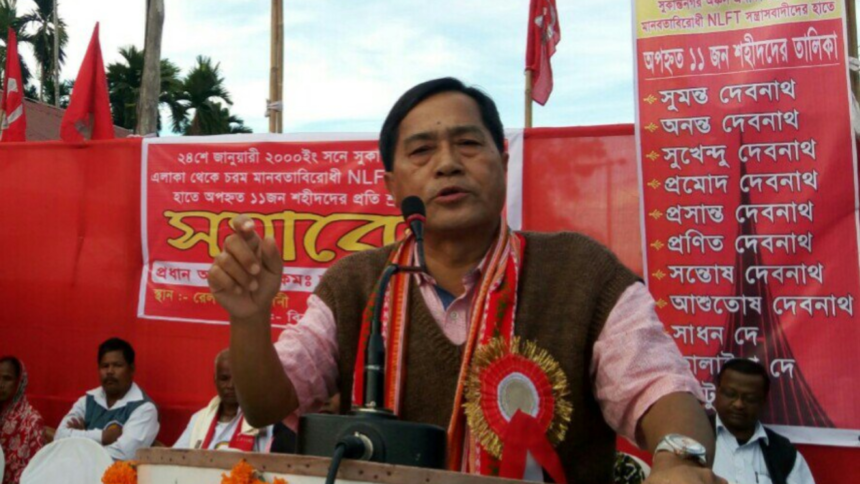
The CPI(M) rejects TIPRA Motha victory narrative emerged after State Secretary Jitendra Chaudhury questioned the regional party’s continued dominance in the Tripura Tribal Areas Autonomous District Council (TTAADC) general elections. Moreover, he alleged that the election outcome had been influenced by the use of black money and polarization. Consequently, the remarks have added a political dimension to discussions surrounding the recently concluded elections. Meanwhile, the results have continued to draw reactions from various political stakeholders across the state.
National Mass Agitation Announced, M.A. Baby Predicts BJP Decline After 2029
Footballers’ Body Slams Player Defamation Over Allegations Against Injured Local Player
CPI(M) Rejects TIPRA Motha Victory Over TTAADC Election Results
The CPI(M) rejects TIPRA Motha victory position was articulated by State Secretary Jitendra Chaudhury, who expressed dissatisfaction with the regional party’s electoral performance in the TTAADC polls. Moreover, he questioned the circumstances surrounding the outcome and raised concerns over the electoral process.
Political parties frequently assess election results and offer their interpretations of the factors influencing voter behavior. Furthermore, post-election reactions are a common feature of democratic processes. As a result, differing perspectives often emerge following the declaration of results.
According to Chaudhury, the continuous electoral success of TIPRA Motha in the TTAADC elections was influenced by factors beyond ordinary political competition. Additionally, he alleged that black money and polarization played a role in shaping the outcome. Therefore, his comments have generated further political debate.
Meanwhile, the election results continue to be discussed among political observers and party leaders. Similarly, stakeholders are expected to evaluate the broader implications of the verdict. Hence, the TTAADC elections remain a significant topic in Tripura’s political landscape.
Although political differences persist, democratic institutions provide avenues for expressing concerns and viewpoints. Nevertheless, continued engagement remains essential.
Jitendra Chaudhury Alleges Use of Black Money and Polarization
The CPI(M) rejects TIPRA Motha victory remarks were accompanied by allegations regarding the use of black money and divisive political strategies. Moreover, Jitendra Chaudhury claimed that these factors influenced the electoral environment.
Election campaigns often become subjects of scrutiny and debate among rival parties. Furthermore, allegations and counter-allegations are common during and after political contests. Consequently, statements from political leaders frequently attract public attention.
Chaudhury’s comments reflect the CPI(M)’s assessment of the electoral process. Additionally, they underscore the party’s concerns regarding the nature of political competition. Therefore, the allegations have added another dimension to the post-election discourse.
Meanwhile, political developments in Tripura continue to evolve. Similarly, parties are expected to analyze the results and prepare future strategies. Hence, discussions surrounding the elections are likely to continue.
Although competing viewpoints may differ, democratic systems allow parties to articulate their positions. Nevertheless, institutional processes remain important.
CPI(M) Rejects TIPRA Motha Victory Amid Continuing Political Debate
The CPI(M) rejects TIPRA Motha victory statement has intensified discussions regarding the significance of the TTAADC elections. Moreover, the outcome has once again highlighted the importance of regional politics in Tripura.
The TTAADC elections hold considerable importance because they influence governance and representation in tribal areas. Furthermore, political developments in the council often carry broader implications for state politics. As a result, reactions to the results have attracted widespread interest.
The CPI(M)’s response reflects ongoing political competition among parties in Tripura. Additionally, the remarks underscore the importance attached to the council elections. Therefore, the issue remains politically significant.
Meanwhile, political leaders continue to engage with supporters and assess future priorities. Similarly, observers are examining the impact of the results on the state’s political dynamics. Hence, the debate surrounding the elections is expected to remain active.
Although electoral outcomes may produce differing reactions, democratic engagement remains fundamental. Nevertheless, constructive dialogue continues to be important.
TTAADC Elections Continue to Shape Tripura Politics
The CPI(M) rejects TIPRA Motha victory controversy illustrates the continuing importance of the TTAADC in Tripura’s political framework. Moreover, developments within the council often influence broader political discussions in the state.
Regional parties and national parties alike consider the council elections to be strategically important. Furthermore, the electoral outcome reflects evolving political trends and public sentiment. Consequently, political leaders continue to closely monitor developments.
The latest remarks from Jitendra Chaudhury have added momentum to ongoing political conversations. Additionally, post-election assessments are expected to influence future strategies. Therefore, the significance of the TTAADC elections extends beyond immediate results.
Meanwhile, stakeholders continue to analyze the implications of the outcome. Similarly, political parties are expected to strengthen organizational efforts in the coming months. Hence, the elections will likely remain an important reference point.
Although political competition remains intense, democratic institutions provide the framework for debate and participation. Nevertheless, continued dialogue remains valuable.
Conclusion
The CPI(M) rejects TIPRA Motha victory position, articulated by State Secretary Jitendra Chaudhury, has brought renewed attention to the TTAADC general elections in Tripura. Moreover, his allegations regarding black money and polarization have intensified political discussions surrounding the outcome. Consequently, the remarks have contributed to the broader post-election debate.
The controversy also highlights the significance of the TTAADC and its role in shaping Tripura’s political landscape. Furthermore, reactions from various stakeholders demonstrate the continuing importance of democratic engagement and political accountability. As a result, the elections are likely to remain a major topic of discussion.
Looking ahead, the CPI(M) rejects TIPRA Motha victory issue is expected to influence political narratives and future electoral strategies. Additionally, continued dialogue among political parties will remain important. Therefore, the TTAADC elections will continue to play a crucial role in Tripura’s evolving political environment.
FAQs
1. Why did CPI(M) reject TIPRA Motha’s victory?
CPI(M) State Secretary Jitendra Chaudhury questioned the outcome of the TTAADC elections and alleged that black money and polarization influenced the results.
2. Who made the allegations against TIPRA Motha?
Moreover, the allegations were made by CPI(M) State Secretary Jitendra Chaudhury.
3. Which election is at the center of the controversy?
The controversy revolves around the Tripura Tribal Areas Autonomous District Council (TTAADC) general elections. Consequently, the results have sparked political debate.
4. What concerns did CPI(M) raise?
CPI(M) alleged that the electoral outcome was engineered through black money and polarization. Furthermore, the party questioned the fairness of the process.
5. Why is the CPI(M) rejects TIPRA Motha victory issue significant?
The issue is significant because it highlights the political importance of the TTAADC elections and reflects ongoing competition among parties in Tripura.