



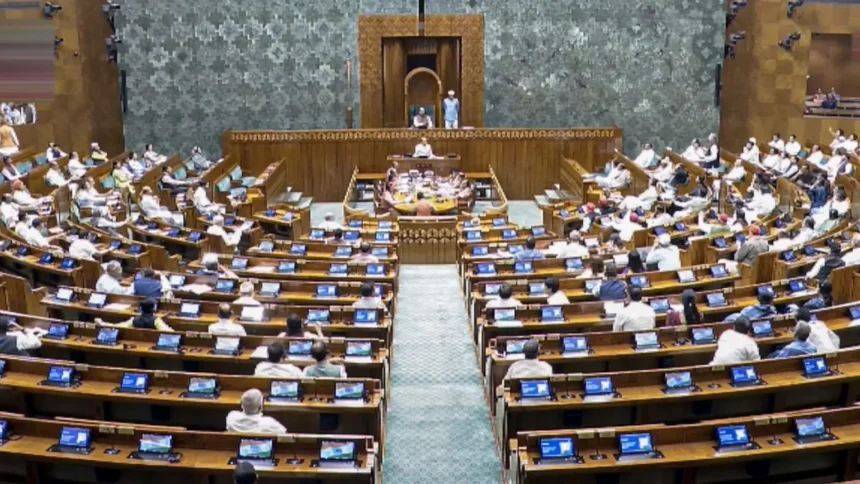
The proposed special delimitation session of Parliament has triggered intense political discussion over the future of constituency boundaries and women’s representation. Reports had suggested that the Central Government could convene Parliament for three days from August 16 to 18, 2026, to consider the Delimitation Bill and measures linked to women’s reservation.
Shillong Parliamentary Vacancy: Electoral Bodies Advance Revision Tracking
However, the government has subsequently denied that it has any proposal for a separate special session on these two issues. Parliamentary Affairs Minister Kiren Rijiju reportedly ruled out an August 16–18 special sitting, adding uncertainty to reports surrounding the proposed session.
The clarification comes as the government continues to engage opposition parties over legislation concerning delimitation and women’s reservation. Moreover, the two issues carry major political implications because changes to constituency boundaries can affect parliamentary representation across states.
Special Delimitation Session Sparks Political Debate
Reports of a three-day special Parliament session initially generated considerable political attention.
The proposed dates of August 16–18 had been linked to efforts to advance legislation concerning delimitation and women’s reservation. Furthermore, the timing would have placed the issues at the centre of parliamentary proceedings during a politically sensitive period.
However, the government has since clarified that it has no proposal for such a dedicated special session. Therefore, the reported August schedule should not be treated as a confirmed parliamentary programme.
The controversy nevertheless demonstrates the importance of the two legislative issues.
Delimitation Bill Remains Politically Sensitive
Delimitation involves the readjustment of electoral constituency boundaries and the allocation of seats among states and Union territories.
The government introduced a Delimitation Bill in April 2026 as part of a wider legislative package connected with women’s reservation. The official bill documents state that the proposed framework would facilitate delimitation and help put women’s reservation provisions into operation.
The issue remains politically sensitive because changes in constituency boundaries can affect the distribution of parliamentary representation.
Moreover, different states and political parties have expressed concerns about how future delimitation could influence their representation.
Women’s Reservation Adds Another Dimension
Women’s reservation forms a major part of the broader legislative discussion.
The government introduced the Constitution (131st Amendment) Bill, 2026, alongside the Delimitation Bill and the Union Territories Laws (Amendment) Bill in April. Official government material said the package sought to enable one-third reservation for women following the proposed changes.
The government has argued that the changes could allow women’s reservation to take effect sooner than waiting for a later delimitation process.
Consequently, delimitation and women’s representation have become closely connected in the government’s legislative strategy.
Government Rules Out August Special Session
The reported August 16–18 session has faced an important setback following the government’s clarification.
Parliamentary Affairs Minister Kiren Rijiju reportedly stated that there was no proposal for a special session from August 16 to 18 to consider the women’s reservation and delimitation measures.
The statement contrasts with earlier reports that suggested the government was considering a dedicated three-day sitting.
Therefore, the immediate focus has shifted from the proposed dates to the government’s broader efforts to build political support for the legislation.
Centre Reaches Out to Opposition
The government has continued efforts to engage opposition parties over the proposed measures.
Reports indicate that the Centre has reached out to Congress and other opposition leaders as it seeks broader support for the delimitation and women’s reservation proposals.
Such consultations could prove important because delimitation has implications extending beyond a single party or election.
Furthermore, opposition parties may seek safeguards concerning the distribution of parliamentary seats and the representation of different regions.
Southern States Raise Representation Concerns
Delimitation has generated particular interest among states concerned about changes in their parliamentary representation.
Population-based redistribution can create political sensitivities because states have experienced different population growth rates. Moreover, states that have invested heavily in population control may question whether future delimitation could reduce their relative influence.
The government has sought to address such concerns during discussions around the proposed reforms.
Therefore, negotiations over delimitation could involve both constitutional questions and broader federal concerns.
Parliament Already Considered the Bills
The current controversy follows major parliamentary developments earlier in 2026.
The government introduced the Constitution (131st Amendment) Bill, the Delimitation Bill, and the Union Territories Laws (Amendment) Bill in April. Official parliamentary material records the introduction of the relevant legislation on April 16.
The legislative package attempted to connect constituency restructuring with the implementation of women’s reservation.
However, the proposed measures faced strong opposition and did not advance as the government initially intended.
Political Stakes Remain High
Even without a confirmed August special session, the issues remain politically significant.
Delimitation can influence the future distribution of Lok Sabha constituencies, while women’s reservation could alter the composition of legislatures. Additionally, the two issues can affect party strategies well beyond the immediate parliamentary debate.
Political parties therefore have strong incentives to examine the proposals carefully.
However, the final outcome will depend on parliamentary negotiations and the government’s ability to secure sufficient support.
Opposition Seeks Greater Clarity
Opposition parties are likely to seek greater clarity on how delimitation would affect different states.
They may also question the methodology used to determine constituency boundaries and seat allocations. Furthermore, parties could seek assurances that regional representation will remain balanced.
These concerns could influence future negotiations.
However, the precise parliamentary strategy of individual opposition parties may evolve as the government provides more details.
Women’s Representation Remains a Major Issue
The proposed changes have also revived debate over women’s political representation.
The government’s legislative package seeks to operationalise one-third reservation for women in the Lok Sabha and state legislatures. Moreover, official government material has described the reforms as a step toward increasing women’s participation in decision-making.
Supporters view the proposal as an important step toward greater representation.
However, political parties continue to debate how and when the reservation should take effect.
What Happens Next?
The immediate question is whether the government will bring the legislation before Parliament through the regular schedule or seek another parliamentary mechanism.
The reported August 16–18 special session currently lacks government confirmation. Therefore, political parties will likely focus instead on consultations and the legislative timetable announced through official parliamentary channels.
Moreover, negotiations could lead to changes in the proposed bills before Parliament considers them again.
Conclusion
The proposed special delimitation session from August 16–18, 2026 has generated significant political attention, but the government has clarified that it has no proposal for a dedicated special session on the Delimitation and Women’s Reservation Bills during those dates.
Moreover, the underlying legislative debate remains active. The government introduced the relevant bills in April as part of an effort to connect delimitation with the implementation of women’s reservation.
Overall, the immediate uncertainty concerns the parliamentary route and timing rather than the importance of the issues themselves. Delimitation, regional representation, and women’s reservation will remain major political questions as the government continues discussions with opposition parties.
FAQs
1. Was a special Parliament session confirmed for August 16–18?
No. Recent statements from Parliamentary Affairs Minister Kiren Rijiju indicate that the government has no proposal for a dedicated August 16–18 special session on these bills.
2. What is the Delimitation Bill about?
The Delimitation Bill concerns the readjustment of parliamentary and assembly constituencies and related allocation of seats.
3. How is women’s reservation connected to delimitation?
The government’s legislative package seeks to connect the implementation of women’s reservation with changes to constituency arrangements.
4. Why is delimitation politically sensitive?
Changes to constituency boundaries and seat allocation can affect the relative parliamentary representation of different states and regions.
5. What happens next?
The government is expected to continue consultations with political parties while determining how and when the proposed legislation should return to Parliament.