




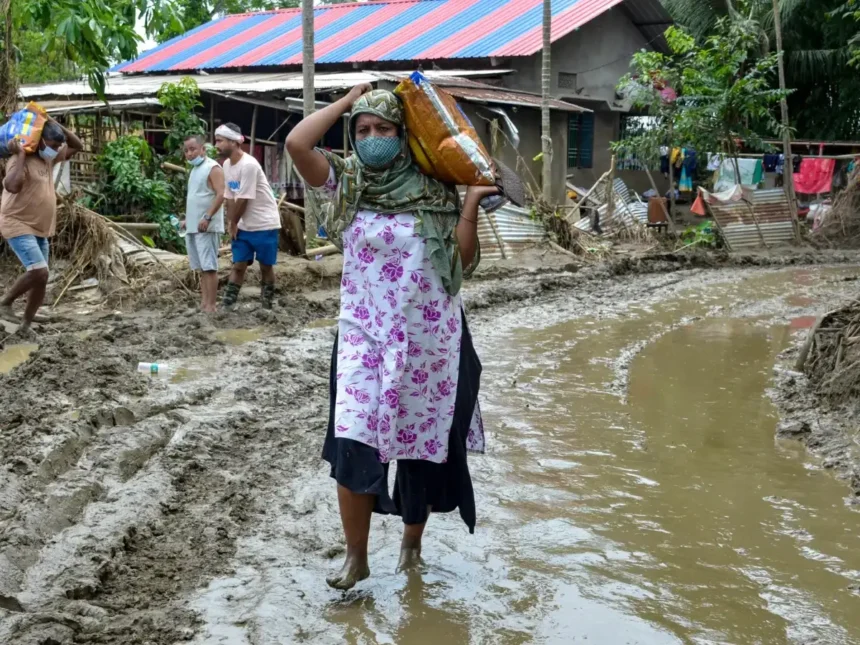
Assam’s official flood-related death toll has reportedly climbed to 98, marking a significant escalation in the human impact of the ongoing disaster. Widespread flooding across rural areas has placed communities under severe pressure as authorities continue rescue, relief, and recovery operations.
The reported fatality figure comes amid extensive displacement, submerged agricultural land, damaged infrastructure, and the expansion of relief efforts across affected districts. Moreover, prolonged flooding can make emergency access more difficult while increasing the demands on district administrations.
The rising death toll underscores the seriousness of the flood emergency. However, the information provided does not include a district-wise breakdown of fatalities, the causes recorded in individual cases, or the latest number of people requiring rescue.
Assam Reviews Flood Mapping After Worst-Hit Districts
Assam Flood Death Toll Reaches 98
The official flood-related fatality count in Assam has reportedly reached 98.
The increase reflects the severity of the flooding across affected communities. Furthermore, fatalities can rise as authorities receive updated reports from remote and rural areas where communication and transportation remain difficult.
Officials therefore need to maintain accurate reporting as emergency operations continue.
However, the available information does not provide a detailed district-wise breakdown of the 98 deaths.
Rural Communities Face Severe Flooding
Widespread flooding has reportedly affected numerous rural areas across Assam.
Rural communities can face particular challenges when roads, bridges, and communication networks become inaccessible. Additionally, residents living near rivers and low-lying areas may have limited options for reaching safer locations quickly.
These conditions can complicate rescue and evacuation operations.
However, the information provided does not identify the specific rural areas experiencing the greatest losses.
Displacement Adds to the Humanitarian Impact
The reported fatalities form part of a much broader humanitarian crisis.
Large numbers of residents have reportedly faced displacement, while relief camps continue to shelter vulnerable citizens. Moreover, families affected by flooding may lose homes, belongings, crops, livestock, and other sources of income.
The combined impact can extend well beyond the immediate emergency.
However, the number of displaced residents continues to change as authorities update their assessments.
Flooded Farmland Increases Economic Pressure
Agricultural communities have also suffered major losses.
More than 14,000 hectares of cropland have reportedly remained underwater, creating risks for crops, soil, farm infrastructure, and rural incomes. Furthermore, prolonged flooding can delay agricultural recovery even after water levels decline.
Farmers may therefore face continuing economic difficulties.
However, the final value of agricultural losses remains unclear.
Relief Operations Continue
District administrations are reportedly operating designated relief camps for people displaced by flooding.
These centres can provide temporary shelter, food, drinking water, sanitation, and healthcare support. Additionally, emergency teams may need to deliver supplies directly to communities that cannot reach relief facilities.
Maintaining these services remains essential while flood conditions persist.
However, the available information does not provide the latest district-wise relief requirements.
Emergency Access Remains Difficult
Floodwaters can disrupt transportation across rural areas.
Damaged or submerged roads can slow rescue teams and prevent essential supplies from reaching isolated communities. Moreover, rising water levels can make previously accessible routes unsafe.
Authorities therefore need to monitor transportation routes continuously.
However, the specific number of inaccessible roads or bridges has not been provided.
Families of Victims Need Support
Families who lose relatives during a disaster can face immediate emotional and financial difficulties.
The Assam government has reportedly moved to accelerate ex-gratia assistance for eligible next of kin through direct bank transfers. Furthermore, authorities have reportedly eased certain administrative procedures to reduce delays for bereaved families.
These measures could provide quicker access to government assistance.
However, the number of families currently receiving such assistance has not been specified.
Accurate Fatality Reporting Matters
Maintaining accurate casualty figures remains important during a large-scale disaster.
Authorities need to verify reports from hospitals, police, district administrations, and local officials before updating official totals. Additionally, accurate records can help determine relief requirements and compensation eligibility.
Reliable reporting can therefore support both emergency management and recovery planning.
However, the reported total may change as officials continue verifying cases.
River Levels Remain Important
The continuing flood situation depends heavily on rainfall and river conditions.
Several rivers across Assam can rise rapidly when heavy rainfall occurs upstream. Moreover, saturated soil and already flooded low-lying areas can increase the impact of additional precipitation.
Authorities therefore need continuous monitoring of river levels and rainfall forecasts.
However, the information provided does not include current readings for all major rivers.
Healthcare Response Remains Necessary
Flood emergencies can place additional pressure on healthcare systems.
Medical teams may need to support displaced residents, monitor sanitation conditions, and maintain access to essential medicines. Furthermore, damaged transportation routes can make it harder for patients to reach hospitals.
Maintaining mobile and local medical support can therefore become important.
However, no comprehensive figure for flood-related medical cases has been provided.
Long-Term Recovery Will Be Necessary
The effects of the disaster will continue after floodwaters recede.
Families may need to repair homes, replace belongings, restore agricultural activities, and rebuild damaged infrastructure. Additionally, authorities may need to assess roads, bridges, embankments, schools, and public facilities.
Recovery could therefore require significant time and resources.
However, no complete recovery plan has been announced in the information provided.
Authorities Face Continued Pressure
The rising death toll adds urgency to the broader emergency response.
Officials must balance rescue operations with relief distribution, healthcare support, damage assessment, and preparations for recovery. Moreover, changing weather conditions can force authorities to adjust plans quickly.
Strong coordination remains essential.
However, the future trajectory of the flood emergency depends on rainfall and river conditions.
What Happens Next?
Authorities are expected to continue rescue and relief operations while monitoring flood conditions across Assam.
Officials may update the fatality figure as reports from affected districts undergo verification. Furthermore, relief arrangements could expand if additional communities require evacuation or shelter.
The situation will remain closely linked to rainfall patterns and river levels.
However, the available information does not provide a forecast for when the flood emergency will end.
Conclusion
The reported Assam flood death toll of 98 highlights the severe human cost of widespread flooding across rural communities. The rising fatality figure comes alongside major displacement, agricultural losses, property damage, and continued pressure on emergency services.
Moreover, authorities must maintain accurate casualty reporting while providing shelter, healthcare, food, and financial assistance to affected families. At the same time, sustained river monitoring and timely warnings remain essential as flood conditions continue to evolve.
Overall, the 98 flood fatalities in Assam underscore the scale of the disaster and the need for continued rescue operations, humanitarian support, and long-term recovery planning.
FAQs
1. What is Assam’s reported flood death toll?
The official flood-related death toll has reportedly reached 98 casualties.
2. What has contributed to the rising impact?
Widespread flooding across rural areas has disrupted communities, infrastructure, agriculture, and transportation.
3. Are relief operations still continuing?
Yes. Authorities are reportedly continuing relief and emergency operations across affected areas.
4. How are families of flood victims being supported?
The government has reportedly moved to accelerate ex-gratia assistance and simplify certain administrative procedures for eligible families.
5. Could the death toll change?
Yes. Officials may revise the figure as they verify reports from affected districts and receive additional information.