




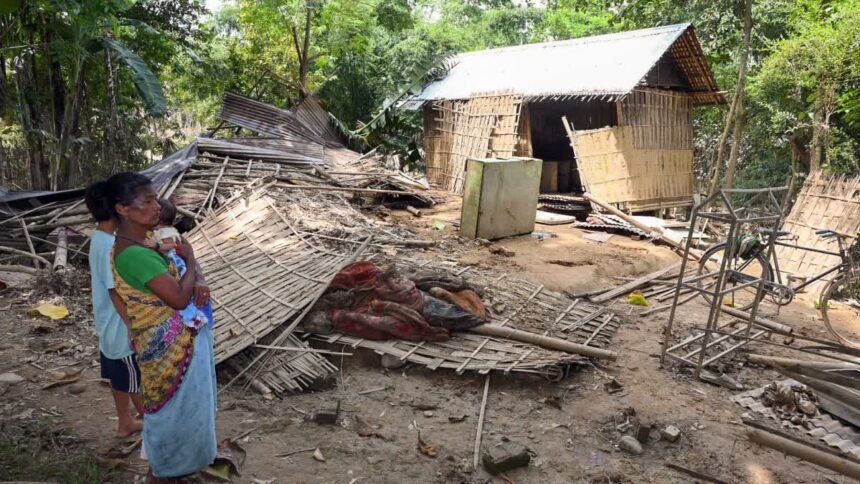
More than 14,000 hectares of agricultural cropland in Assam have reportedly suffered extensive damage after remaining submerged under floodwater. The affected area represents a major agricultural loss and highlights the wider economic impact of the ongoing flood situation across the state.
The reported farmland area is roughly comparable to 1.5 times the size of Paris. Moreover, prolonged waterlogging can damage standing crops, delay planting, erode fertile soil, and disrupt the livelihoods of farming communities that depend heavily on agriculture.
The scale of the reported damage has increased concerns about food production and rural incomes. However, the available information does not identify the specific districts affected, the crops involved, or the estimated financial value of the agricultural losses.
Assam Reviews Flood Mapping After Worst-Hit Districts
14,000 Hectares of Cropland Affected
More than 14,000 hectares of agricultural land have reportedly remained underwater.
The scale of the affected area demonstrates the seriousness of the flood’s impact on Assam’s farming sector. Furthermore, prolonged submergence can prevent farmers from accessing fields and carrying out routine agricultural activities.
The damage can therefore extend beyond the immediate loss of standing crops.
However, authorities have not provided a district-wise breakdown of the affected farmland in the information available.
Floodwater Damages Agricultural Production
Floodwater can cause extensive damage when it remains over cropland for prolonged periods.
Standing crops may become submerged, while excessive moisture can affect roots and soil structure. Additionally, farmers may lose valuable planting windows if fields remain inaccessible after water levels decline.
These effects can create economic difficulties for farming households.
However, the specific crops affected by the reported flooding have not been identified.
Rural Livelihoods Face Pressure
Agriculture provides an important source of income for many rural households.
When farmland remains underwater, farmers can lose expected earnings from crops while also facing additional expenses for seeds, fertilisers, labour, and future cultivation. Moreover, repeated flooding can make recovery more difficult for households with limited financial resources.
The agricultural impact can therefore continue beyond the flood period.
However, the available information does not estimate the number of farming families affected.
Soil Conditions May Deteriorate
Flooding can also affect the physical condition of agricultural soil.
Strong water movement can remove topsoil, while prolonged saturation can alter soil structure and nutrient availability. Furthermore, deposited sediment can either damage farmland or provide useful nutrients depending on its composition and thickness.
Farmers may therefore require soil assessments before restarting cultivation.
However, no information has been provided about the condition of the affected soil.
Agricultural Recovery Could Take Time
Farmers may need time to restore damaged fields after floodwaters recede.
They may have to clear debris, repair field boundaries, assess soil conditions, and replant crops. Additionally, the availability of seeds and other agricultural inputs can influence how quickly cultivation resumes.
Recovery therefore depends on more than simply removing floodwater.
However, no official recovery timeline has been provided.
Food Production Faces Uncertainty
Large-scale cropland damage can create concerns about local agricultural output.
If significant areas remain unusable, farmers may miss important cultivation periods. Moreover, reduced production can affect local markets and household food security.
Authorities may therefore need to monitor agricultural conditions closely.
However, the reported 14,000-hectare figure alone does not establish the overall effect on Assam’s food supply.
Flooding Disrupts Farm Infrastructure
Floodwater can damage more than crops.
Farm roads, irrigation channels, storage facilities, pumps, fencing, and other agricultural infrastructure may also require repairs. Furthermore, transportation difficulties can make it harder for farmers to access markets and obtain essential inputs.
Agricultural recovery may therefore require infrastructure support.
However, no assessment of infrastructure damage has been provided.
Livestock Can Also Face Risks
Flood emergencies can affect livestock alongside cropland.
Farmers may struggle to find dry areas, feed, and safe transportation for animals. Additionally, prolonged exposure to contaminated water can increase health risks for livestock.
Relief planning may therefore need to consider both crop and animal-based livelihoods.
However, the available information does not provide figures for livestock losses.
Government Support Could Aid Recovery
Affected farmers may require assistance after floodwaters recede.
Authorities can assess crop losses and consider support through agricultural relief programmes, input assistance, or rehabilitation measures. Moreover, timely support can help farmers restart cultivation before the next agricultural cycle.
Accurate damage assessments can guide these decisions.
However, no specific compensation package has been identified in the information provided.
Accurate Crop Damage Assessments Matter
Officials need reliable field data to determine the scale of agricultural losses.
Teams can use satellite imagery, local surveys, crop records, and field inspections to identify submerged areas. Furthermore, updated assessments can help authorities prioritise assistance for the worst-affected farming communities.
Accurate information can therefore strengthen recovery planning.
However, the reported figure does not include a detailed methodology for calculating the affected area.
Climate and Flood Risks Add Complexity
Repeated flooding can create long-term challenges for agricultural planning.
Farmers may need to consider crop varieties, planting schedules, drainage improvements, and other adaptation measures. Additionally, authorities can use historical flood data and updated weather information to identify areas that face recurring risks.
Such planning can improve agricultural resilience.
However, individual farmers may face different conditions depending on their location and crop type.
Rural Markets Could Feel the Impact
Agricultural losses can affect local markets as well as individual farmers.
Reduced harvests may influence the availability and prices of certain crops. Moreover, farmers who lose production may reduce spending in local markets, affecting other rural businesses.
The economic effects can therefore spread beyond farmland.
However, no market-price impact has been reported in the information provided.
What Happens Next?
Authorities are expected to assess agricultural losses as floodwaters recede.
Officials may identify damaged fields, estimate crop losses, and determine which farmers require immediate support. Furthermore, agricultural departments may need to coordinate with disaster-management agencies to accelerate recovery.
The pace of recovery will depend heavily on how quickly water levels decline.
However, the available information does not provide a specific timeline for agricultural rehabilitation.
Conclusion
The reported cropland devastation in Assam has left more than 14,000 hectares of agricultural land underwater, creating significant concerns for farmers and rural communities. The affected area, described as roughly 1.5 times the size of Paris, demonstrates the substantial geographic scale of the reported agricultural damage.
Moreover, prolonged flooding can destroy crops, disrupt planting schedules, damage farm infrastructure, and affect rural incomes. Therefore, detailed crop assessments, soil evaluations, infrastructure repairs, and timely agricultural assistance will remain important as floodwaters recede.
Overall, the 14,000-hectare cropland loss highlights the wider economic consequences of Assam’s ongoing flood emergency and the need for effective agricultural recovery planning.
FAQs
1. How much agricultural land has reportedly been affected?
More than 14,000 hectares of cropland have reportedly remained underwater.
2. Why is prolonged flooding harmful to farmland?
It can damage crops, affect soil conditions, disrupt planting schedules, and prevent farmers from accessing their fields.
3. How can farmers recover after flooding?
Recovery may involve clearing debris, assessing soil, repairing infrastructure, obtaining agricultural inputs, and replanting suitable crops.
4. Could the damage affect local food production?
Potentially, especially if large areas remain unusable during important cultivation periods. However, the overall food-production impact requires further assessment.
5. Will affected farmers receive assistance?
The available information does not specify a particular compensation or agricultural recovery package.