




The Assam government has reportedly directed officials to fast-track ex-gratia financial assistance for the next of kin of people who died during the ongoing flood emergency. Under the reported approach, authorities will use direct bank transfers to deliver immediate compensation without waiting for traditional block-level reports.
The move aims to reduce delays in providing financial support to bereaved families during the disaster. Moreover, direct transfers can help simplify the payment process by sending approved assistance directly to eligible bank accounts.
The reported decision reflects an effort to make disaster compensation faster and more accessible. However, the available information does not specify the compensation amount, eligibility conditions, or the number of families expected to receive the payments.
Assam Reviews Flood Mapping After Worst-Hit Districts
Government Prioritises Faster Compensation
The state government has reportedly instructed officials to accelerate ex-gratia payments to eligible families.
Traditional administrative procedures can require multiple levels of verification before authorities release financial assistance. Furthermore, waiting for block-level reports can delay support during emergencies when families may already face significant financial pressures.
The reported approach seeks to shorten that process.
However, authorities have not provided a specific timeline for completing the transfers.
Direct Bank Transfers Could Reduce Delays
The reported payment mechanism relies on direct bank transfers.
Direct transfers can allow approved compensation to reach beneficiaries without requiring them to collect payments through multiple administrative channels. Additionally, electronic payments can improve transparency by creating a clear transaction record.
The approach may therefore make emergency assistance more efficient.
However, successful transfers depend on accurate beneficiary and bank-account information.
Next of Kin Receive Priority
The reported measure focuses on the next of kin of people who died during the flood emergency.
Families facing sudden loss may also encounter immediate financial difficulties. Moreover, rapid compensation can provide some short-term support while relatives manage funeral expenses and other household needs.
Authorities therefore appear to be prioritising these families.
However, the available information does not identify the number of eligible next-of-kin beneficiaries.
Traditional Reports May Not Be Required First
The reported system seeks to avoid waiting for conventional block-level reports before initiating assistance.
This could reduce administrative delays during a rapidly developing disaster. Furthermore, officials may rely on alternative verification mechanisms to establish eligibility before approving payments.
Such a system can allow assistance to move more quickly.
However, the precise verification process under the new approach has not been provided.
Disaster Compensation Requires Verification
Even when governments accelerate payments, authorities need reliable information to prevent errors.
Officials may verify deaths, family relationships, identity documents, and bank-account details before releasing funds. Additionally, accurate records can help prevent duplicate payments or transfers to incorrect beneficiaries.
Verification therefore remains important alongside speed.
However, the specific documentation requirements have not been detailed.
Digital Payments Improve Transparency
Bank transfers can create electronic records for each transaction.
Such records can help departments track payments and identify unresolved cases. Moreover, digital systems can reduce dependence on physical paperwork and repeated visits to government offices.
This can be particularly useful during emergencies when transportation remains difficult.
However, beneficiaries without functioning bank accounts may still require additional assistance.
Flood Conditions Increase Urgency
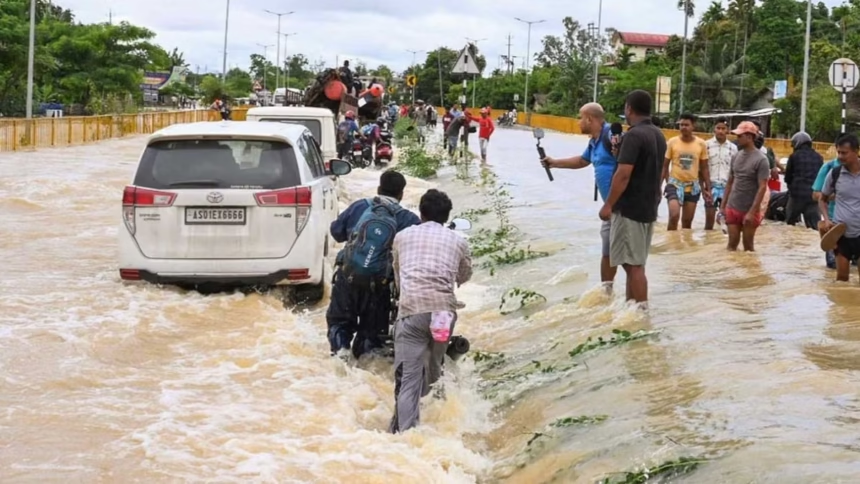
The reported decision comes amid widespread flooding across Assam.
Displacement, property damage, agricultural losses, and disruption to livelihoods can place considerable pressure on affected families. Furthermore, families that lose relatives during the emergency may face both emotional and financial challenges.
Faster compensation can therefore become an important part of the humanitarian response.
However, the available information does not establish how many flood-related deaths qualify for compensation.
Administrative Coordination Remains Essential
Fast-tracked payments require coordination among several government departments.
District administrations, disaster-management authorities, revenue officials, banks, and other agencies may need to share information. Additionally, accurate communication can help officials identify eligible families and resolve documentation problems.
Effective coordination can reduce payment delays.
However, the specific departments involved in the reported process have not been identified.
Bank Access Can Affect Delivery
Direct transfers depend on functioning banking infrastructure.
Flooding can disrupt access to bank branches, ATMs, and local financial services. Moreover, some beneficiaries may face difficulties if their account details contain errors or if accounts require updating.
Authorities may therefore need mechanisms to resolve payment-related problems.
However, no information has been provided about support for beneficiaries facing banking difficulties.
Families May Need Wider Assistance
Financial compensation represents only one component of disaster support.
Bereaved families may also require healthcare assistance, counselling, livelihood support, housing assistance, or help restoring damaged property. Furthermore, communities affected by flooding may need broader rehabilitation after the emergency ends.
Ex-gratia payments can provide immediate assistance while longer-term measures address wider losses.
However, no additional support package has been specified in the information provided.
Payment Tracking Can Strengthen Accountability
Authorities can monitor the progress of direct transfers through digital payment records.
Tracking can help identify approved cases that remain unpaid and resolve discrepancies more quickly. Additionally, transparent reporting can help demonstrate whether assistance reaches eligible beneficiaries.
Such monitoring can strengthen public confidence in emergency compensation systems.
However, no public payment-tracking figures have been provided.
What Happens Next?
Officials are expected to identify eligible next-of-kin beneficiaries and process their compensation through direct bank transfers.
Authorities may need to update beneficiary records and resolve documentation or banking issues before completing all payments. Moreover, the government could provide further details about the amount and coverage of the ex-gratia assistance.
The effectiveness of the measure will depend on how quickly verified beneficiaries receive the funds.
However, no specific payment deadline has been announced in the available information.
Conclusion
The reported ex-gratia fast-track in Assam aims to accelerate financial assistance for the next of kin of people who died during the flood emergency. By using direct bank transfers without waiting for traditional block-level reports, the government seeks to reduce administrative delays and deliver support more quickly.
Moreover, electronic payments can improve transparency and create clear transaction records while reducing paperwork. At the same time, authorities must maintain accurate verification to ensure that compensation reaches the correct beneficiaries.
Overall, the fast-tracked ex-gratia payments represent an effort to provide quicker financial support to bereaved families during Assam’s continuing flood emergency.
FAQs
1. Who will receive the reported ex-gratia assistance?
The reported measure targets the next of kin of people who died during the flood emergency.
2. How will the compensation reach beneficiaries?
Authorities reportedly plan to transfer the assistance directly into eligible bank accounts.
3. Why is the government changing the process?
The reported objective is to reduce delays caused by waiting for traditional block-level reports.
4. Will authorities still verify beneficiaries?
Verification remains important to confirm eligibility and ensure that payments reach the correct families.
5. Has the compensation amount been announced?
The information provided does not specify the amount of financial assistance for each eligible family.