




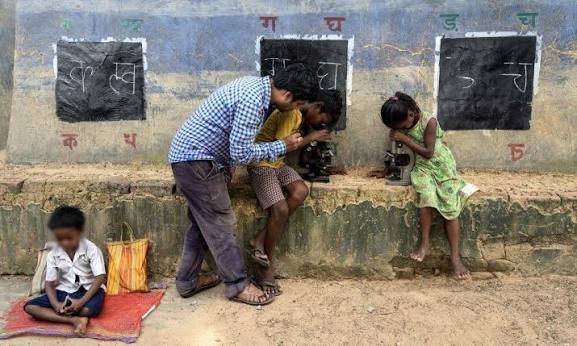
Local teachers in Najira have reportedly established makeshift open-air classrooms on dry highway dividers while school buildings remain affected by flooding. The initiative allows students to continue learning despite disruptions to regular classroom facilities.
The temporary lessons provide an alternative learning space for children unable to return to their flooded schools. Moreover, the teachers’ effort demonstrates how local communities can adapt educational activities during emergencies.
The roadside classrooms form part of wider community efforts to maintain education during flood conditions. However, the available information does not specify the number of students attending, the number of teachers involved, or how long the temporary classrooms will operate.
Meghalaya Forms Multi-Departmental Taskforce to Deliver Flags
Teachers Move Classes Outdoors
Teachers in Najira have reportedly shifted lessons to dry sections of highway dividers.
The makeshift classrooms provide students with a temporary place to study while school buildings remain flooded. Furthermore, outdoor teaching allows education to continue without waiting for classrooms to become accessible.
The initiative offers an immediate response to the disruption.
However, outdoor classrooms cannot provide the same facilities and protection as permanent school buildings.
Flooded Schools Disrupt Education
Flooding can prevent students and teachers from accessing school buildings.
Water can damage classrooms, books, furniture, electrical systems, and other educational resources. Additionally, families may face transportation difficulties when roads and local routes remain affected.
These challenges can interrupt regular lessons.
The roadside initiative attempts to reduce some of that disruption.
However, the broader condition of schools in Najira remains unclear.
Highway Dividers Become Temporary Classrooms
Teachers have reportedly selected dry highway dividers as temporary learning spaces.
These areas provide accessible open ground when conventional classrooms remain unavailable. Moreover, the approach allows teachers to organise students in a central location without requiring a permanent structure.
The unusual setting reflects the urgency created by the flooding.
However, highway locations can present safety and environmental challenges that require careful management.
Students Continue Their Lessons
The makeshift classrooms allow students to maintain some continuity in their studies.
Regular lessons can help children remain connected with their academic routines during prolonged school closures. Furthermore, continuing education can provide students with a sense of normalcy during a disruptive period.
Teachers can adapt lessons to the available surroundings.
However, the range of activities may remain limited without classroom equipment and teaching materials.
Teachers Show Community Resilience
The initiative highlights the role of teachers during emergencies.
Rather than completely suspending classes, local educators have reportedly found an alternative location for lessons. Additionally, their effort demonstrates flexibility when communities face damage to essential infrastructure.
Such local responses can help reduce educational disruption.
However, teachers may need additional support if temporary classes continue for an extended period.
Educational Materials Remain Important
Outdoor classes still require basic learning resources.
Students may need textbooks, notebooks, writing materials, and teaching aids. Moreover, recent flooding may have damaged some of these materials, creating additional challenges for teachers.
Community recovery efforts can therefore support the temporary classrooms.
However, the availability of educational supplies in Najira has not been detailed.
Safety Must Remain a Priority
Holding classes near highways requires careful attention to student safety.
Teachers and local authorities may need to establish safe boundaries between students and moving vehicles. Furthermore, traffic conditions can change quickly, especially when emergency and relief vehicles use affected routes.
Safety arrangements are therefore essential.
However, no specific safety measures for the reported roadside classrooms have been provided.
Weather Can Affect Outdoor Classes
Open-air education also depends heavily on weather conditions.
Rainfall, strong winds, extreme heat, or renewed flooding can interrupt lessons. Additionally, students may require shaded areas and access to drinking water during outdoor classes.
Teachers may therefore need flexible arrangements.
However, the duration of the temporary classrooms remains unknown.
Community Support Could Help
Local residents can play an important role in supporting temporary education.
Community members may provide mats, writing materials, drinking water, shade, or other basic resources. Moreover, local coordination can help teachers identify safe locations for students.
Such support can make temporary classes more practical.
However, long-term educational recovery requires broader institutional assistance.
Schools Need Restoration
Roadside classrooms can provide short-term continuity, but students ultimately need functioning school buildings.
Authorities may need to remove floodwater, clean classrooms, repair damaged infrastructure, and restore electricity and sanitation. Furthermore, schools may require replacement furniture and educational materials.
Restoration will therefore remain a key priority.
However, no timeline for reopening the affected school buildings has been provided.
Education During Emergency Conditions
The Najira initiative demonstrates how education can continue under difficult circumstances.
Emergency learning arrangements can reduce the amount of instructional time students lose during disasters. Additionally, maintaining contact between teachers and students can make the eventual return to permanent classrooms easier.
The effort therefore carries importance beyond the immediate lessons.
However, temporary education should complement, rather than replace, efforts to restore permanent schools.
What Happens Next?
Teachers are expected to continue adapting lessons according to local conditions while school buildings remain affected by flooding.
Local authorities and communities may need to provide safe spaces and educational materials as the situation develops. Moreover, restoring schools will allow students to return to more suitable learning environments.
The transition back to regular classrooms will depend on flood recovery.
However, the available information does not establish a reopening date.
Conclusion
The reported Najira roadside classrooms demonstrate how local teachers are adapting to severe educational disruption caused by flooding. By setting up makeshift open-air schools on dry highway dividers, educators are helping students continue their lessons while school buildings remain inaccessible.
Moreover, the initiative highlights community resilience and the importance of maintaining educational continuity during emergencies. At the same time, outdoor classes require careful attention to traffic safety, weather conditions, learning materials, and student welfare.
Overall, the roadside classrooms provide a temporary solution for flood-affected students while authorities and communities work toward restoring permanent school facilities.
FAQs
1. Where have the temporary classrooms been established?
Teachers in Najira have reportedly established makeshift classrooms on dry highway dividers.
2. Why are students learning outdoors?
The regular school buildings remain affected by flooding, preventing normal classroom activities.
3. Who is conducting the temporary classes?
Local teachers are reportedly organising and conducting the open-air lessons.
4. What challenges do roadside classrooms face?
Traffic safety, weather, limited teaching facilities, and access to educational materials can create challenges.
5. Will students return to regular classrooms?
The temporary arrangement is intended to maintain learning until affected school buildings become accessible and safe again.