




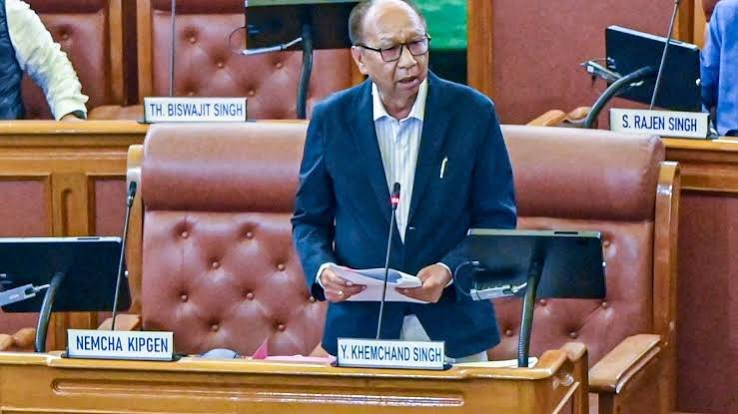
~Deputy Chief Minister Nemcha Kipgen has announced a new budget-balancing protocol aimed at ensuring more equal funding distribution between valley and hill councils. The reported policy seeks to create a more balanced approach to development spending across different administrative regions.
The announcement comes as the government focuses on improving coordination between hill and valley areas. Moreover, a funding framework that considers both regions could help address concerns over uneven development and resource allocation.
The proposed protocol could influence how government departments plan and distribute development funds. However, the precise formula, implementation timeline, and total financial allocation under the new mechanism have not been detailed in the information provided.
Bishnupur Militant Arrests: Four Cadres Held in Manipur Security Crackdown
Kipgen Announces Funding Protocol
Deputy Chief Minister Nemcha Kipgen has announced the new budget-balancing mechanism.
The policy aims to establish a more equitable approach to distributing development funds between valley and hill councils. Furthermore, the framework could give officials a clearer structure when planning regional expenditure.
The announcement places financial balance at the centre of the government’s development strategy.
However, officials have not yet disclosed all operational details of the protocol.
Valley and Hill Areas Included
The proposed framework covers both valley and hill administrative areas.
Manipur’s geographical and administrative diversity creates different development requirements across regions. Additionally, infrastructure, connectivity, public services, and economic needs can vary significantly between hill and valley communities.
A balanced funding policy could therefore account for these differing requirements.
However, equal funding does not necessarily mean identical spending in every area.
Budget Balancing Aims to Reduce Gaps
The reported policy seeks to address concerns over unequal development spending.
A more systematic allocation mechanism could help officials identify areas receiving comparatively fewer resources. Moreover, transparent budgeting can make it easier to evaluate whether public investment reaches different regions fairly.
This could support a more balanced development process.
However, the government will need to establish clear criteria for measuring funding equity.
Equal Distribution Does Not Mean Identical Allocation
Regional development needs can differ considerably.
Some areas may require greater investment in roads, bridges, healthcare, education, or public infrastructure because of geographical challenges. Furthermore, hill regions may face higher logistical costs for delivering public projects.
Therefore, a balanced funding protocol may need to consider both population and development requirements.
However, the precise indicators that the government will use remain unclear.
Councils Could Gain Greater Financial Attention
Hill and valley councils can play an important role in implementing local development initiatives.
Greater attention to funding distribution could help councils plan projects according to local priorities. Additionally, predictable allocations can make it easier for local authorities to prepare development proposals and coordinate implementation.
This could strengthen local-level planning.
However, the extent of financial authority available to individual councils under the new protocol has not been specified.
Infrastructure Could Benefit
Balanced funding could support infrastructure development across regions.
Road connectivity, public buildings, water systems, healthcare facilities, and other essential infrastructure often require sustained investment. Moreover, addressing gaps in infrastructure can improve access to government services and economic opportunities.
The new policy could therefore have implications for long-term development planning.
However, actual benefits will depend on how authorities implement and monitor the funding mechanism.
Transparent Allocation Could Improve Trust
Clear financial rules can help reduce uncertainty over government spending.
If officials publish allocation criteria and expenditure details, communities can better understand how development funds reach different areas. Furthermore, transparent budgeting can strengthen accountability among departments and local authorities.
This can contribute to greater public confidence.
However, transparency will depend on regular reporting and effective monitoring.
Regional Priorities Remain Important
A balanced funding system must consider the specific needs of different communities.
Hill and valley areas can face distinct challenges related to geography, transportation, employment, education, and public services. Additionally, local councils can provide information that helps state authorities identify priority projects.
This can make funding decisions more responsive.
However, balancing competing regional demands will remain a complex administrative task.
Implementation Will Determine Impact
The success of the policy will depend largely on how officials translate the announcement into budget procedures.
Departments may need to revise planning methods, establish allocation benchmarks, and monitor expenditure across regions. Moreover, authorities could require regular reviews to determine whether the mechanism is reducing development gaps.
Effective implementation can turn the policy into measurable outcomes.
However, no detailed implementation schedule has been provided.
Monitoring Could Support Accountability
A new funding mechanism requires regular monitoring.
Authorities can compare planned allocations with actual expenditure and evaluate whether projects reach their intended beneficiaries. Furthermore, financial reviews can identify delays, underutilisation, or regional imbalances.
Such monitoring can strengthen the policy’s effectiveness.
However, the government has not yet announced a specific monitoring framework.
Policy Could Shape Future Budgets
If implemented consistently, the new protocol could influence future state development budgets.
Departments may need to consider regional balance while preparing annual proposals. Additionally, councils could receive greater clarity about the resources available for local development projects.
This could make regional funding a more visible part of budget planning.
However, future allocations will depend on government decisions and available resources.
What Happens Next?
The government is expected to work out the operational details of the budget-balancing protocol.
Officials may establish allocation criteria, identify priority sectors, and determine how councils will participate in the process. Moreover, departments may need to coordinate their budgets to ensure that the policy applies consistently across regions.
The implementation stage will therefore be crucial.
However, further details will be necessary to determine how the protocol will function in practice.
Conclusion
Deputy Chief Minister Nemcha Kipgen’s equal development policy introduces a reported budget-balancing protocol designed to promote more equitable funding between Manipur’s hill and valley councils. The approach aims to address regional development differences while creating a more structured framework for public spending.
Moreover, transparent allocation criteria and regular monitoring could strengthen the policy’s impact and improve public confidence. At the same time, authorities must recognise that equal development does not always require identical funding, as different regions face different infrastructure and service-delivery challenges.
Overall, the equal development policy could become an important component of regional budget planning if the government establishes clear criteria, transparent procedures, and effective implementation mechanisms.
FAQs
1. Who announced the new funding protocol?
Deputy Chief Minister Nemcha Kipgen announced the reported budget-balancing protocol.
2. Which regions does the policy cover?
The policy aims to ensure more balanced funding between hill and valley councils.
3. Does equal funding mean every council receives the same amount?
Not necessarily. Different regions can have different development requirements and project costs.
4. Why is balanced funding important?
A more equitable funding system can help address regional development gaps and improve access to infrastructure and public services.
5. What happens next?
Authorities will need to establish the allocation formula, implementation procedures, and monitoring mechanisms before the policy can produce measurable results.