



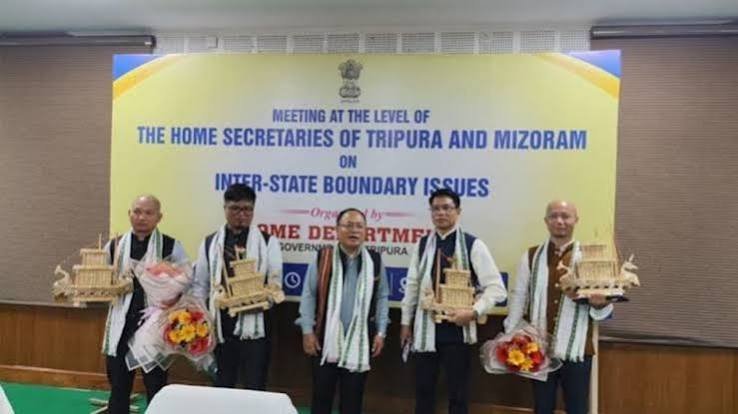
The Tripura-Mizoram border status quo has gained renewed administrative backing after senior officials from the two northeastern states held high-level talks in Agartala. The meeting focused on the long-pending boundary dispute, with both sides agreeing to maintain the existing position while pursuing a peaceful and mutually acceptable solution. The discussions also opened the way for joint technical examination and future demarcation.
The talks brought together senior officials, including Home Secretaries, Revenue Secretaries, District Magistrates and Superintendents of Police from the two states. Moreover, the sides agreed that routine development activities in the border areas would continue. Any future demarcation exercise will involve the Survey of India.
Gopal Roy Demands Puja Grants for Tripura Clubs
Tripura-Mizoram Border Status Quo Becomes Immediate Understanding
The Tripura-Mizoram border status quo represents an interim administrative understanding rather than a final settlement of the boundary dispute. Both governments have agreed to avoid unilateral changes in the disputed areas while officials work through records, surveys and further consultations.
The latest meeting took place at the State Guest House in Agartala on September 10. It followed renewed political-level communication between Tripura Chief Minister Manik Saha and Mizoram Chief Minister Lalduhoma during the North Eastern Council meeting in Shillong. Both leaders had discussed the need to address the long-standing issue through dialogue.
Chief Minister Manik Saha later said officials from Mizoram had arrived in Tripura for preliminary discussions. He also expressed confidence that the two states could eventually find a solution through dialogue and mutual understanding.
However, the Chief Minister clarified that he had not initially received the complete details of the officials’ discussions. Therefore, the current agreement should be viewed as an early step in a longer process rather than as the conclusion of negotiations.
The immediate priority remains maintaining peace and administrative stability along the disputed sections. Consequently, the status quo provides both governments with time to examine historical records and coordinate their next steps without creating fresh tensions on the ground.
Joint Technical Team to Examine Boundary Records
A major outcome of the talks involves the proposed formation of a Joint Technical Team. The team will include officials from the Directorate of Land Records and Settlement of both states as well as the Survey of India’s Guwahati office.
The team will first examine available land records before any future field-level survey takes place. This approach could help both governments compare documentary evidence and identify areas where the records or interpretations differ.
Furthermore, the Survey of India will play a central technical role in the future demarcation process. Officials have agreed that any fresh demarcation should involve the national surveying agency rather than proceed through unilateral action by either state.
The proposed technical mechanism also includes regular meetings. According to reports, the Survey of India will convene Joint Technical Team meetings every fortnight at its Silchar office. The objective will be to work toward consensus on border-related land records before any future field demarcation.
Both states will additionally nominate nodal officers for regular communication. Their role will help maintain contact between the administrations and address emerging issues without waiting for high-level political meetings.
This structure could make the process more systematic. Instead of treating each disagreement as a separate political issue, officials can first examine records, technical evidence and field information before placing unresolved matters before higher authorities.
Phuldungsei Remains Central to the Boundary Dispute
The latest discussions also bring renewed attention to Phuldungsei, a village in the border region that has emerged as a key point of disagreement between Tripura and Mizoram. Both states claim the area as part of their respective territories.
The broader Tripura-Mizoram boundary extends for around 109 kilometres. The dispute has remained unresolved for decades, making administrative coordination particularly important for communities living in the border areas.
Recent developments have created fresh momentum for dialogue. Earlier in 2026, Chief Minister Manik Saha proposed that senior officials from both states should first examine the issue before the two Chief Ministers hold a dedicated meeting. Mizoram Chief Minister Lalduhoma agreed to continue the dialogue.
Moreover, officials are expected to examine issues beyond physical demarcation. Previous plans for the high-level discussions included administrative coordination, law and order, challenges faced by residents and development activities in border areas.
The latest understanding to continue routine development activities is therefore significant for local administration. It indicates that the boundary disagreement will not automatically halt normal government work in areas where people depend on public services and infrastructure.
At the same time, development activities in disputed areas can remain sensitive. Maintaining communication between the two administrations can help prevent misunderstandings and allow concerns to be addressed through established channels.
Officials Seek Peaceful and Permanent Resolution
The Tripura-Mizoram border status quo is intended to create a stable environment while both governments continue their search for a lasting settlement. Officials from both sides have emphasised dialogue, coordination and technical examination rather than confrontation.
The approach also reflects a broader emphasis on administrative coordination along Tripura’s border areas. In June 2026, Union Home Minister Amit Shah chaired a meeting in Tripura that included the Chief Minister, Chief Secretary, DGP and District Magistrates and Superintendents of Police from the state’s border districts. The meeting stressed coordinated border management involving state administration, police and other agencies.
The Tripura-Mizoram issue, however, remains a separate inter-state boundary matter. Its resolution requires agreement between the two state governments and careful examination of the relevant records and physical boundaries.
Another Home Secretary-level meeting between Tripura and Mizoram is expected in Aizawl after two months. This planned follow-up indicates that the latest Agartala meeting is part of an ongoing consultation process rather than a one-time engagement.
Meanwhile, the Joint Technical Team could provide the next important stage of the process. If the two sides can develop consensus around land records, future field surveys may proceed with clearer technical parameters.
The eventual objective remains a peaceful, mutually acceptable and durable resolution. Until that process reaches a final agreement, maintaining the status quo can help prevent fresh disputes while officials continue their work.
Conclusion
The Tripura-Mizoram border status quo now forms the immediate framework for managing the long-standing inter-state boundary dispute. Senior officials from both states have agreed to maintain the existing position, continue routine development activities and pursue further discussions through administrative and technical channels.
The proposed Joint Technical Team will examine land records with the involvement of the Survey of India. Additionally, designated nodal officers and regular technical meetings are expected to improve communication between the two administrations.
The understanding does not settle the boundary dispute. Instead, it creates a structured process for addressing the disagreement while protecting peace and administrative stability along the border.
With another Home Secretary-level meeting expected in Aizawl, the next phase will focus on documentary examination, technical coordination and preparation for any future joint field survey. The continued commitment to dialogue could provide a stronger foundation for a permanent settlement.
FAQs
What does the Tripura-Mizoram border status quo mean?
It means both states have agreed to maintain the existing position in the disputed border areas while they continue discussions and technical examination aimed at finding a lasting solution.
When did Tripura and Mizoram hold their latest border talks?
Senior officials from the two states held the latest high-level meeting in Agartala on September 10, 2026.
What role will the Survey of India play?
The Survey of India will participate in examining land records and any future joint demarcation exercise. It is also expected to convene meetings of the Joint Technical Team.
What is the Joint Technical Team?
It is a proposed technical body involving the land-record authorities of Tripura and Mizoram and the Survey of India’s Guwahati office. It will examine available records before future field surveys.
Has the Tripura-Mizoram border dispute been resolved?
No. The latest agreement is an interim understanding to maintain the status quo while both states pursue further discussions, technical assessments and eventual demarcation.