



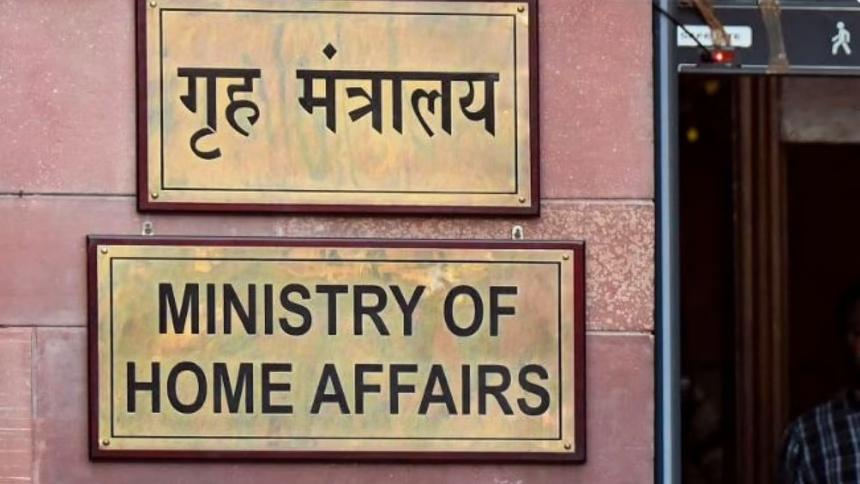
The Manipur Nagaland AFSPA extension has taken effect from October 1, 2026, following fresh notifications from the Union Ministry of Home Affairs. The Centre has continued the “disturbed area” status in specified parts of Manipur and Nagaland for another six months. The orders followed a review of the prevailing law and order situation.
In Manipur, the notification covers the entire state except areas under 13 police stations across five districts. In Nagaland, the extension covers nine districts and specified areas under 21 police stations in five other districts. The notifications will remain effective until March 31, 2027, unless withdrawn earlier.
Malem Thongam’s Kashmir-to-Mizoram Peace Ride Gains Local Support
Manipur Nagaland AFSPA Extension Covers Key Areas
The Manipur Nagaland AFSPA extension keeps the special law in force across most of Manipur. The Centre has excluded 13 police-station jurisdictions from the disturbed-area declaration, continuing the partial relaxation that has developed over recent years.
The exempted areas include six police stations in Imphal West, three in Imphal East, and one each in Thoubal, Bishnupur and Kakching districts. The specific exclusions cover Imphal, Lamphel, City, Singjamei, Patsoi and Wangoi in Imphal West.
In Imphal East, the Porompat, Heingang and Irilbung police-station areas remain outside the latest declaration. Thoubal, Bishnupur, Nambol and Kakching are also among the excluded police-station jurisdictions. Consequently, the latest order does not impose the disturbed-area status uniformly across every part of Manipur.
The extension comes amid continuing security concerns in Manipur. The Centre has repeatedly reviewed the geographical scope of AFSPA, with areas removed from its coverage at different stages as authorities assess local security conditions.
Manipur Nagaland AFSPA Extension Continues in Nagaland
The Manipur Nagaland AFSPA extension also continues the disturbed-area declaration across nine Nagaland districts. The covered districts are Dimapur, Niuland, Chumoukedima, Mon, Kiphire, Noklak, Phek, Peren and Meluri.
The latest notification additionally covers areas under 21 police stations in five other districts. These include Kohima, Mokokchung, Longleng, Wokha and Zunheboto. Therefore, the order applies to both entire districts and specified police-station jurisdictions.
The Centre cited its further review of the law and order situation as the basis for the six-month extension. Under Section 3 of AFSPA, the Central government can declare an area “disturbed” when it considers the use of armed forces necessary to assist civil authorities.
Nagaland has seen a gradual reduction in the geographical application of AFSPA over time. However, the latest notification shows that the Centre continues to consider several districts and localities significant from a security perspective.
The extension also comes against the backdrop of the long-running political dialogue over the Naga issue. Security arrangements and negotiations have developed alongside one another, making the continued application of AFSPA an important issue in the state’s wider political environment.
Manipur Nagaland AFSPA Extension Follows Security Review
The Manipur Nagaland AFSPA extension follows the Union government’s regular assessment of security conditions in the Northeast. The MHA has said that significant progress has occurred in reducing the geographical reach of the law over the years.
A March 2026 MHA report noted that AFSPA remained applicable in nine Nagaland districts and 21 police-station areas in five other districts. It also recorded its application in Manipur after exclusions covering 13 police stations in five districts. The report described the broader reduction in AFSPA coverage as evidence of improved security conditions in the Northeast.
The Union government has also previously highlighted a substantial decline in insurgency-related violence across the region. A 2024 PIB statement said insurgency incidents had fallen by 71% between 2014 and 2023, while civilian fatalities declined by 82% during the same period.
At the same time, the continued extension in selected areas indicates that the government considers local security conditions sufficiently serious to retain the legal framework. The six-month duration allows authorities to reassess the situation before deciding whether to continue, reduce or withdraw the declaration.
The latest orders therefore reflect a mixed picture. While the overall application of AFSPA has narrowed compared with earlier years, the law remains active across substantial areas of Manipur and Nagaland.
Manipur Nagaland AFSPA Extension Retains Special Powers
The Manipur Nagaland AFSPA extension means that armed forces operating in the notified disturbed areas continue to receive special powers provided under the 1958 Act. These powers operate within the statutory framework and are intended to assist civil authorities in maintaining public order and addressing security threats.
AFSPA allows specified armed forces personnel to exercise powers such as arrest without a warrant and use force in circumstances defined by the Act. The continuation therefore has direct implications for security operations in areas where the notification remains applicable.
The law has also remained a subject of public and political debate in the Northeast. Supporters argue that it provides security forces with a legal framework for operating in areas affected by insurgency or serious unrest. Critics have raised concerns about accountability and the scope of powers granted to security personnel.
The Centre’s latest decision does not extend AFSPA uniformly across all northeastern states. Instead, the current framework reflects a state- and area-specific approach, with Tripura and Meghalaya no longer under AFSPA and other states facing more limited coverage.
For Manipur and Nagaland, the next six months will therefore remain important for assessing whether security conditions permit further reductions. Any future changes will depend on subsequent reviews and government notifications.
Conclusion
The Manipur Nagaland AFSPA extension will remain in force for six months from October 1, 2026, unless the Centre withdraws it earlier. Most of Manipur remains covered, while 13 police-station areas are excluded. In Nagaland, nine districts and specified areas under 21 police stations in five other districts remain under the law.
The latest decision follows another review of the law and order situation and highlights the continuing security challenges in parts of the Northeast. At the same time, the limited geographical application compared with earlier years shows the gradual reduction in AFSPA coverage across the region.
FAQs
What is the Manipur Nagaland AFSPA extension?
The Manipur Nagaland AFSPA extension is the Union government’s decision to continue the disturbed-area status under AFSPA for another six months from October 1, 2026. The order covers specified areas of both states.
How long will the latest AFSPA extension remain effective?
The latest notifications remain effective for six months from October 1, 2026, unless the government withdraws them earlier. The current period therefore extends to March 31, 2027.
Which parts of Manipur are excluded from AFSPA?
Areas under 13 police stations across five districts are excluded. These include specified police-station jurisdictions in Imphal West, Imphal East, Thoubal, Bishnupur and Kakching.
Which Nagaland districts remain under AFSPA?
Nine districts remain covered: Dimapur, Niuland, Chumoukedima, Mon, Kiphire, Noklak, Phek, Peren and Meluri. Specified areas under 21 police stations in five additional districts are also included.
Why did the Centre extend AFSPA?
The MHA said the extension followed a further review of the law and order situation in the affected states. The government can review the declaration again and withdraw or modify it before the six-month period ends.