





The Manipur attack that killed three people and injured three others has renewed tensions in the state after suspected armed assailants opened fire on civilians collecting firewood near the Imphal East–Kangpokpi district border on October 19. The incident triggered protests in Imphal, where angry residents brought two victims’ bodies to the gate of Chief Minister Yumnam Khemchand Singh’s official residence.
The chief minister visited the injured at a hospital but left without answering media questions, drawing attention amid public anger over the killings. However, Singh later met the bereaved families on October 26 and assured them of government assistance, following demands for accountability and growing pressure from local organisations. PTIFeed+2
Manipur attack leaves three dead and three injured
The attack occurred on the morning of October 19 when a group of villagers went to the hills to collect firewood. According to officials, around 16 people had travelled to the area when armed assailants allegedly ambushed them and opened fire.
The incident claimed the lives of Arubam Ronil, 35, Lairenlakpam Inaobi, 51, and Kshetrimayum Sushil, 32. Two victims reportedly died at the scene, while the third succumbed to his injuries at a private hospital.
Three other people, identified as Ngangom Suraj, Meisnam Somendro and Bonson Khingdram, sustained injuries and received medical treatment in Imphal.
Additionally, reports indicated that three members of the group were missing after the incident. Security personnel rushed to the area following the shooting, while authorities worked to establish the circumstances surrounding the attack.
The incident occurred in a sensitive region along the Imphal East–Kangpokpi periphery, where continuing tensions have raised concerns about civilian safety. PTIFeed+1
Protests erupt outside Manipur CM’s residence
The killings sparked anger among residents, who brought two victims’ bodies to the main gate of the chief minister’s official bungalow in Babupara, Imphal. The protest reflected growing frustration over the continuing violence and demands for stronger protection for civilians.
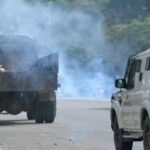
Police and security personnel moved to control the situation. Authorities used tear gas to disperse protesters, and officials later shifted the bodies to the mortuary at the Jawaharlal Nehru Institute of Medical Sciences.
Meanwhile, security was tightened around the chief minister’s residence and along nearby roads. Protesters also blocked a road at Khurai Lamlong, while women staged a demonstration at Ema Keithel, a major market in Imphal.
Several markets and shops across the state capital reportedly shut following the killings. Consequently, the attack quickly became a wider public order concern, extending beyond the location where the shooting occurred. The Tribune+2
Chief Minister Khemchand Singh faces questions
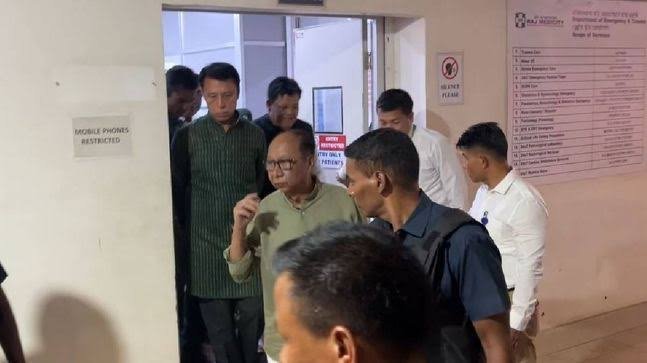
Chief Minister Yumnam Khemchand Singh visited the injured at a private hospital after the protests outside his residence. He met the victims and their family members but did not respond to questions from reporters before leaving.
His silence came as residents demanded accountability and questioned the authorities’ ability to prevent further attacks. However, the chief minister subsequently met the families of all three deceased victims at Nongshum on October 26.
During that visit, Singh expressed condolences and assured the bereaved families that the state government would provide all possible assistance. He also met representatives of the Joint Action Committee (JAC), formed in connection with the incident.
The JAC had demanded visits from the chief minister and other political leaders to the victims’ homes. After those demands remained unmet by its deadline, the committee announced a statewide shutdown beginning October 26.
The committee also sought greater accountability over the security situation. The developments placed renewed pressure on the state government to address public concerns and support the affected families. India Today NE+1
Security concerns grow after fresh Manipur attack
The latest Manipur attack has highlighted continuing concerns about safety in areas affected by ethnic tensions. The state has experienced prolonged unrest since May 2023, with violence and mistrust between communities complicating efforts to restore normalcy.
However, investigators must establish the identities of the attackers and determine their motive. Allegations about the involvement of particular groups should not be treated as established facts without confirmation from the authorities.
Security forces face the immediate challenge of preventing further violence while ensuring that residents can move safely through vulnerable areas. Moreover, officials must address concerns raised by local communities without allowing the incident to trigger retaliatory attacks.
The situation also underlines the importance of timely communication between the administration and residents. Clear information about investigations, security measures and assistance for victims’ families could help address public concerns.
Manipur attack puts focus on peace and accountability
The deaths of three civilians and injuries to three others have intensified demands for security and justice in Manipur. The protests following the shooting show the depth of public anger, while the subsequent meetings between the chief minister and affected families indicate efforts to address some of those concerns.
Nevertheless, restoring confidence will require more than assurances. Authorities must investigate the attack, establish responsibility and take appropriate action based on the evidence.
Overall, the Manipur attack has renewed questions about civilian protection and the state’s wider peace efforts. Preventing further violence and ensuring accountability will remain essential as officials respond to the incident and its aftermath.