





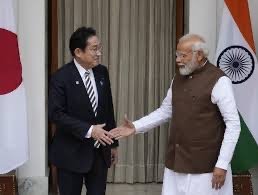
In a recent statement, Japanese ambassador Hiroshi Suzuki expressed Japan’s belief that the participation of Indian Prime Minister Narendra Modi in the G7 Summit would foster synergy between the G7 and G20 processes. The ambassador emphasized the importance of addressing the concerns of the Global South, and saw Modi’s involvement as a step towards achieving that goal.
The G7 Summit, comprised of the world’s seven largest advanced economies, serves as a forum for leaders to discuss and coordinate on a wide range of global issues. Meanwhile, the G20 Summit brings together the leaders of both advanced and emerging economies, aiming to promote international economic cooperation. By bridging the two processes, Japan hopes to create a more comprehensive and inclusive platform for addressing global challenges.
Prime Minister Modi’s presence at the G7 Summit signifies India’s increasing role and influence on the world stage. As one of the largest economies and most populous countries in the Global South, India’s perspective and insights are crucial in shaping global policies. Japan recognizes this significance and believes that Modi’s participation will amplify the voices of the Global South within the G7 framework.
One of the key objectives of this synergy is to prioritize and address the issues faced by developing nations. The Global South, encompassing countries from Africa, Asia, Latin America, and the Caribbean, confronts unique challenges such as poverty, healthcare, climate change, and infrastructure development. By bringing these concerns to the forefront, the G7 and G20 can develop more inclusive and effective strategies to tackle these issues.
Japan, as the host of the G20 Summit in 2019, has demonstrated its commitment to promoting global cooperation and understanding. Building on that foundation, the country seeks to strengthen the bonds between the G7 and G20, leveraging the unique perspectives and capabilities of each forum. The ambassador highlighted that Japan values the G7’s role in addressing global issues, but acknowledges the need for broader representation and perspectives that the G20 offers.
Furthermore, Japan’s emphasis on bridging the G7 and G20 processes aligns with its vision of a free and open Indo-Pacific region. The Indo-Pacific, spanning from the eastern coast of Africa to the western coast of the Americas, is a dynamic and strategically significant area. By integrating the G7 and G20 frameworks, Japan aims to foster greater cooperation among nations in this region, promoting stability, economic growth, and a rules-based order.
Japanese ambassador Hiroshi Suzuki believes that Prime Minister Modi’s participation in the G7 Summit will facilitate synergy between the G7 and G20 processes, particularly in addressing the concerns of the Global South. This collaboration seeks to enhance global cooperation, with a focus on the unique challenges faced by developing nations. Japan’s commitment to creating a more inclusive platform aligns with its broader vision of a free and open Indo-Pacific region. By leveraging the strengths and perspectives of both forums, Japan aims to tackle global issues more effectively and foster greater international understanding and collaboration.