




By using this site, you agree to the Privacy Policy and Terms of Use.
Accept
Hindustan PioneerHindustan Pioneer
  • Home
  • Business
  • News
  • Education
  • Entertainment
  • Lifestyle
  • Travel
  • Web Stories
Reading: Supreme Court Hears Article 370 Case: J&K Reorganisation Not Unprecedented
Share
Notification Show More
Latest News
Shutdown Imposed in Parts of Kangpokpi After Arson Attack on K. Songlung Village
January 27, 2026
Mizoram CM Lalduhoma Launches ‘Mizoram CSR Connect’ Portal to Boost CSR Investments
January 27, 2026
Assam CM Himanta Biswa Sarma Highlights Investment Opportunities at WEF 2026
January 22, 2026
Muanpuii Saiawi Appointed India’s Next High Commissioner to New Zealand
January 22, 2026
Golden Competitions 2026 Conclude Successfully at Maghey Sankranti Mela in Sikkim
January 21, 2026
Aa
Aa
Hindustan PioneerHindustan Pioneer
  • Home
  • Business
  • News
  • Education
  • Entertainment
  • Lifestyle
  • Travel
  • Web Stories
Follow US
  • Advertise
  • Editorial Policy
  • Contact Us
© 2022 Foxiz News Network. Ruby Design Company. All Rights Reserved.
Home » Blog » Supreme Court Hears Article 370 Case: J&K Reorganisation Not Unprecedented
Misc

Supreme Court Hears Article 370 Case: J&K Reorganisation Not Unprecedented

Rudrakshi Gupta
By Rudrakshi Gupta 3 Min Read Published August 31, 2023
Share
Supreme Court Hears Article 370 Case: J&K Reorganisation Not Unprecedented
SHARE

August 31, 2023

Contents
Introduction CJI Provides ClarificationConclusion 

Introduction 

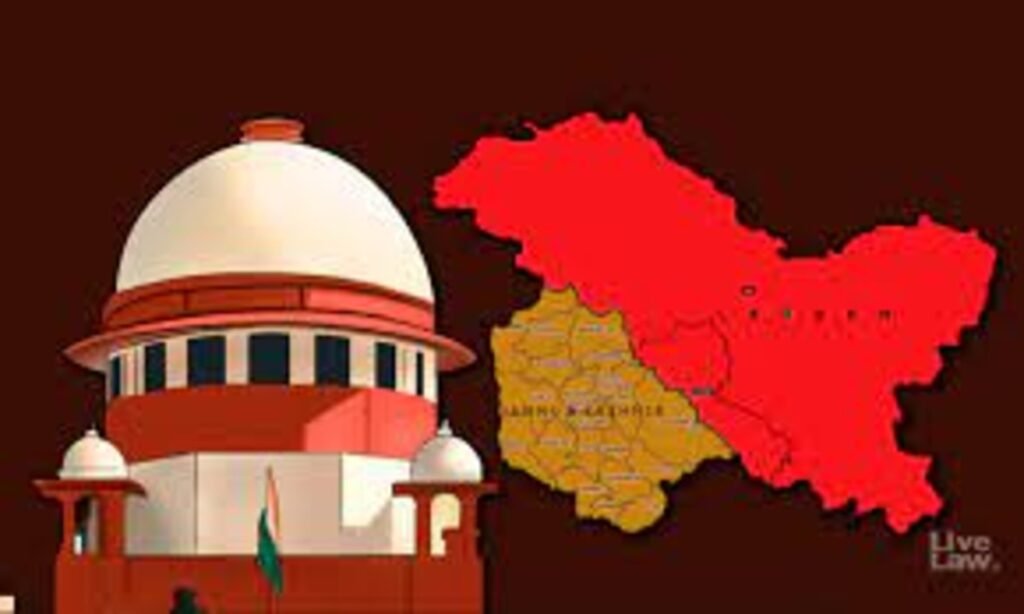
In an ongoing legal battle, the Supreme Court of India heard petitions challenging the abrogation of Article 370 for the twelfth consecutive day. During the proceedings, the apex court observed that the reorganization of Jammu and Kashmir was not an isolated incident, pointing out comparable cases in other Indian states. The hearing saw Solicitor General Tushar Mehta representing the government, defending the unique circumstances surrounding the reorganization.
Supreme Court Hears Article 370 Case: J&K Reorganisation Not Unprecedented

The five-judge bench, consisting of Chief Justice of India DY Chandrachud, Justices Sanjay Kishan Kaul, Sanjiv Khanna, BR Gavai, and Surya Kant, noted that the case of Jammu and Kashmir’s bifurcation was not unprecedented. Solicitor General Mehta emphasized the strategic significance of the region due to its history of terrorism, infiltration, and external influences from neighboring countries. He argued that these factors necessitated specific considerations in the reorganization process.

Justice Kaul, however, countered this argument by citing instances in other Indian states that share borders with neighboring countries. He pointed out that states like Punjab and the North East have faced similar challenges and reorganizations in the past. This brought into question the assertion that Jammu and Kashmir’s situation was truly unique.

The court also explored the need for a blueprint to ensure the power of reorganization. So that it would not be misused in the future. Solicitor General Mehta highlighted the complexities of Jammu and Kashmir’s history and ongoing challenges, such as stone pelting, strikes, deaths, and terror attacks. He underlined the efforts to integrate the region into the mainstream, including democratic local self-governance and youth empowerment.

CJI Provides Clarification

In response, Chief Justice Chandrachud sought clarification on the assertion that Jammu and Kashmir’s situation was one of a kind. The Chief Justice emphasized the need for fairness and consistency in treating various border states. Solicitor General Mehta acknowledged the complexities but maintained that the specific circumstances of Jammu and Kashmir justified its unique treatment.

During the proceedings, the Indian government also informed the Supreme Court that the ‘Union territory’ status of Jammu and Kashmir was not intended to be permanent. The court expressed interest in a roadmap to restore electoral democracy in the region, indicating the judiciary’s focus on ensuring the return to normalcy and democratic governance.

Conclusion 

As the hearings continues the Supreme Court’s deliberations on the Article 370 case are closely being watched. By all legal experts, policymakers, and the public alike.

The court’s eventual ruling is expected to have far-reaching implications for the future of Jammu and Kashmir. It can also potentially influence the treatment of other Indian states in similar situations.

You Might Also Like

Protests Erupt in Dhubri: Relocated Liquor Shop Near Temple Sparks Tension

ARWS Event in Mechukha: Arunachal Prepares for Global Racing

Hornbill Festival 2025 Concludes with a Spectacular Display of Naga Culture

Arunachal Pradesh Intercepts Nearly 9,000 Illegal Entries Amid ILP 3.0 Reforms

Bengal Voter Roll Mismatch Issue

Rudrakshi Gupta August 31, 2023
Share this Article
Facebook Twitter Whatsapp Whatsapp LinkedIn Copy Link
Previous Article Snacks and Treats Homemade Energy Bars: Creating Nutrient-Packed Snacks at Home
Next Article Snacks and Treats Chia Pudding Pleasures: Omega-3-Rich Desserts for Health
Leave a comment

Leave a Reply Cancel reply

You must be logged in to post a comment.

Stay Connected

- Advertisement -

Latest News

Shutdown Imposed in Parts of Kangpokpi After Arson Attack on K. Songlung Village
News
Mizoram CM Lalduhoma Launches ‘Mizoram CSR Connect’ Portal to Boost CSR Investments
News
Assam CM Himanta Biswa Sarma Highlights Investment Opportunities at WEF 2026
News
Muanpuii Saiawi Appointed India’s Next High Commissioner to New Zealand
News

© 2022-2025 Hindustan Pioneer. All Rights Reserved.

  • About Us
  • Editorial Policy
  • Our Team
  • Contact Us

Removed from reading list

Undo
Welcome Back!

Sign in to your account

Lost your password?