





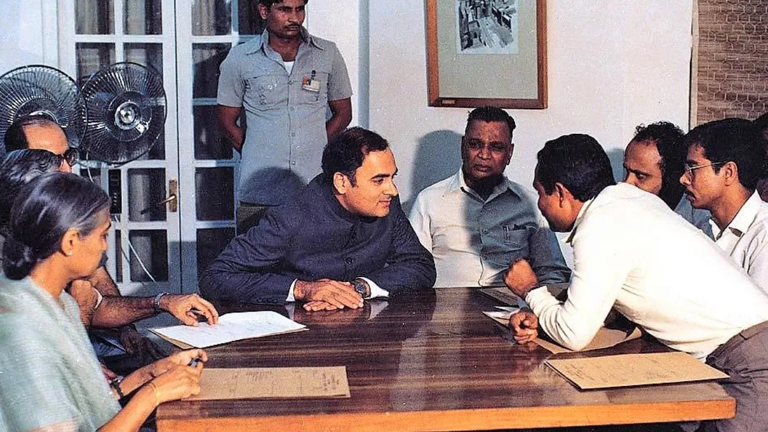
The Assam Accord explained remains central to understanding the state’s political landscape, even four decades after it was signed. The agreement, which aimed to address the issue of illegal immigration and protect the identity of the Assamese people, continues to influence electoral narratives and public discourse. Despite its historic significance, many of its promises remain unfulfilled, making it a recurring issue in every election.
Read More: Tipra Motha Acting Like Opposition Despite Cabinet Role: Manik Saha
What is the Assam Accord?
The Assam Accord was signed on August 15, 1985, between the Government of India and leaders of the Assam Movement. The movement, led by student groups like the All Assam Students’ Union (AASU), had demanded the detection and deportation of illegal immigrants.
The Accord set March 24, 1971, as the cut-off date for identifying foreigners in Assam. Those who entered the state after this date were to be detected and expelled, while those who arrived before it were to be granted citizenship.
In addition, the agreement included provisions to safeguard Assamese culture, language, and identity. It also promised economic development and political protection for the people of the state.
Why Was the Accord Necessary?
The Assam Movement, which lasted from 1979 to 1985, emerged from widespread concerns over illegal immigration, particularly from neighbouring regions. Many locals feared that unchecked migration would alter the demographic balance and threaten their cultural identity.
The movement saw massive protests, strikes, and political mobilisation. It eventually led to negotiations with the central government, culminating in the signing of the Assam Accord.
The Assam Accord explained in this context represents an attempt to resolve a deeply sensitive issue through political consensus.
Key Provisions of the Accord
The Accord included several important clauses aimed at addressing both immediate and long-term concerns:
First, it established the 1971 cut-off date for citizenship. This became the basis for identifying illegal immigrants.
Second, it promised constitutional safeguards to protect Assamese identity. This included measures related to land rights, cultural preservation, and political representation.
Third, the Accord outlined economic development initiatives to improve infrastructure and create employment opportunities.
Finally, it called for strengthening border security to prevent future illegal immigration.
These provisions were meant to provide a comprehensive solution. However, implementation has remained a challenge.
Implementation Challenges Over the Years
Despite its ambitious goals, the Assam Accord has faced significant hurdles in implementation. One of the biggest challenges has been identifying and deporting illegal immigrants.
The process requires extensive documentation and verification, which has often led to delays and disputes. Over the years, various mechanisms have been introduced, but results have been mixed.
The updating of the National Register of Citizens (NRC) was seen as a major step towards implementing the Accord. However, it too faced criticism and controversy, highlighting the complexities involved.
The Assam Accord explained thus becomes a story of intent versus execution.
Clause 6 and the Identity Debate
One of the most debated aspects of the Accord is Clause 6, which promises safeguards for the Assamese people. This clause aims to protect their cultural, social, and linguistic identity.
However, defining who qualifies as “Assamese” has been a contentious issue. Different groups have differing views, making it difficult to reach a consensus.
Various committees have been formed to recommend measures for implementing Clause 6. Yet, progress has been slow, and the issue remains unresolved.
This uncertainty continues to fuel political debates, especially during elections.
Political Significance in Elections
The Assam Accord remains a powerful political tool. Political parties frequently invoke it to appeal to voters concerned about identity and immigration.
During election campaigns, leaders often promise to fully implement the Accord. However, the lack of concrete progress has led to skepticism among voters.
The Assam Accord explained in electoral terms shows how historical agreements can shape contemporary politics. It continues to influence voter behaviour and party strategies.
Moreover, the issue of illegal immigration remains a sensitive topic, making it central to political discourse in the state.
Impact on Society and Governance
The unresolved issues surrounding the Accord have had a lasting impact on society. Debates over citizenship and identity have sometimes led to tensions among different communities.
At the same time, the prolonged implementation process has affected governance. Resources and administrative efforts have been heavily invested in addressing these issues.
The Assam Accord explained also highlights the challenges of balancing legal, social, and political considerations in policymaking.
Recent Developments and Ongoing Debates
In recent years, the government has taken steps to address some aspects of the Accord. However, many issues remain unresolved.
Discussions around border security, citizenship verification, and identity protection continue to dominate public discourse. These debates are often intensified during election periods.
The Assam Accord explained today reflects both progress and persistent challenges. While some measures have been implemented, others remain pending.
Why the Accord Still Matters
Even after 40 years, the Assam Accord continues to be relevant. It represents a commitment to addressing complex issues that affect the state’s future.
For many people in Assam, the Accord is not just a historical document but a promise that has yet to be fully realised. Its provisions continue to shape expectations from governments.
The Assam Accord explained serves as a reminder of the importance of effective implementation and sustained political will.
Conclusion
The Assam Accord remains a defining element of Assam’s political and social landscape. Signed in 1985 to address illegal immigration and protect identity, it continues to influence elections and public discourse.
Despite its significance, many of its promises remain unfulfilled. This has kept the issue alive in political debates, making it a recurring theme in every election.
As Assam moves forward, the challenge lies in translating the Accord’s provisions into reality. Only then can the long-standing concerns it sought to address be resolved, bringing closure to a 40-year-old promise that still shapes the state’s destiny.
Read More: Meghalaya CM launches Mission 1000 Days to fight malnutrition