





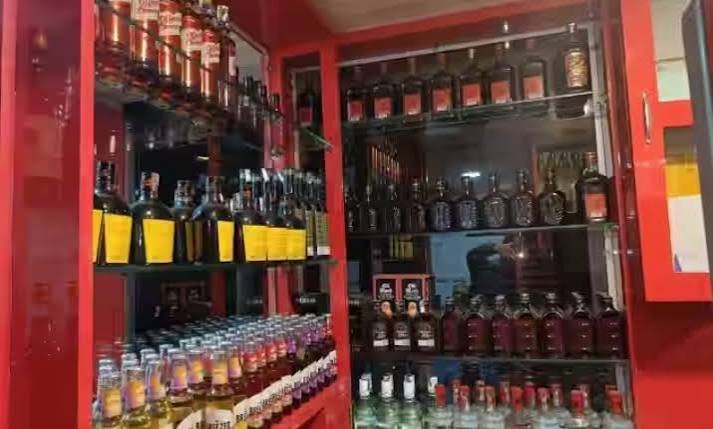
Assam liquor bottles in 180 ml and 375 ml sizes can once again be sold by licensed bars and restaurants in the state, reversing a recent restriction on smaller bottle sizes. The move restores access to smaller quantities of Indian Made Foreign Liquor (IMFL) at licensed establishments.
The change is significant for the hospitality sector because smaller bottles are commonly used by customers who do not want to purchase a full 750 ml bottle. It also brings Assam’s rules closer to the bottle sizes already recognised under its excise framework.
Assam liquor bottles get smaller-size approval
The latest decision allows licensed establishments serving liquor for consumption on the premises to offer 180 ml and 375 ml bottles again. The move comes after a recent excise rule had required ‘ON’ licence holders, including bars and restaurants, to use bottles of at least 750 ml.
That restriction was part of a wider set of excise changes introduced in 2026. The state also introduced changes related to liquor licensing, revenue collection and the regulation of retail outlets.
With the latest change, customers will have more flexibility in choosing the quantity they purchase. However, sales will continue to remain subject to the conditions of the relevant excise licence.
Why Assam liquor bottles matter to the trade
The 180 ml and 375 ml formats are established bottle sizes in Assam’s excise system. The Assam Excise Rules provide for 750 ml quart bottles, 375 ml pint bottles and 180 ml nip bottles for brandy, whisky, gin and rum.
The state’s official tax information also lists separate excise calculations for IMFL in 180 ml, 375 ml and 750 ml quantities. This indicates that the smaller formats remain part of the state’s broader liquor pricing and taxation structure.
Moreover, the availability of smaller bottles can help establishments serve customers according to their preferred quantity. For restaurants and bars, it can also provide greater flexibility in managing different customer orders.
Recent excise changes brought restrictions
The return of smaller formats follows a period of changes to Assam’s excise rules. In June 2026, amendments introduced a Minimum Guaranteed Revenue system for liquor licence holders and changed several operating conditions.
One of the changes required ‘ON’ licence holders to sell sealed bottles of at least 750 ml. The provision effectively prevented bars and restaurants from keeping or selling smaller sealed bottles, even though 180 ml and 375 ml formats remained recognised elsewhere in the state’s liquor framework.
The same round of changes also tightened rules on the distance between retail liquor shops. New or relocated shops were made subject to minimum distance requirements that vary between urban and rural areas.
Assam liquor bottles remain under excise controls
The relaxation does not mean that liquor sales will become unrestricted. Licensed establishments must continue to comply with Assam’s excise rules, including requirements on sealed bottles and permitted liquor sales.
The rules also recognise the use of a peg measure for liquor served at ‘ON’ premises. A full peg is defined as 60 ml.
Therefore, the restoration of smaller bottle sizes should be viewed as a change in permitted packaging rather than a broader relaxation of liquor regulation.
What the change means for customers
For customers, the main benefit is greater choice. Instead of having to purchase a 750 ml bottle, those visiting licensed bars and restaurants can again opt for smaller 180 ml or 375 ml formats where the establishment stocks them.
For the hospitality industry, the decision may also reduce concerns about stocking only larger bottles. Smaller formats can be useful for customers seeking limited quantities and may make liquor sales more adaptable to individual demand. The change gives bars and restaurants greater flexibility while keeping liquor sales within the state’s licensing and regulatory system.