





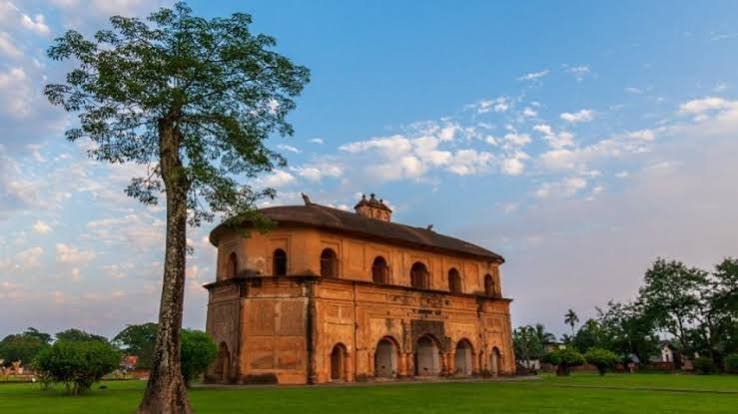
Rangpur-Sivasagar has moved a step closer to UNESCO World Heritage recognition after India formally submitted its nomination for the historic ensemble in Assam. Chief Minister Himanta Biswa Sarma announced the development on September 5, 2026.
The nomination was submitted to UNESCO on June 19, 2026, under cultural criteria (iii) and (iv). The site is now included on UNESCO’s Tentative List, which means it can be considered for possible World Heritage inscription, but it has not yet received World Heritage status.
Rangpur-Sivasagar enters UNESCO’s process
The Rangpur-Sivasagar Historic Ensemble is located in Sivasagar district and represents the political and ceremonial centre of the Ahom kingdom. UNESCO records the nomination as a cultural property submitted by India’s Permanent Delegation to UNESCO.
The ensemble covers two main areas, Rangpur and Sivasagar. Rangpur was developed as a planned capital by Ahom ruler Swargadeo Rudra Singha in 1704. The wider historic landscape includes palaces, temples, ceremonial structures, roads, bridges and large water reservoirs.
According to UNESCO, the ensemble reflects the Ahom dynasty’s political, cultural and architectural achievements in the upper Brahmaputra Valley. The dynasty ruled the region for about six centuries before its end in the 19th century.
A major legacy of the Ahom kingdom
Rangpur-Sivasagar is significant because its heritage is not limited to individual monuments. Instead, the nomination presents an interconnected historic landscape in which architecture, water management, administration and religious life developed together.
Among the prominent structures are Talatal Ghar and Rang Ghar, while major water bodies include Joysagar, Gaurisagar and Sivasagar. The site also contains temple groups and historic road networks that show how the Ahom capital was organised.
UNESCO’s nomination document says the ensemble demonstrates a synthesis of Tai Ahom traditions with Hindu, Mughal and later British architectural influences. It also highlights the shift towards brick and stone construction during the later Ahom period.
Why the water system matters
A key feature of Rangpur-Sivasagar is its network of large tanks and smaller ponds. These water bodies served practical, religious and ceremonial purposes and formed an important part of the kingdom’s urban planning.
UNESCO describes the reservoirs as part of an advanced water-management system. Their integration with temples, palaces, roads and ceremonial spaces shows how hydraulic engineering was linked to civic and political life.
The nomination also points to the continuing cultural role of several parts of the ensemble. Temples remain active places of worship, while the historic tanks and ceremonial structures continue to shape community practices and cultural memory.
UNESCO criteria for the nomination
India has submitted the property under criteria (iii) and (iv). Criterion (iii) relates to the ensemble’s testimony to living cultural traditions, belief systems and statecraft associated with the Tai Ahom polity.
Criterion (iv) focuses on the ensemble as an example of water-based urban planning, palace-fort architecture and ceremonial infrastructure developed during the 17th and 18th centuries.
However, the nomination also acknowledges challenges. UNESCO’s documentation identifies modern development, encroachment around water bodies, sedimentation and the partial loss of original fabric as vulnerabilities that require attention.
What UNESCO recognition could mean for Assam
The Rangpur-Sivasagar nomination places another major part of Assam’s heritage on the international heritage pathway. It follows the inscription of the Moidams of the Ahom dynasty on UNESCO’s World Heritage List in 2024.
Moreover, the nomination gives renewed visibility to Sivasagar’s historic monuments and the landscape that connects them. Conservation of these linked features will be important as the proposal advances through the UNESCO process.
The latest nomination could strengthen international attention on Sivasagar’s historic landscape and its conservation needs. It also highlights the wider importance of preserving monuments, water bodies and living traditions together rather than treating them as isolated heritage sites.
Still, inclusion on the Tentative List is not the same as final World Heritage inscription. The nomination must go through UNESCO’s assessment process before any decision on listing is made.
For Assam, the move marks an important step in presenting the Ahom capital’s architectural and cultural legacy to a global audience. Rangpur-Sivasagar now enters that process with its historic urban planning, monumental structures and enduring traditions at the centre of India’s case.
India-New Zealand FTA Likely to Be in Force by October 2026: Sources