





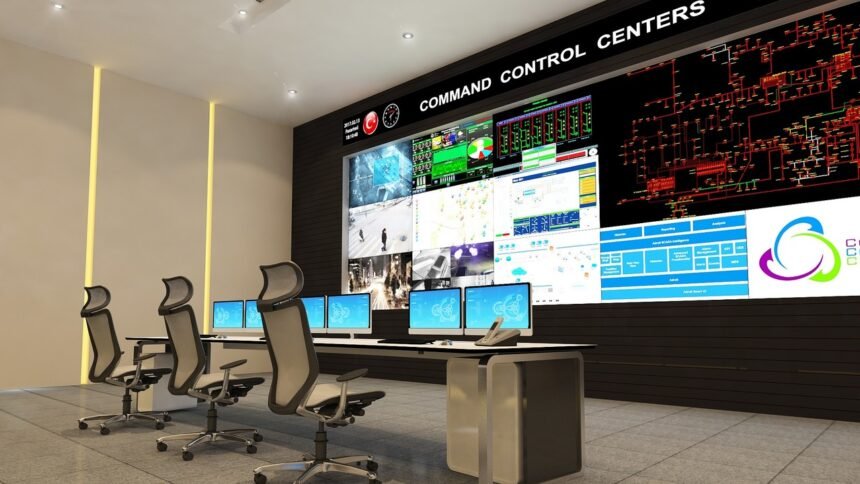
The decision to establish a high-tech emergency management facility has brought renewed attention to disaster preparedness and emergency response systems in Assam. The Assam to Establish High-Tech Central Emergency Control Room at Dergaon initiative aims to strengthen coordination, improve response mechanisms, and enhance public safety infrastructure across the state. Moreover, the proposed facility is expected to play a significant role in managing emergencies through advanced technology and centralized operations. Consequently, the development highlights Assam’s growing focus on disaster management and administrative preparedness.
India Reviews Refugee Influx Strategy for Manipur and Mizoram Border Security
Tripura Chief Minister Manik Saha Launches Digital Solid Waste Management Tracking Application
Assam to Establish High-Tech Central Emergency Control Room at Dergaon for Enhanced Emergency Management
The announcement that Assam to Establish High-Tech Central Emergency Control Room at Dergaon marks an important step in the state’s efforts to modernize emergency response infrastructure. Furthermore, the initiative reflects increasing emphasis on technology-driven governance and disaster preparedness.
Emergency management systems have become increasingly important due to the growing frequency of natural disasters and public emergencies. Consequently, governments across India have prioritized investments in infrastructure that can improve coordination and response times. Assam’s decision to establish a centralized control room aligns with this broader objective.
Moreover, centralized emergency facilities help streamline communication among various departments and agencies. Therefore, the proposed control room at Dergaon is expected to contribute to more efficient administrative coordination during emergencies.
The location of the facility in Dergaon also underscores the state’s efforts to strengthen institutional capacities beyond major urban centers. Additionally, decentralizing critical infrastructure can help improve accessibility and operational effectiveness across wider geographic areas.
Technology Integration to Drive the Central Emergency Control Room
The Assam to Establish High-Tech Central Emergency Control Room at Dergaon initiative places significant emphasis on technological integration. Furthermore, advanced technologies have become essential components of modern emergency management systems worldwide.
High-tech emergency control centers typically utilize communication networks, surveillance systems, data analysis platforms, and real-time monitoring capabilities. Consequently, these systems enable authorities to assess situations quickly and coordinate responses more effectively.
Moreover, digital infrastructure allows emergency management agencies to maintain constant communication with district administrations, law enforcement agencies, and disaster response teams. Therefore, technological modernization remains a key aspect of improving emergency preparedness.
Similarly, centralized command systems can facilitate rapid decision-making during crises. Additionally, integrated platforms often improve resource allocation and operational planning. Thus, investments in technology-driven infrastructure continue to gain importance in public administration.
The proposed facility also reflects broader trends in governance, where technology increasingly supports public safety initiatives. Consequently, the establishment of such infrastructure represents a strategic administrative development.
Disaster Preparedness and Public Safety Remain Key Priorities
The decision that Assam to Establish High-Tech Central Emergency Control Room at Dergaon highlights the state’s focus on strengthening disaster preparedness mechanisms. Furthermore, Assam frequently faces challenges associated with floods, landslides, and other emergencies that require coordinated responses.
Effective disaster management depends heavily on communication, coordination, and timely intervention. Consequently, authorities have increasingly emphasized the need for robust institutional infrastructure capable of responding rapidly to emergencies.
Moreover, emergency control rooms serve as critical hubs for information collection and dissemination. Therefore, strengthening these facilities can improve response efficiency and reduce administrative delays during crisis situations.
Public safety initiatives also benefit from improved coordination among government departments. Similarly, integrated emergency systems can support healthcare services, law enforcement agencies, and disaster management authorities simultaneously.
Additionally, enhanced preparedness measures contribute to greater public confidence in institutional capabilities. Thus, investments in emergency infrastructure remain important components of governance and public administration.
Dergaon Emerges as a Strategic Location for Emergency Infrastructure
The plan under which Assam to Establish High-Tech Central Emergency Control Room at Dergaon also brings attention to the strategic importance of the location. Furthermore, establishing critical infrastructure outside major metropolitan areas can support balanced regional development.
Strategic placement of emergency facilities often helps improve operational coverage across larger regions. Consequently, authorities can respond more effectively to incidents occurring in diverse geographic locations.
Moreover, infrastructure development in smaller towns contributes to administrative decentralization and regional growth. Therefore, Dergaon’s selection may carry significance beyond emergency management considerations.
Similarly, strengthening institutional infrastructure in different regions helps create more resilient administrative systems. Additionally, distributed networks of public facilities can enhance accessibility and efficiency.
The development also reflects broader efforts to modernize public infrastructure across Assam. Consequently, the proposed emergency control room represents both a technological and administrative advancement for the state.
Conclusion
The initiative under which Assam to Establish High-Tech Central Emergency Control Room at Dergaon represents an important development in the state’s emergency management and disaster preparedness framework. Moreover, the project underscores the growing importance of technology-driven governance and centralized response mechanisms.
Furthermore, the establishment of a modern emergency control facility highlights Assam’s efforts to strengthen public safety infrastructure and improve coordination among government agencies. Consequently, the project could contribute significantly to enhancing operational efficiency during emergencies and disaster situations.
Looking ahead, the success of the initiative will likely depend on effective implementation, technological integration, and sustained institutional support. Therefore, the decision that Assam to Establish High-Tech Central Emergency Control Room at Dergaon reflects a broader commitment to strengthening governance, preparedness, and public safety infrastructure.
FAQs
1. What is the Assam to Establish High-Tech Central Emergency Control Room at Dergaon initiative?
The initiative involves the establishment of a technologically advanced centralized emergency control facility in Dergaon to strengthen emergency response and disaster management capabilities.
2. Where will the new emergency control room be established?
The proposed high-tech central emergency control room will be established in Dergaon, Assam.
3. Why is the new emergency control room important?
The facility aims to improve coordination, communication, and response efficiency during emergencies and disaster situations.
4. How can technology improve emergency management systems?
Technology can enhance real-time monitoring, communication, data analysis, and coordination among various emergency response agencies.
5. What broader significance does the project have for Assam?
The project highlights Assam’s focus on strengthening disaster preparedness, public safety infrastructure, and technology-driven governance.