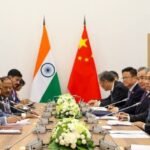





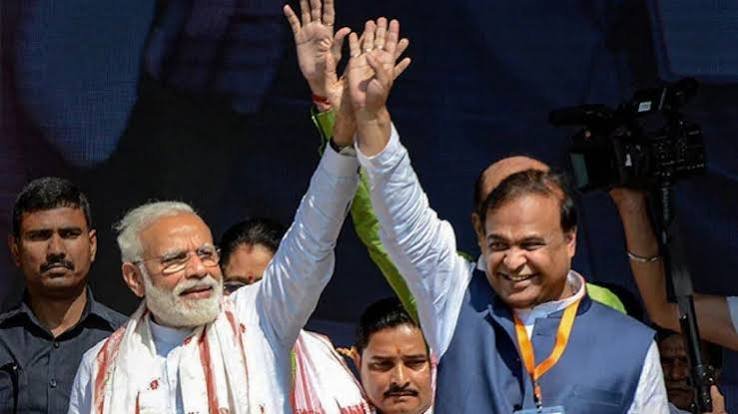
The BRICS consensus at the New Delhi summit has drawn strong praise from Assam Chief Minister Himanta Biswa Sarma, who credited Prime Minister Narendra Modi’s leadership for bringing diverse member countries together on several major issues.
Sarma welcomed the unanimous adoption of the New Delhi Declaration at the 18th BRICS Summit, describing it as evidence of India’s pragmatic, inclusive and forward-looking leadership. His remarks came after leaders reached agreement despite differences among the expanded grouping.
BRICS consensus marks India’s diplomatic push
The BRICS consensus emerged at a time of significant geopolitical tensions and competing national interests. The expanded grouping includes major emerging economies from Asia, Africa, the Middle East and Latin America.
The New Delhi Declaration covered issues ranging from global governance and counter-terrorism to economic cooperation, technology, agriculture and sustainable development. According to Sarma, the breadth of the agreement showed that critical issues could still find common ground among countries with different priorities.
Moreover, the declaration reaffirmed BRICS’ commitment to dialogue, consultation, sovereign equality and consensus. It also backed reforms aimed at making global institutions more representative and responsive.
Modi’s leadership highlighted by Sarma
Sarma specifically praised Modi for the successful adoption of the declaration during India’s BRICS chairship. He described the document as a significant achievement for India and said it demonstrated the country’s growing role in an evolving global order.
The BRICS consensus also came against a difficult international backdrop. Conflicts, trade restrictions, sanctions and supply-chain disruptions have increased pressure on countries to protect their economic and strategic interests.
However, BRICS members managed to produce a joint declaration. The document called for dialogue and diplomacy in addressing international disputes and expressed concern over unilateral protectionist measures.
A broad agenda finds common ground
The summit also placed emphasis on practical cooperation. Leaders discussed economic resilience, innovation, climate action, food security, health and technology.
The declaration noted progress under India’s 2026 chairship and welcomed efforts to strengthen cooperation across the expanded grouping. It also supported greater participation of emerging markets and developing countries in global economic governance.
Sarma said several critical areas had found consensus, including multilateral reform, counter-terrorism, new-age technology, agriculture and animal conservation. His comments reflected the broader political significance attached to the summit’s final document.
Guwahati gets a special mention
One of the points highlighted by Sarma was the inclusion of the Guwahati Declaration in the New Delhi Declaration.
The Guwahati Declaration was adopted during the BRICS Heads of Anti-Drug Agencies meeting held in Guwahati in July. It focused on stronger operational and technical cooperation against narcotics, including information sharing, intelligence exchange and the use of digital tools.
For Assam, the reference carries particular significance because the state lies along an important route associated with drug trafficking. Sarma called the recognition of the Guwahati Declaration symbolic and important.
The New Delhi Declaration formally welcomed the Guwahati outcome and said it would help facilitate cooperation among BRICS anti-drug agencies.
BRICS consensus strengthens India’s Global South role
The summit also highlighted India’s push for greater representation of developing countries in global institutions. The declaration backed reform of the United Nations system and noted support from China and Russia for India and Brazil to play a greater role in the UN, including the Security Council.
Meanwhile, economic cooperation remained central to the BRICS agenda. Members discussed resilient supply chains, trade, investment and cross-border payment mechanisms. The declaration also recorded progress on the BRICS Economic Partnership Strategy 2030.
These developments give the BRICS consensus significance beyond the summit itself. The challenge now will be translating broad commitments into practical cooperation.
India’s BRICS chairship leaves a clear mark
Overall, the BRICS consensus has given the Modi government a significant diplomatic outcome to present after India’s 2026 chairship. Sarma’s praise reflects the view within the BJP-led political establishment that the declaration demonstrated India’s ability to work with countries holding sharply different positions.
At the same time, the declaration does not erase the differences within BRICS. The expanded grouping contains diverse political systems, economic interests and strategic priorities.
Still, the unanimous document shows that cooperation remains possible despite those differences. As India hands the BRICS chairship to China for 2027, the focus will now shift from consensus in New Delhi to implementation of the commitments made there.
Tripura Tea Export Resurgence Targets European Organic Markets