


The Mizoram humanitarian aid corridors issue has gained renewed attention as the state balances humanitarian concerns with tighter border management along the Myanmar frontier. The government has continued engaging civil society groups involved in assistance, border activities and community coordination. Recent developments have also highlighted the importance of keeping essential supplies moving while maintaining lawful and secure cross-border operations.
Mizoram shares a long international boundary with Myanmar, including areas connected to communities across the border. Consequently, humanitarian assistance remains closely linked with local livelihoods, refugee support and border administration.
Breaking News: MNF Flags Mizoram SASCI Funding Gap
Mizoram Humanitarian Aid Corridors Gain Importance
The Mizoram humanitarian aid corridors discussion comes against the backdrop of continuing instability in Myanmar and its impact on communities along Mizoram’s eastern and southern borders. Thousands of people displaced by conflict have sought shelter in Mizoram since the Myanmar military coup in 2021.
The state government has repeatedly highlighted the humanitarian nature of the situation. In June 2026, Chief Minister Lalduhoma told Union Home Minister Amit Shah that nearly 40,000 refugees from Myanmar, Bangladesh and neighbouring Manipur were residing in Mizoram. The Centre subsequently assured the state of rice worth ₹10 crore for refugee relief.
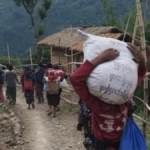
Meanwhile, humanitarian assistance has involved government departments, churches, village bodies and civil society organisations. These groups have helped provide food, shelter, healthcare and other forms of support to displaced people.
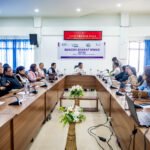
A coordination meeting in Champhai earlier this year reviewed humanitarian assistance for Myanmar refugees and vulnerable host communities. Officials and volunteer organisations discussed the implementation of the PATHRISE Project 2026, which focuses on protection and livelihood support.
Therefore, any arrangement involving movement of humanitarian supplies requires coordination between public authorities and local organisations. The approach also needs to account for the difficult terrain and the changing situation across the international boundary.
Civil Society Groups Seek Continued Border Coordination
Civil society organisations remain important actors in Mizoram’s response to developments along the Myanmar border. Their involvement ranges from humanitarian support to community coordination and local monitoring.
The recent activities of the Mara Thyutlia Py (MTP) in Siaha district demonstrate the importance of these organisations. In September, the group temporarily suspended trade activities through Khaikhy, Lomasu and Lodaw following a confrontation involving Myanmar traders and MTP volunteers. The organisation later lifted the embargo after talks with representatives of the United League of Arakan.
The episode showed how quickly local disputes can affect movement through border areas. It also demonstrated the role civil society groups can play in resolving tensions through dialogue.
More than 100 pickup trucks reportedly move goods to Khaikhy village each day, while boats transport supplies onward through the Salalui River. These routes connect parts of southern Mizoram with communities in Myanmar’s Rakhine and Chin regions.
At the same time, authorities have stressed that humanitarian needs cannot override legal requirements. The Lawngtlai district administration recently called for stricter verification of goods transported towards Myanmar and greater scrutiny of vehicle-related activities.
Government Balances Aid With Border Security
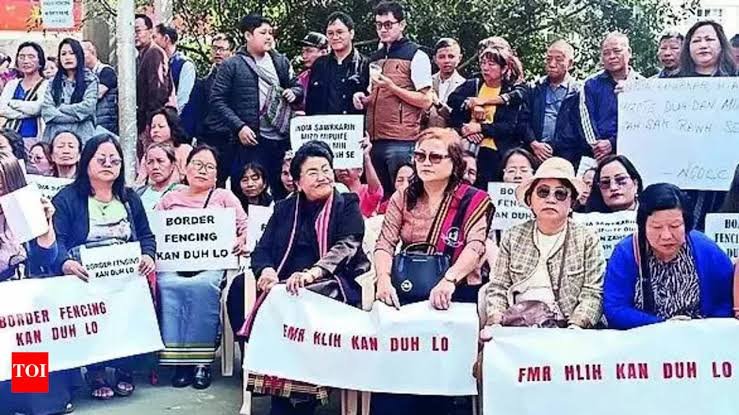
Mizoram’s position reflects a continuing effort to balance humanitarian responsibilities with border-management requirements. The state government has opposed the proposed fencing of the India-Myanmar border, although it acknowledges that border management falls under the Union government’s jurisdiction.
In February 2026, the Mizoram Cabinet reiterated its opposition to fencing the state’s section of the border. The government cited concerns about the social and cultural consequences for communities that maintain close ties across the boundary.
The border measures also intersect with the question of refugee movement. Mizoram has provided assistance to people fleeing conflict despite having limited resources. In June, Lalduhoma warned that the growing refugee population was placing additional pressure on state resources and services.
However, the government has also sought stronger enforcement against illegal cross-border activities. In Lawngtlai, officials, police, Assam Rifles, the Lai Autonomous District Council and civil society representatives recently discussed stricter checks along the border.
The meeting specifically addressed the movement of goods and vehicles and highlighted the growing importance of the Kaladan Multi-Modal Transit Transport Project route through Zorinpui. Officials called for continued cooperation between enforcement agencies and civil society organisations.
Kaladan Route Adds Strategic Humanitarian Dimension
The Kaladan corridor has increased the importance of southern Mizoram’s border areas. The project is intended to improve connectivity between Mizoram and Myanmar and provide an alternative route towards the Bay of Bengal.
Chief Minister Lalduhoma told the Mizoram Assembly in March that the road beyond the border passes through territory controlled by the Arakan Army rather than the Myanmar government. He also expressed concern about unregulated cross-border trade in the Zochachhuah area of Lawngtlai district.
The situation makes coordination particularly important. Humanitarian supplies may need to reach communities affected by conflict, while authorities must simultaneously monitor commercial movements and prevent unlawful activities.
Mizoram’s civil society organisations have historically played a major role in assisting displaced populations. The Central Young Mizo Association, for example, has organised relief activities and supported refugees through its extensive network of local branches. Churches and other community organisations have also contributed to the humanitarian response.
Furthermore, the state’s relationship with communities across the border is shaped by shared ethnic, cultural and family ties. These connections have influenced Mizoram’s response to the refugee crisis and its opposition to measures that could sharply restrict traditional cross-border interaction.
At the same time, authorities have increasingly stressed regulated movement and stronger coordination. This suggests that future humanitarian arrangements will need to operate within a framework that combines community participation, official oversight and border security.
Conclusion
The Mizoram humanitarian aid corridors issue reflects the complex balance between humanitarian assistance and border management. Mizoram continues to face pressure from refugee arrivals, while civil society organisations remain important partners in supporting affected communities and maintaining local coordination.
Recent developments in Siaha and Lawngtlai also show why cooperation between the government and civil society remains important. As cross-border routes gain significance through trade and the Kaladan project, authorities will need to maintain lawful movement while ensuring that humanitarian needs receive appropriate attention.
FAQs
What are Mizoram humanitarian aid corridors?
The term refers to routes and arrangements through which essential goods and humanitarian assistance can reach communities affected by displacement and conflict around Mizoram’s border with Myanmar. Recent developments have focused on maintaining movement while strengthening coordination and oversight.
Why are humanitarian corridors important for Mizoram?
They are important because Mizoram has received thousands of displaced people from Myanmar and continues to support affected communities. The state also has long-standing social and cultural connections with communities across the border.
What role do civil society organisations play?
Civil society organisations assist with humanitarian support, community coordination and local border-related activities. Groups in districts such as Siaha and Lawngtlai have also worked with government authorities on border issues.
What is the government doing along the Myanmar border?
The government is combining humanitarian assistance with stronger monitoring of cross-border movement. Recent Lawngtlai discussions focused on verifying goods, investigating vehicle-related violations and improving coordination among authorities and civil society groups.
How does the Kaladan project affect the border situation?
The Kaladan Multi-Modal Transit Transport Project is increasing the importance of southern Mizoram’s connectivity with Myanmar. Authorities have therefore stressed stronger regulation and monitoring along routes that could see increased trade and transportation activity.