


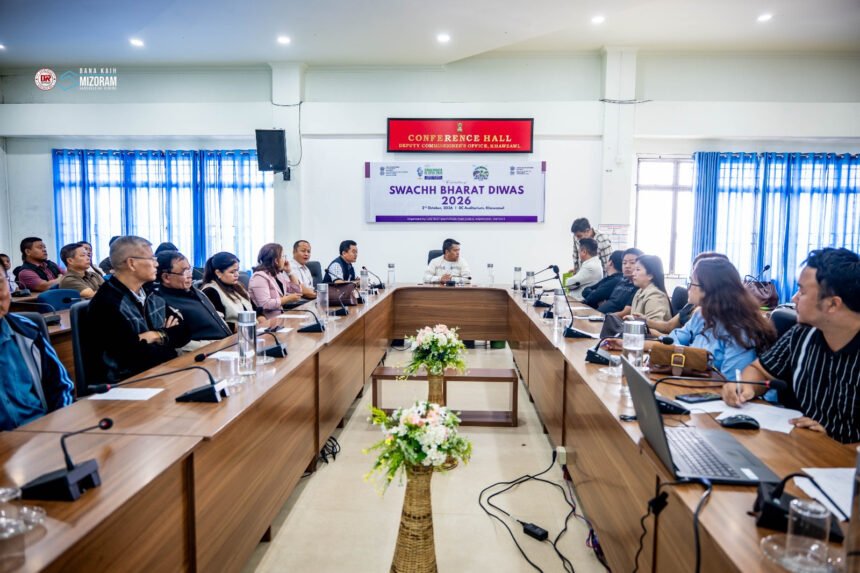
The Mizoram Swachh Bharat Diwas 2026 observance focused on turning cleanliness into a lasting personal and community practice. PHE Minister Prof. Lalnilawma led the state-level programme at the UD&PA Auditorium in MINECO on October 2. He urged citizens to begin cleanliness efforts with themselves and make them part of everyday life.
The event formed part of the wider Swachhata Hi Seva 2026 campaign, which ran from September 17 to October 2. This year’s national campaign placed citizen participation and sustained behaviour change at the centre of cleanliness efforts.
Breaking News: MNF Flags Mizoram SASCI Funding Gap
Mizoram Swachh Bharat Diwas Highlights Behaviour Change
The Mizoram Swachh Bharat Diwas 2026 programme brought together officials and representatives involved in sanitation and urban development. Aizawl Municipal Corporation Mayor H. Lalremtluanga attended the event as the guest of honour.
Addressing the gathering, Prof. Lalnilawma said cleanliness should begin with a change in mindset. He stressed that individuals must examine their own habits instead of expecting others to maintain clean surroundings.
The minister also encouraged people to consider cleanliness as a responsibility towards others. In his message, he called on participants to become examples through their own actions and motivate people around them.
Furthermore, the minister highlighted the need for personal responsibility in sustaining cleanliness beyond designated campaign periods. Such an approach shifts the focus from one-time drives to regular habits at homes, workplaces and public spaces.
The message also aligns with the national Swachhata Hi Seva framework. The Union government has identified sustained behaviour change as a central objective of the 2026 campaign, particularly through participation by students, young people and local communities.
Swachhata Hi Seva Activities Continue Across State
The October 2 programme marked the conclusion of the annual Swachhata Hi Seva period. Since 2017, the campaign has brought citizens, institutions and government agencies together for voluntary cleanliness activities across India.
In Mizoram, departments and local authorities organised activities in both urban and rural areas during the campaign. Officials presented updates on the initiatives undertaken during the period at the state-level event.
Aizawl also witnessed a major cleanliness drive on October 1. Around 500 heads of offices and staff members from 28 government departments participated in cleaning activities at Lammual and surrounding areas.
Aizawl Deputy Commissioner Er. Lalhriatpuia similarly stressed that cleanliness should become a habit rather than something people practise only because of official instructions. He encouraged government employees to take responsibility for cleanliness at workplaces, homes and localities.
Meanwhile, the national campaign included a one-hour nationwide shramdaan initiative on October 1. The programme, titled “Ek Din, Ek Ghanta, Ek Saath,” encouraged citizens to contribute voluntarily to cleanliness activities.
Sanitation Workers Receive Recognition
The Mizoram programme also recognised people who contribute directly to sanitation and cleanliness. Seven individuals who had made notable contributions to cleanliness received recognition during the state-level observance.
In addition, 95 sanitation workers received personal protective equipment kits during the event. The distribution acknowledged the role of sanitation workers while addressing basic safety needs associated with their work.
Recognition of sanitation workers forms an important part of the national Swachhata Hi Seva framework. The 2026 campaign included SafaiMitra Suraksha Evam Samman Shivir, which combines recognition with health check-ups, protective equipment and access to welfare schemes.
Such measures complement cleanliness campaigns by focusing on the people who maintain public sanitation systems. Moreover, supporting sanitation workers can strengthen the broader objective of making cleanliness a shared civic responsibility.
The state-level programme also provided an opportunity for departments to report on activities conducted during the campaign. PHE Secretary Zodingpuii delivered the vote of thanks, while UD&PA Commissioner and Secretary V. Lalsangliana chaired the proceedings.
Government Links Cleanliness With Daily Life
The call for individual behaviour change comes as Mizoram continues to address sanitation and waste-management challenges. In May, the Union Ministry of Housing and Urban Affairs reviewed the progress of the Swachh Bharat Mission-Urban in Mizoram and identified 18 issues related to visible cleanliness.
The Union government directed state officials to prepare a detailed action plan with monitorable timelines. It also emphasised the need for lasting cleanliness outcomes in Mizoram’s urban areas.
Technology and capacity building also form part of the wider effort. The Centre proposed training local youth in technologies such as LiDAR and drone-based surveys for quantifying legacy waste and supporting related activities.
Additionally, Mizoram districts are working on the implementation of the Solid Waste Management Rules, 2026. The Kolasib district administration, for example, has published action plans, review documents and other material connected with the new waste-management framework.
These developments indicate that cleanliness efforts increasingly involve more than physical cleaning. Waste segregation, responsible disposal, public participation and consistent personal habits are also becoming important parts of sanitation planning.
Conclusion
The Mizoram Swachh Bharat Diwas 2026 observance placed individual responsibility at the centre of the state’s cleanliness message. PHE Minister Prof. Lalnilawma urged people to begin with their own habits and make cleanliness part of everyday life rather than limiting it to special campaigns.
The recognition of sanitation workers, distribution of PPE kits and activities across Mizoram added practical elements to the observance. As the state continues implementing sanitation and waste-management measures, sustained public participation will remain important for achieving long-term cleanliness outcomes.
FAQs
What was the focus of Mizoram Swachh Bharat Diwas 2026?
The focus was on making cleanliness a lasting personal and community habit. PHE Minister Prof. Lalnilawma urged people to begin with themselves and demonstrate responsible behaviour in daily life.
Who led the Swachh Bharat Diwas programme in Mizoram?
PHE Minister Prof. Lalnilawma led the state-level Swachh Bharat Diwas observance at the UD&PA Auditorium in MINECO on October 2, 2026.
How were sanitation workers recognised?
Seven people associated with cleanliness efforts received recognition, while 95 sanitation workers received PPE kits during the state-level programme.
What is the Swachhata Hi Seva campaign?
Swachhata Hi Seva is an annual nationwide cleanliness campaign that promotes citizen participation, voluntary action and sustained behaviour change. The 2026 campaign ran from September 17 to October 2.
Why is individual behaviour important for cleanliness?
Individual habits directly affect the cleanliness of homes, workplaces and public areas. Officials in Mizoram have therefore stressed that cleanliness should become part of daily life instead of depending only on organised drives.