




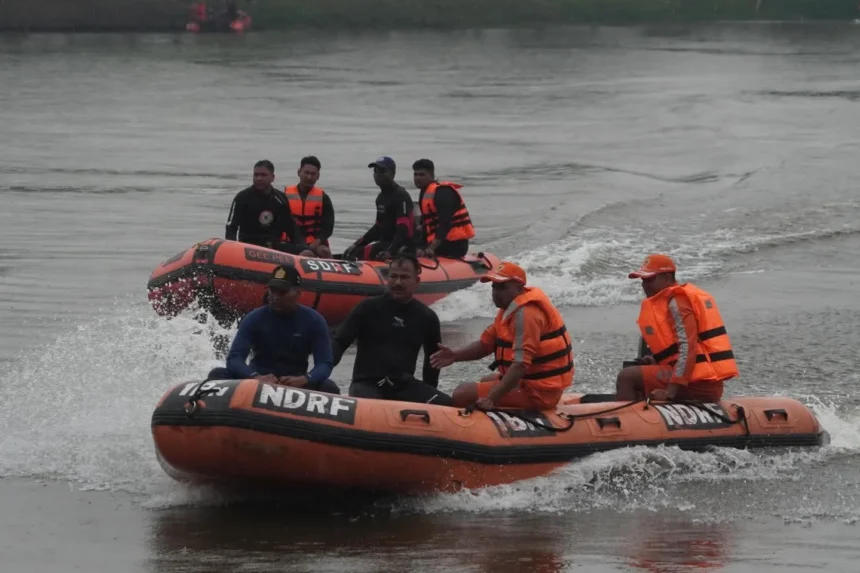
In Guwahati, the Indian Army’s Red Horns Division under the Gajraj Corps conducted a large-scale joint flood relief exercise named ‘Jal Rahat’ at IIT Guwahati. The drill brought together multiple agencies, including NDRF, SDRF, and SSB, to enhance coordination during disasters.
Teams demonstrated advanced rescue techniques, drone surveillance, and evacuation operations. The exercise aimed to strengthen preparedness for floods, a recurring challenge in Assam.
Read More: Assam Liquor Seizure Near Misamari
Key Facts
- Exercise Name: Jal Rahat
- Location: IIT Guwahati, Guwahati
- Organised By: Indian Army (Red Horns Division, Gajraj Corps)
- Participating Agencies: NDRF, SDRF, SSB, Army units
- Key Official: Neeraj Shukla
- Focus Areas: Flood rescue, interagency coordination, disaster preparedness
- Technologies Used: Drones, rescue boats, advanced evacuation techniques
Joint Exercise Demonstrates Preparedness
The Indian Army led the ‘Jal Rahat’ exercise to strengthen disaster response capabilities in Assam. Multiple agencies participated and coordinated their roles during simulated flood scenarios.
Moreover, the exercise showcased how different forces can respond quickly and effectively during emergencies. Officials emphasized teamwork and rapid decision-making.
Advanced Rescue Techniques on Display
During the drill, teams demonstrated modern rescue operations, including drone-based surveillance and supply delivery. They also carried out simulated evacuations of stranded civilians.
In addition, specialist units from the Army, NDRF, and SDRF performed deep-water rescue operations. These demonstrations highlighted technical expertise and readiness for real-life situations.
Focus on Coordination and Training
The exercise placed strong emphasis on coordination among agencies. Each unit practiced its specific role while maintaining seamless communication with others.
Furthermore, the drill aimed to refine standard operating procedures (SOPs) and improve joint response strategies. Regular training will help agencies respond more effectively to disasters.
Leadership Calls for Collective Approach
Addressing the gathering, Lt Gen Neeraj Shukla urged all agencies to adopt a “whole-of-society approach.”
He highlighted the importance of the four ‘Ps’—Predict, Prepare, Protect, and Provide. According to him, these principles can guide better disaster management and national resilience.
Wider Participation and Awareness
The event attracted senior officials from the Army, state administration, and Central Armed Police Forces. Additionally, NCC and NSS cadets, along with students from local institutions, attended the exercise.
As a result, the drill also helped raise awareness about disaster preparedness among young citizens.
Commitment to Future Collaboration
Participating agencies reaffirmed their commitment to continued collaboration with the Indian Army. They plan to conduct regular joint exercises and improve disaster response frameworks.
Consequently, authorities expect better preparedness and faster response during future flood emergencies.
Q&A Section
Q1: What is ‘Jal Rahat’?
It is a joint flood relief exercise conducted by the Indian Army and multiple agencies.
Q2: Where was the exercise held?
The drill took place at IIT Guwahati in Assam.
Q3: Which agencies participated?
The Army, NDRF, SDRF, and SSB took part in the exercise.
Q4: What activities were demonstrated?
Teams showcased drone surveillance, rescue operations, and evacuation drills.
Q5: Why is this exercise important?
It improves disaster preparedness and coordination during floods.
Location Context
Assam frequently faces severe flooding due to its river systems, especially the Brahmaputra, making disaster preparedness exercises crucial for the region.