





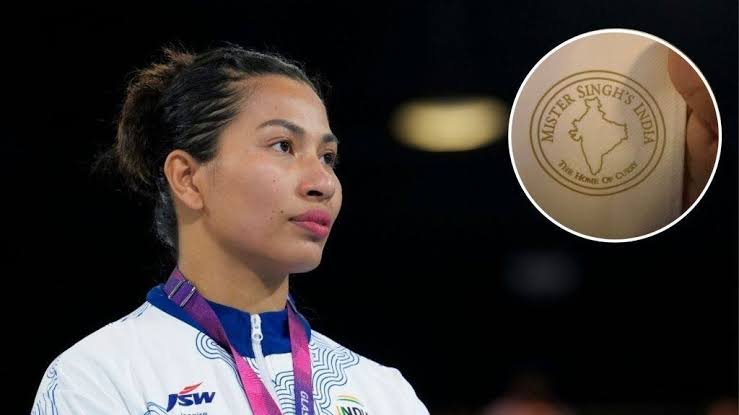
The Map Omission Backlash has triggered a wider political discussion after Olympic boxer Lovlina Borgohain drew attention to the omission of the Northeast from a map displayed at a Commonwealth Games event. Her remarks brought renewed attention to concerns about the region’s representation in public and international settings.
Arunachal Expands ‘Sarkar Aapke Dwar’ Programme to Expedite Public Grievances
The Map Omission Backlash has moved beyond a sporting issue and entered the national political conversation. Moreover, the incident has prompted discussions about geographic representation, regional identity, and the importance of accurately depicting every part of India.
Visual representations of national territory carry strong symbolic importance. Therefore, omissions from official or event-related maps can attract significant public attention, particularly when they involve an entire region.
The controversy also highlights the visibility of the Northeast in national institutions and international events. Additionally, public figures from the region can play an important role in drawing attention to representation-related concerns.
Map Omission Backlash Draws National Attention
The Map Omission Backlash followed comments from Olympic boxer Lovlina Borgohain regarding a map used during a Commonwealth Games event. She raised concerns after noticing that the Northeast did not appear on the displayed representation of India.
Moreover, Borgohain’s profile as an Olympic athlete helped bring the issue to a wider audience. Consequently, what began as a representation concern became part of a broader political and public discussion.
Accurate geographic representation remains important at major international sporting events. Furthermore, organizers and institutions can face scrutiny when visual material appears to exclude or inaccurately depict a region.
The available information does not establish whether the omission resulted from an intentional decision, a design error, or another production issue. Therefore, conclusions about intent require confirmation from the event organizers.
Map Omission Backlash Highlights Northeast Representation
The Map Omission Backlash has renewed conversations about how the Northeast appears in national and international public spaces. The region includes eight states with distinct cultural, geographical, and historical identities.
Additionally, representation in maps and visual materials can carry significance beyond geography. Such depictions can influence how audiences understand the country’s territorial and regional diversity.
The controversy also demonstrates how sporting events can become platforms for wider social and political conversations. Meanwhile, athletes with large public audiences can bring attention to issues that might otherwise receive limited coverage.
The available information does not indicate whether Commonwealth Games organizers have issued a formal explanation or correction regarding the map.
Map Omission Backlash Fuels Political Discussion
The Map Omission Backlash has prompted political discussion about the visibility and recognition of the Northeast. Leaders and public figures may use the controversy to call for greater attention to the region in national institutions and international platforms.
Moreover, the incident can encourage institutions to review their visual and informational materials before public display. Consequently, greater attention to accuracy can help prevent similar controversies.
Political debate around the issue may also extend to broader questions of regional inclusion. Similarly, discussions about representation can highlight the importance of acknowledging the Northeast’s contribution to India’s sporting, cultural, and economic landscape.
However, public discussion should distinguish between a confirmed omission and assumptions about its cause. Therefore, official clarification remains important before assigning responsibility for the incident.
Conclusion
The Map Omission Backlash has entered the national political conversation after Olympic boxer Lovlina Borgohain highlighted the omission of the Northeast from a map used at a Commonwealth Games event.
Furthermore, the incident has renewed attention to geographic accuracy, regional representation, and the visibility of the Northeast. An official explanation from the event organizers could provide clarity about how the map omission occurred.
Overall, the Map Omission Backlash demonstrates how seemingly simple visual representations can carry wider political and social significance, particularly when they involve the representation of an entire region.
FAQs
1. What triggered the Map Omission Backlash?
The Map Omission Backlash followed Olympic boxer Lovlina Borgohain’s concerns about the omission of the Northeast from a map displayed at a Commonwealth Games event.
2. Who highlighted the issue?
Lovlina Borgohain, an Olympic boxer from Assam, brought attention to the map-related concern.
3. Why did the issue become political?
The omission raised broader questions about regional representation and the visibility of the Northeast, leading to national political discussion.
4. Was the omission intentional?
The available information does not establish whether the omission was intentional or resulted from an error.
5. Why is accurate map representation important?
Accurate maps provide correct geographic information and can also carry important symbolic significance regarding national and regional representation.