





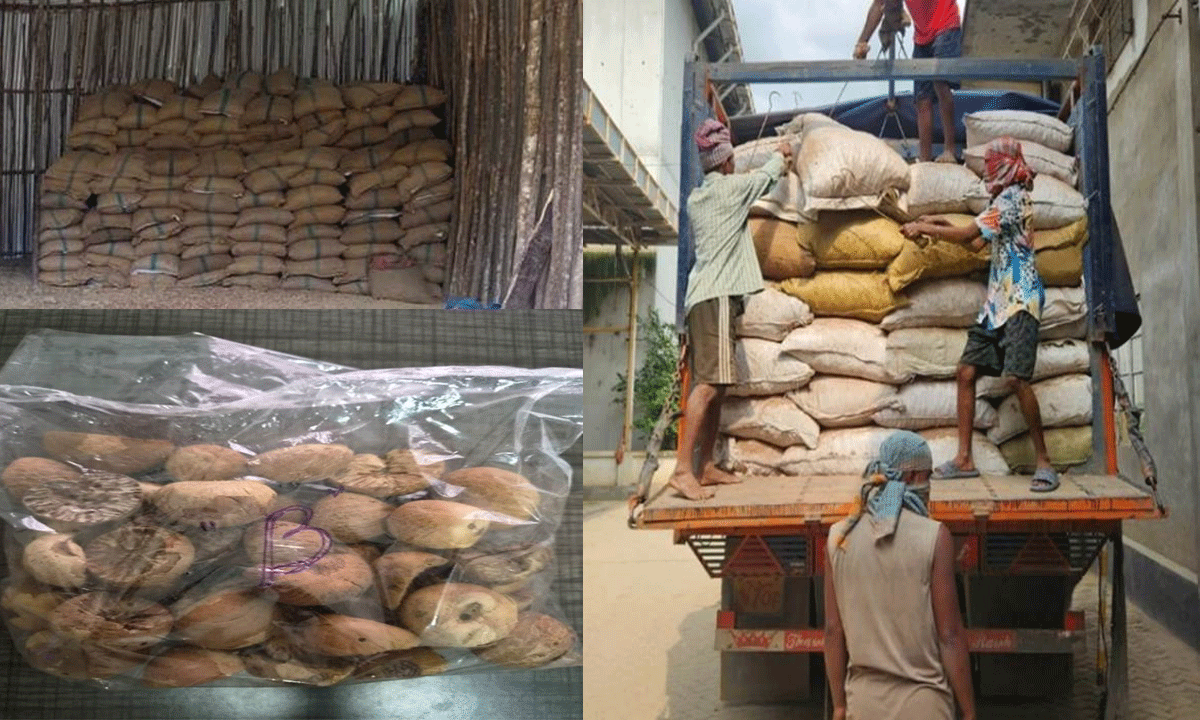
A major enforcement action has exposed a large-scale smuggling network as Massive Betel Nut Seizure becomes a key security development following coordinated raids by the Directorate of Revenue Intelligence (DRI) across Assam and Mizoram on 22 May. Authorities recovered around 60,000 kg of foreign-origin areca nuts and arrested five individuals in connection with the operation. The crackdown highlights intensified efforts to curb cross-border smuggling activities in the Northeast region.
Tripura Holds Irregular Employees Convention
Tripura Forest Staff Guards Armed Against Smuggling
Background
Areca nut, commonly known as betel nut, remains widely consumed across India. However, illegal trade networks have increasingly used foreign-origin consignments to bypass regulations and exploit market demand. Due to price differences and import restrictions, smugglers often use border regions to move goods through unauthorized channels.
In this context, Massive Betel Nut Seizure highlights the continuing challenge faced by customs and revenue agencies in sensitive border areas. Moreover, organized networks frequently use complex transit routes and exploit vulnerable corridors to move large consignments. Therefore, authorities have steadily strengthened surveillance systems and expanded intelligence-led operations to disrupt illegal supply chains.
Current Update
On 22 May, the Directorate of Revenue Intelligence conducted two major raids in Assam and Mizoram after receiving intelligence inputs. During the operation, officers seized nearly 60,000 kg of smuggled foreign-origin areca nuts.
The Massive Betel Nut Seizure operation also resulted in the arrest of five individuals linked to transportation and distribution activities. Furthermore, investigators suspect that the seized stock formed part of a larger organized smuggling network operating across multiple states.
Authorities have already started investigations to identify additional connections and trace the wider supply chain.
Key Details
Officials believe smugglers transported the seized consignment through cross-border routes before moving it into domestic markets. Additionally, the scale of the operation points to coordinated planning and structured logistics.
The significance of the Massive Betel Nut Seizure lies in exposing large-scale illicit trade that affects revenue collection and weakens regulatory enforcement. Consequently, enforcement agencies are expected to intensify monitoring across vulnerable corridors.
Experts also emphasize stronger intelligence sharing, closer inter-agency cooperation, and tighter border surveillance to reduce future smuggling attempts.
Impact and Public Significance
The seizure is expected to disrupt illegal supply chains and create stronger deterrence against organized smuggling groups. At the same time, it reinforces the role of enforcement agencies in protecting lawful trade systems.
From a governance perspective, Massive Betel Nut Seizure demonstrates the importance of coordinated action between central agencies and state enforcement bodies. In addition, stronger operational coordination may improve detection and response capabilities.
Public attention may now shift toward long-term measures aimed at reducing illegal cross-border trade.
What Happens Next
Authorities are expected to continue investigations and identify suppliers, transport operators, and financial links connected to the seized consignment. Meanwhile, agencies may conduct additional operations if new evidence emerges.
Future enforcement efforts may include stronger intelligence coordination, enhanced border monitoring, and expanded multi-state operations. Ultimately, the outcome of the Massive Betel Nut Seizure case will depend on successful prosecution and dismantling of connected networks.
Conclusion
The seizure of 60,000 kg of foreign-origin areca nuts marks a major enforcement achievement in Northeast India. As investigations progress, Massive Betel Nut Seizure highlights the continuing challenge of cross-border smuggling and the need for intelligence-driven action. Going forward, stronger coordination and sustained monitoring will remain essential to protect legal trade systems.