





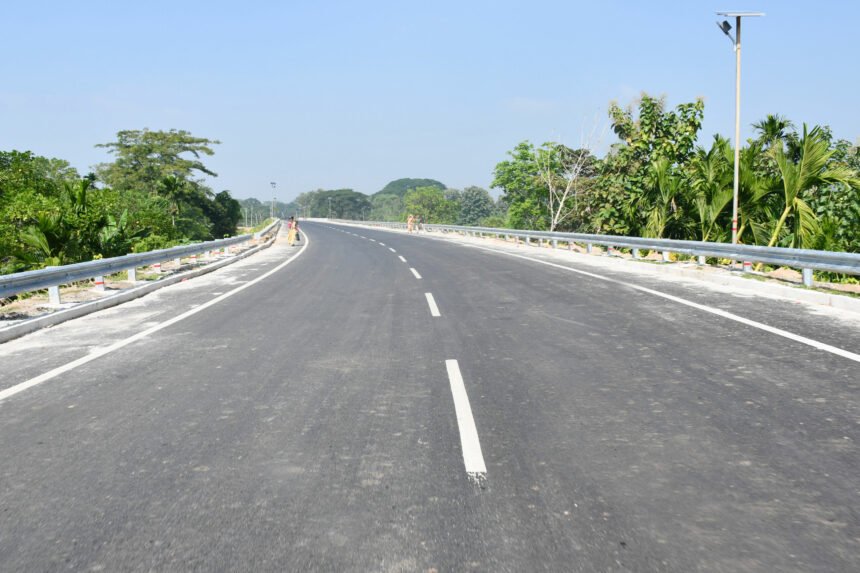
The Asom Mala 2.0 Project is rapidly advancing across Assam as nearly 1,000 kilometres of rural and urban roads remain under active construction. Chief Minister Himanta Biswa Sarma stated that the large-scale infrastructure initiative aims to strengthen connectivity, improve trade routes, and enhance the ease of doing business throughout the state.
Transformative Dasda Development Projects Get Major NITI Boost
Powerful Tripura Flood Control Plan Targets River Erosion
Assam Accelerates Major Road Construction Drive
Assam has significantly accelerated road infrastructure development under the Asom Mala 2.0 initiative. Chief Minister Himanta Biswa Sarma announced that close to 1,000 kilometres of roads are currently under active construction across different parts of the state.
The project includes both rural and urban road networks designed to improve transportation efficiency and economic connectivity. Consequently, authorities expect the initiative to strengthen trade, mobility, and public infrastructure in multiple districts.
Officials described the project as one of the state’s largest ongoing connectivity expansion efforts.
Asom Mala 2.0 Focuses On Connectivity
The Asom Mala 2.0 initiative primarily focuses on improving connectivity between villages, towns, business centers, and important transportation corridors across Assam. Authorities believe better road infrastructure can significantly improve movement of goods, services, and people.
Improved connectivity may also reduce travel time, increase regional accessibility, and strengthen economic integration between rural and urban areas. Furthermore, upgraded roads can support emergency services, tourism, and industrial expansion more effectively.
The government continues prioritizing infrastructure modernization as a key driver of long-term development.
Nearly 1,000 Kilometres Of Roads Under Construction
According to official statements, construction work is currently progressing on nearly 1,000 kilometres of roads throughout Assam. Engineers, contractors, and infrastructure agencies continue working across multiple districts simultaneously.
The road projects involve widening existing roads, constructing new routes, improving drainage systems, and strengthening transportation networks. In addition, authorities are focusing on durable infrastructure capable of handling increased traffic and difficult weather conditions.
Officials stated that several stretches are already nearing completion while work continues rapidly on remaining sections.
Rural Areas Expected To Benefit Significantly
Rural communities across Assam may benefit greatly from the expanding road network under the project. Better roads can improve access to markets, healthcare facilities, educational institutions, and government services in remote regions.
Farmers and small businesses often depend heavily on transportation infrastructure for trade and supply movement. Therefore, improved connectivity may help rural producers reach larger markets more efficiently.
Authorities also expect the project to generate employment opportunities during both construction and future economic activity.
Urban Infrastructure Also Receives Attention
The initiative does not focus only on rural roads. Urban areas across Assam are also witnessing major road upgrades and expansion projects under Asom Mala 2.0.
Officials stated that improved urban roads can reduce congestion, support business growth, and improve overall transportation management in cities and towns. Consequently, commuters and commercial transport operators may experience smoother travel conditions in several urban centers.
Infrastructure modernization also supports Assam’s broader urban development goals.
Government Emphasizes Ease Of Doing Business
Chief Minister Himanta Biswa Sarma highlighted that the project aims to improve the ease of doing business across Assam. Efficient transportation infrastructure often plays a major role in attracting investment, supporting industries, and reducing logistical costs.
Better roads may encourage commercial activity, industrial growth, and tourism expansion throughout the state. Furthermore, investors often consider connectivity and infrastructure quality before establishing businesses in developing regions.
Authorities believe improved road networks can strengthen Assam’s role as an important economic gateway in Northeast India.
Trade And Economic Activity May Expand
Improved transportation infrastructure may significantly boost trade and economic activity across Assam. Businesses often benefit from faster delivery systems, lower transportation delays, and stronger regional connectivity.
The project may also improve movement between production areas, commercial hubs, and border-linked trade routes. Consequently, logistics efficiency and supply chain reliability could improve substantially in several sectors.
Economic experts often describe infrastructure investment as a foundation for sustainable long-term growth and regional competitiveness.
Infrastructure Development Gains Momentum In Northeast
Assam’s latest road construction push reflects the broader infrastructure expansion taking place across Northeast India. Governments continue investing heavily in highways, bridges, railways, airports, and border connectivity projects throughout the region.
Authorities aim to improve economic integration and strengthen transportation links between Northeastern states and the rest of India. Additionally, improved infrastructure may enhance tourism, trade opportunities, and regional development.
Experts believe such projects can transform economic prospects in previously underserved areas.
Public Response Remains Positive
Many residents welcomed the rapid progress of road construction under the Asom Mala 2.0 initiative. Citizens expressed hope that improved roads would reduce travel difficulties and support local economic growth.
Business groups and transportation operators also praised the focus on infrastructure modernization. Furthermore, rural communities highlighted the importance of reliable roads for education, healthcare access, and agricultural trade.
Public expectations remain high regarding timely project completion and long-term maintenance quality.
Assam Pushes Forward With Infrastructure Transformation
The Asom Mala 2.0 Project represents a major step in Assam’s ongoing infrastructure transformation strategy. With nearly 1,000 kilometres of roads under construction, the state continues strengthening transportation networks aimed at supporting economic growth and regional development.
As construction progresses, authorities remain focused on improving connectivity, boosting trade opportunities, and enhancing public mobility across both rural and urban regions. The project also reflects the increasing importance of infrastructure investment in shaping Assam’s future economic and social landscape.
FAQs
What is the Asom Mala 2.0 Project?
It is a major road infrastructure initiative aimed at improving connectivity across Assam.
How many kilometres of roads are under construction?
Nearly 1,000 kilometres of rural and urban roads are currently under construction.
What are the goals of the project?
The project aims to improve trade, connectivity, transportation, and ease of doing business.
Which areas will benefit from the project?
Both rural villages and urban centers across Assam are expected to benefit.
Who announced the latest project progress?
Assam Chief Minister Himanta Biswa Sarma shared the update on the project.