




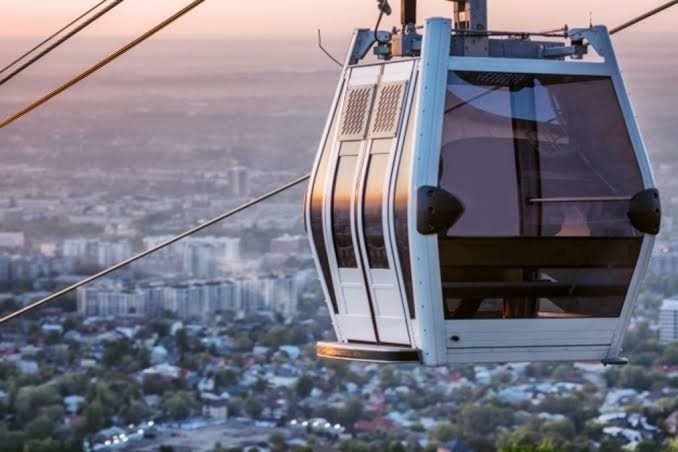
The Shillong Peak ropeway project has moved forward after the Meghalaya government addressed environmental and safety concerns surrounding the proposed tourist infrastructure. Recent government statements indicate that required statutory approvals and environmental safeguards are in place, while construction has progressed on the project. The ropeway is planned to connect Lawsohtun with Shillong Viewpoint and strengthen access to one of Meghalaya’s major tourist attractions.
The project has attracted attention because its alignment passes through an environmentally sensitive landscape. Moreover, authorities have revised aspects of the design to reduce tree cutting and protect important water sources. The development therefore combines tourism infrastructure with environmental management requirements.
Gopal Roy Demands Puja Grants for Tripura Clubs
Shillong Peak Ropeway Project Moves Ahead After Environmental Review
The Shillong Peak ropeway project has remained under preparation for several years. The Meghalaya Tourism Department began the environmental assessment process as part of the project’s statutory requirements. The original project plan proposed a 955-metre aerial ropeway. It would have a capacity of about 2,500 passengers per hour.
The project falls under the aerial ropeway category. Initially, the Tourism Department sought consultants to conduct detailed Environmental Impact Assessment studies. The consultants would also prepare an Environmental Management Plan. The process included the required statutory permissions for the proposed infrastructure.
However, recent reporting provides an important clarification about the term “environmental clearance.” In July 2026, the Meghalaya government said the project did not require separate environmental clearance under the Environmental Impact Assessment Notification, 2006. Instead, the project moved forward after authorities addressed other mandatory approvals and environmental safeguards. These included forest clearance and related permissions.
This distinction matters because the project’s environmental assessment history differs from its final statutory approval status. Therefore, reports should not describe the project simply as receiving conventional EIA environmental clearance.
Nevertheless, the government continues to face questions about the ropeway’s environmental impact. In August 2026, Leader of the Opposition Mukul Sangma sought Assembly details about studies on the project’s effects on the environment, wildlife, flora and fauna.
Consequently, environmental monitoring remains an important part of the public discussion as the project progresses.
Ropeway Design Revised to Reduce Tree Cutting
The Shillong Peak ropeway project has also undergone design changes to reduce its impact on surrounding vegetation. Officials said the original design could have affected trees around 25 metres tall. The alignment and infrastructure requirements created this concern.
The government later revised the Detailed Project Report. It also increased the height of the ropeway cable cars and stations. According to officials, the changes aimed to reduce the amount of tree cutting needed during construction.
This approach reflects the environmental sensitivity of the project area. Earlier project documents identified part of the site within the Upper Shillong Protected Forest. They also recorded forest land requirements for the development. The initial environmental application referred to about 2.3 hectares of forest land.
The government later said forest clearance covered the diversion of 2.3257 hectares. Authorities granted that clearance in October 2024. The government also said it had completed compensatory afforestation and compliance with the Forest Rights Act.
Furthermore, officials said the revised alignment avoids the main catchment area. It also aims to protect the Patakhana and Wahingdoh water sources.
These measures now form a key part of the government’s response to environmental concerns. Rather than treating the ropeway only as a tourism project, authorities have stressed the need to balance construction with landscape protection.
The project has also involved local Dorbars and residents in consultations. Officials said these meetings covered tree felling, water sources and ropeway safety. The discussions took place before the project received further approval to proceed.
Shillong Peak Ropeway Receives Major Project Support
The Shillong Peak ropeway project has received substantial financial and institutional support from the central and state governments. The project receives support through the New Development Bank and the Ministry of Development of North Eastern Region under the PM-DevINE framework.
The MDoNER project dashboard lists gap funding for the Passenger Ropeway Project at Shillong Peak under PM-DevINE. It lists ₹70.11 crore as the gap-funding component. The project remains marked as ongoing. The dashboard gives January 30, 2027, as the scheduled completion date.
A separate project document places the overall project cost at about ₹175.09 crore. It identifies ₹70.11 crore as the proposed PM-DevINE gap funding. The proposal received support from the Ministry of Road Transport and Highways, Ministry of Tourism and NITI Aayog during the approval process.
The project has also moved through procurement and construction stages. New Development Bank procurement records include a contract for the design, supply, construction and operation and maintenance of the passenger ropeway at Shillong Peak.
Moreover, Meghalaya’s 2026-27 Budget identified the Shillong Peak Ropeway among the state’s iconic tourism projects. The budget noted progress on these projects. This places the ropeway within Meghalaya’s wider tourism infrastructure strategy.
The government has also marked an important milestone through the foundation stone ceremony. Meghalaya’s official portal records that Chief Minister Conrad K. Sangma inaugurated the foundation stone for the Shillong Ropeway Project at Shillong Peak in November 2024.
The project’s continued inclusion in government investment and tourism plans shows its importance within the state’s long-term infrastructure programme.
Ropeway Expected to Strengthen Shillong Tourism
The Shillong Peak ropeway project aims to improve access to Shillong Peak. It also seeks to create a new tourism experience around one of Meghalaya’s best-known viewpoints. Shillong Peak is Meghalaya’s highest peak. Visitors already travel there for panoramic views of the surrounding landscape.
The ropeway would provide an alternative access option. Consequently, it could reduce dependence on road-based travel toward the viewpoint. Once operational, the project could become an important addition to Shillong’s tourism infrastructure.
Government officials have also highlighted potential environmental benefits from reduced tourism-related road traffic. The Meghalaya government said the project could support sustainable tourism. It could also contribute to local employment opportunities.
However, tourism expansion must remain compatible with environmental protection. The project sits in an area where forests, water sources and hills form an important part of Shillong’s landscape.
Therefore, the revised design and environmental safeguards will remain important as construction continues. Regular monitoring can help authorities check whether promised safeguards remain effective during construction and later operations.
The project could also support the wider tourism economy. Furthermore, increased visitor activity could benefit local businesses, transport services and hospitality providers.
Meanwhile, Meghalaya is developing other tourism projects. These include the Sohra tourism circuit and the Mawkdok skywalk and tourist hub. The MDoNER dashboard lists these projects alongside the Shillong Peak ropeway under the state’s broader tourism infrastructure programme.
Shillong Peak therefore forms one part of Meghalaya’s wider effort to improve tourism facilities. Its long-term performance will depend on construction, safe operation, environmental compliance and effective visitor management.
Conclusion
The Shillong Peak ropeway project has advanced after the Meghalaya government addressed key environmental, forest and safety requirements. The project has also undergone design changes to reduce tree cutting and protect important water sources.
However, the project’s environmental status requires precise wording. Government-linked records show that the Tourism Department undertook an EIA process and pursued statutory approvals. The government later stated that the project did not require separate environmental clearance under the 2006 EIA Notification.
Forest clearance and other required permissions were nevertheless secured. The government also cited compensatory afforestation and Forest Rights Act compliance.
With PM-DevINE gap funding and other institutional support, the project remains under implementation. The central project dashboard currently lists January 2027 as the scheduled completion date for the PM-DevINE-supported component.
If construction remains on schedule, the ropeway could add a major tourism facility at Shillong Peak. At the same time, continued environmental monitoring will remain essential. Such monitoring can help ensure that tourism development remains compatible with the sensitive hill ecosystem around the site.
FAQs
What is the Shillong Peak ropeway project?
The Shillong Peak ropeway project is a passenger aerial ropeway planned to connect Lawsohtun with Shillong Viewpoint, providing improved access to Shillong Peak and supporting tourism infrastructure.
Did the project receive environmental clearance?
The government has stated that the project did not require environmental clearance under the Environmental Impact Assessment Notification, 2006. However, it underwent environmental assessment processes and received other required approvals, including forest clearance.
How long is the proposed Shillong Peak ropeway?
The original project documentation proposed a ropeway length of approximately 955 metres with a planned capacity of around 2,500 passengers per hour.
How is the project addressing environmental concerns?
Officials have said that the ropeway alignment was revised and the height of stations and cable cars increased to reduce tree cutting. The government has also highlighted measures to protect important water sources and forest areas.
When is the Shillong Peak ropeway expected to be completed?
The MDoNER project dashboard currently lists January 30, 2027 as the scheduled completion date for the PM-DevINE-supported project component.