



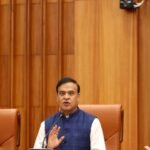


Election Commission decisions have come under fresh scrutiny after Assam Chief Minister Himanta Biswa Sarma defended Chief Election Commissioner Gyanesh Kumar and said the CEC cannot act alone.
Speaking on Thursday, September 24, Sarma said the Election Commission functions as a three-member body. He said the CEC must consult the other Election Commissioners before taking decisions.
His remarks came after a report said Election Commissioners Sukhbir Singh Sandhu and Vivek Joshi had raised objections to several decisions linked to electoral rolls and the Special Intensive Revision (SIR). The report has triggered political criticism and renewed questions about the poll panel’s internal functioning.
Election Commission works through collective decisions
Sarma said the Election Commission cannot operate according to the wishes of one member.
He stressed that the three commissioners collectively make decisions and that a majority view determines the commission’s position. His comments directly addressed criticism aimed at Gyanesh Kumar following reports of disagreements within the poll panel.
The Assam Chief Minister also defended the institutional process rather than treating the CEC as the sole decision-maker. His remarks came as political parties debated whether objections recorded by two commissioners pointed to deeper differences within the Election Commission.
The poll panel, however, has rejected the suggestion that such objections affected its final decisions. It said individual views, observations and technical suggestions form part of the normal deliberation process.
Election Commission faces SIR controversy
The controversy centres on the nationwide SIR of electoral rolls.
An Indian Express investigation reported that Sandhu and Joshi formally objected at least 14 times over 10 months to decisions and orders issued in the commission’s name. The reported objections covered several issues, including changes to Form 6, electoral-roll database controls and voter-related procedures.
The report also highlighted concerns about the centralisation of electoral-roll systems and certain decisions involving voter registration and deletion. These objections have become a major part of the political debate surrounding the SIR exercise.
However, the Election Commission has disputed the interpretation that the objections represented a breakdown in collective decision-making.
Election Commission says final decisions were unanimous
The Election Commission has maintained that the reported objections reflected discussions during the drafting and review stages rather than final decisions taken without approval.
According to the poll panel, all decisions taken during the past year, including those concerning SIR, received the approval of all three commissioners. The commission said written notes and differing views help members examine legal, technical and administrative issues before reaching a final position.
The Election Commission also argued that focusing on individual objections without considering the wider record presents only part of the decision-making process.
That explanation followed the publication of the report on the 14 objections. The commission’s response sought to draw a clear line between internal deliberations and formally approved decisions.
Reported objections and official response
The reported disagreements involved matters such as changes to voter forms and the management of electoral databases. Sandhu and Joshi raised concerns about some of these steps, according to the investigation.
At the same time, Election Commission officials said the two commissioners ultimately approved the relevant final decisions along with the CEC. The commission therefore described the objections as part of its internal checks rather than evidence of unilateral action.
Election Commission row fuels political debate
The issue has now moved beyond the commission’s internal procedures and into a wider political dispute.
Opposition parties have used the reported objections to question the functioning of the poll panel. Meanwhile, Sarma has defended the CEC and argued that criticism of Gyanesh Kumar overlooks the commission’s collective structure.
Sarma also described the criticism of the CEC as a political campaign. That characterization reflects his position and should be distinguished from the Election Commission’s institutional explanation of the reported objections.
The controversy also comes as the SIR process faces wider scrutiny. The Supreme Court recently sought explanations from the Election Commission over notices issued in Delhi for alleged “logical discrepancies” in voter records.
Election Commission debate centres on accountability
The current dispute has therefore produced two separate questions: what commissioners discussed internally and what decisions the Election Commission formally adopted.
Sarma has stressed that the CEC cannot make decisions unilaterally and that the commission operates through collective approval. The Election Commission has separately said its final decisions, including SIR-related decisions, were unanimous.
Meanwhile, the reported objections by Sandhu and Joshi have kept attention on the commission’s internal checks and decision-making procedures. The competing accounts make the distinction between individual objections and formally approved decisions central to the ongoing debate.
As scrutiny of the SIR continues, the Election Commission’s explanation and the documented objections will remain important to discussions about how the poll panel exercises its constitutional responsibilities.