





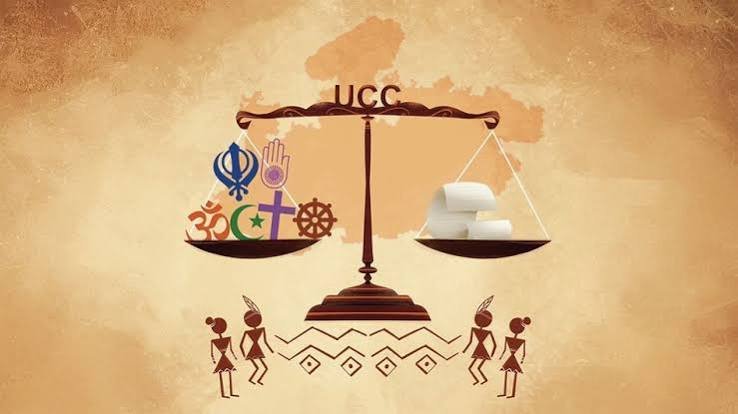
UCC in Mizoram has received a fresh push from BJP MLA K Hrahmo, who has called for a detailed examination of the Uniform Civil Code and its possible application in the state. He said the measure could provide stronger legal protection to Mizo women who marry non-tribal men.
Hrahmo, the MLA from Palak, made the remarks during a political session at the BJP Mizoram office in Aizawl on September 21. He linked his argument to concerns over marriage, property rights and the alleged abandonment of women and children in some inter-community marriages.
UCC in Mizoram and protection for women
Hrahmo argued that UCC in Mizoram should be examined in the context of the state’s non-tribal population and its specific social circumstances. According to him, some non-tribal men living in Mizoram have more than one wife and, in some cases, marry Mizo women while already being married.
He further alleged that some such men involve their Mizo wives in business activities before later abandoning the women and their children when those businesses fail. These claims were presented by Hrahmo as examples of situations in which additional legal safeguards could be useful.
The MLA pointed to provisions of the UCC that provide for monogamy and rules concerning property division after divorce. He said such provisions could offer greater protection to Mizo women involved in marriages with non-tribal men.
Why UCC in Mizoram is a sensitive issue
The debate over UCC in Mizoram comes against a long-running discussion about tribal customs and personal laws. Mizoram’s existing legal framework includes specific provisions governing marriage, divorce and inheritance among Mizo communities.
The issue has gained additional attention this year after amendments to the Mizo Marriage, Divorce and Inheritance of Property Act, 2014. A constitutional challenge argued that the changes could disadvantage Mizo women who marry non-Mizo men and affect the rights of their children. In August, the Supreme Court directed the petitioner to approach the Gauhati High Court instead of examining the challenge directly.
Therefore, questions about women’s rights, tribal identity and property protection remain closely linked to the wider personal-law debate in Mizoram.
Tribal exemptions remain a key question
Hrahmo also addressed concerns over the possible impact of a UCC on tribal communities. He said tribal populations have been excluded from the UCC in states where such laws have been implemented and argued that Mizoram’s position should be studied carefully.
Uttarakhand, which brought its UCC into force in January 2025, provides an important example of a state-level framework covering areas such as marriage, divorce and inheritance. The Uttarakhand framework excludes Scheduled Tribes from its application.
However, any discussion of a similar framework for Mizoram would require consideration of the state’s constitutional protections, customary practices and tribal institutions. The precise scope of any future legislation would depend on the law eventually proposed and enacted.
UCC in Mizoram faces an old political debate
The latest call also revives an earlier political disagreement. In February 2023, the Mizoram Legislative Assembly unanimously adopted a resolution opposing steps toward enacting a UCC in India. At that time, the state’s lone BJP MLA, BD Chakma, said he could not take a position without detailed research.
Hrahmo now argues that opposition to central laws can sometimes arise from political considerations or limited understanding of their provisions. He also alleged that Congress had presented the UCC as dangerous for political purposes, a claim that remains his political characterization rather than an established fact.
Meanwhile, the UCC continues to generate debate across India, particularly over how common personal-law rules would interact with religious and customary practices.
What the latest UCC in Mizoram debate means
The latest demand does not amount to a decision by the Mizoram government to introduce a UCC. Hrahmo has called for a detailed study of whether such a framework is needed and how it could operate in a tribal-majority state.
For Mizoram, the discussion involves several overlapping issues, including women’s property rights, marriage protections, tribal safeguards and customary law. As a result, any move towards UCC in Mizoram would require careful examination of existing legislation and the rights protected under the state’s constitutional and customary framework.
The debate is therefore likely to remain focused on how legal protection for women can be strengthened while addressing Mizoram’s distinct tribal and social context.