







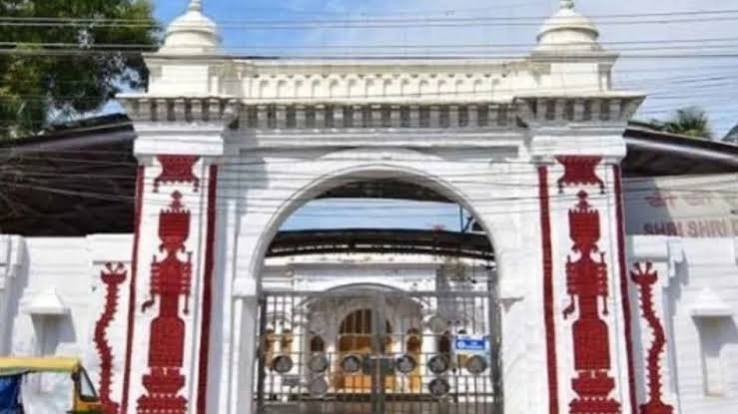
Durgabari Temple animal sacrifice continued during Maha Nabami celebrations in Agartala, Tripura, on October 20, 2026. Priests performed the traditional ritual involving a buffalo and several goats while keeping the sacrifice site away from public view.
The ceremony marked another year of a 149-year-old tradition associated with the temple’s Durga Puja. However, the practice remains subject to legal restrictions following a court battle over animal sacrifice at religious sites across Tripura.
Durgabari Temple Animal Sacrifice Continues on Maha Nabami
The historic Durgabari Temple observed Maha Nabami with traditional rituals dedicated to Goddess Durga. Priests chanted mantras as they carried out the animal sacrifice, according to reports citing temple priest Jayanta Bhattacharjee.
The priest said the ritual forms an important part of the temple’s religious practices. He maintained that worship at the shrine would remain incomplete without the traditional offering.
Meanwhile, the ceremony took place at a location concealed from public view. This arrangement followed restrictions imposed by the Supreme Court concerning animal sacrifice at temples.
The observance reflects the temple’s continued adherence to its established customs during Durga Puja. At the same time, the arrangements highlight how religious traditions can continue under specific legal conditions.
Durgabari Temple Animal Sacrifice and the Court Case
The practice has faced legal challenges in Tripura. In September 2019, a division bench of the Tripura High Court, headed by then Chief Justice Sanjoy Karol, prohibited animal and bird sacrifices at temples across the state.
The order affected several religious sites, including Durgabari Temple and the famous Maa Tripura Sundari Temple. The ruling brought a longstanding ritual practice into the centre of a legal debate.
However, the Supreme Court later stayed the High Court’s order following a petition. It also imposed certain restrictions on animal sacrifice at temples.
Consequently, the ritual at Durgabari Temple has continued under the conditions applicable to the practice. The decision to keep the sacrifice site out of public view formed part of this year’s arrangements, according to reports.
The legal history remains important to understanding why the ceremony now takes place with restrictions.
Durgabari Temple Animal Sacrifice Reflects Royal Heritage
Durgabari Temple holds a significant place in Tripura’s religious and royal history. Located in Agartala near Ujjayanta Palace, the shrine hosts a Durga Puja associated with the former Manikya dynasty.
The festival has continued through changes in Tripura’s political and administrative arrangements. Following the state’s merger with the Indian Union in 1949, the government assumed responsibility for organising the puja under the existing arrangement.
The West Tripura district administration organises the annual celebration on behalf of the former royal dynasty. This connection gives the festival both religious importance and historical significance.
Moreover, the temple follows distinctive customs during the celebrations. Its offerings include items brought by devotees, and temple officials have said that meat and fish are not prohibited as offerings.
These practices distinguish Durgabari’s observances from those at some other temples. They also reflect the customs maintained at the shrine over generations.
Durgabari Temple Animal Sacrifice Ahead of Vijaya Dashami
The festival’s next major observance is Vijaya Dashami, which marks the end of Durga Puja. According to priest Jayanta Bhattacharjee, police are scheduled to present a guard of honour to Goddess Durga early on Wednesday.
Afterward, officials will escort the holy pitcher to Ujjayanta Palace. Members of Tripura’s former royal family are expected to participate in the traditional farewell to the deity.
These ceremonies form part of the wider festival programme and preserve customs linked to the former royal household.
Meanwhile, the annual celebrations continue to bring together religious practice, cultural heritage and public administration. The temple’s rituals remain an important part of Tripura’s Durga Puja traditions.
The continuation of Durgabari Temple animal sacrifice this year also highlights the relationship between inherited religious customs and judicial oversight. As the festival reaches its final stage, the temple’s observances remain rooted in tradition while following the restrictions governing the practice.