




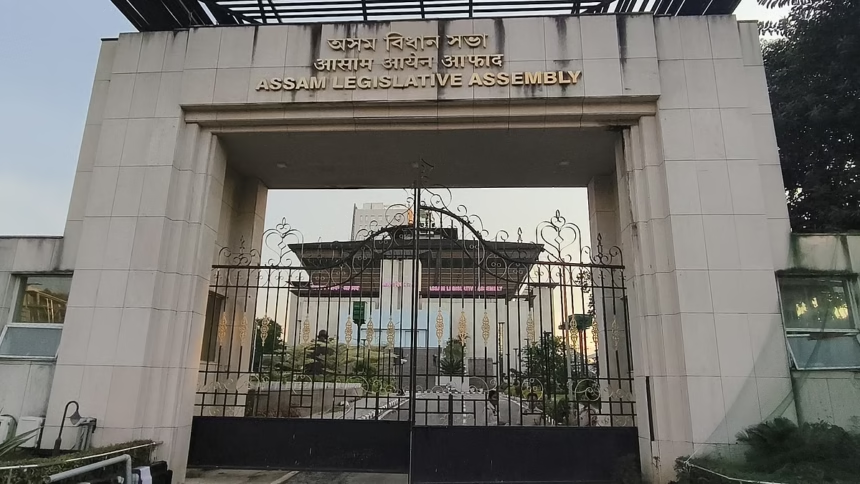
The Assam Assembly Hindi Language Approved decision marks a significant development in the functioning of the Assam Legislative Assembly. The Assam Government passed a motion to introduce Hindi as the fourth working language inside the Assembly, expanding the linguistic framework used during legislative proceedings. Moreover, the move aims to enhance accessibility and participation while maintaining the Assembly’s multilingual character. Consequently, the decision has become an important milestone in the state’s legislative and administrative process.
31,789 of 1.72 Lakh Identified Immigrants Repatriated
‘Let’s Do It Arunachal’ Rally Route Planned From Akash Deep to Indira Gandhi Park
Assam Assembly Hindi Language Approved Through Legislative Motion
The decision under Assam Assembly Hindi Language Approved was taken after the Assam Government passed a motion in the Legislative Assembly to include Hindi as the fourth working language. Furthermore, the move expands the list of languages permitted during Assembly proceedings and reflects the state’s evolving administrative requirements.
Legislative assemblies often adopt multiple working languages to facilitate effective communication among elected representatives. Consequently, the inclusion of an additional language can improve participation and ensure smoother legislative discussions.
Moreover, the adoption of Hindi as a working language aligns with efforts to make Assembly proceedings more inclusive for members who are comfortable using the language. Therefore, the decision represents an administrative change within the legislative framework.
Additionally, the motion demonstrates the Assembly’s constitutional authority to regulate its internal procedures. Thus, the development has attracted considerable attention across the state.
Fourth Working Language to Support Legislative Proceedings
The Assam Assembly Hindi Language Approved initiative is expected to support legislative functioning by providing members with another officially recognized language for conducting Assembly business. Furthermore, multilingual legislative systems help accommodate representatives from diverse linguistic backgrounds.
The role of a working language is to facilitate debates, discussions, official communications, and other legislative activities. Consequently, expanding language options can improve the efficiency of parliamentary proceedings.
Moreover, the use of multiple languages promotes broader participation in legislative deliberations. Therefore, the newly approved language is expected to contribute to smoother communication inside the Assembly.
Similarly, linguistic inclusivity supports democratic engagement by allowing members to express their views more comfortably. Additionally, language diversity reflects the inclusive nature of legislative institutions.
Language Expansion Reflects Administrative and Constitutional Framework
The development that Assam Assembly Hindi Language Approved also highlights the flexibility available to legislative bodies in determining their working procedures. Furthermore, state legislatures operate within constitutional provisions that allow them to regulate internal functioning through established rules.
Language plays an important role in legislative administration because it enables effective debate and policy discussions. Consequently, governments periodically review procedural arrangements to improve institutional efficiency.
Moreover, expanding working languages can strengthen communication without altering the constitutional status of officially recognized state languages. Therefore, the latest motion primarily concerns the conduct of Assembly proceedings.
Similarly, legislative reforms often aim to improve administrative convenience while respecting existing constitutional provisions. Additionally, procedural changes contribute to the modernization of legislative institutions.
Decision Highlights Assam’s Multilingual Legislative Environment
The Assam Assembly Hindi Language Approved motion reflects the multilingual nature of Assam and the importance of accommodating linguistic diversity in governance. Furthermore, the Assembly has historically functioned using multiple languages to facilitate communication among legislators.
The inclusion of another working language demonstrates the Assembly’s effort to address practical communication needs. Consequently, members will have greater flexibility while participating in debates and official proceedings.
Moreover, multilingual governance supports broader participation in democratic institutions. Therefore, language-related decisions often carry administrative significance beyond procedural changes.
Similarly, effective communication contributes to informed legislative discussions and transparent governance. Additionally, language accessibility helps strengthen institutional functioning and public representation.
Conclusion
The Assam Assembly Hindi Language Approved decision marks an important procedural development in the functioning of the Assam Legislative Assembly. Moreover, the approval of Hindi as the fourth working language expands the linguistic framework available for legislative proceedings.
Furthermore, the move reflects the Assembly’s effort to promote inclusive communication while ensuring efficient conduct of House business. Consequently, elected representatives will have greater flexibility during debates and official discussions.
Looking ahead, the implementation of the new working language is expected to support smoother legislative operations and reinforce Assam’s multilingual governance framework. Therefore, the Assam Assembly Hindi Language Approved motion represents a noteworthy milestone in the state’s legislative administration.
FAQs
1. What decision did the Assam Legislative Assembly take regarding language?
The Assembly passed a motion to include Hindi as the fourth working language for conducting legislative proceedings.
2. What does the new language policy mean?
It means that Hindi can now be used as one of the officially recognized working languages during Assembly proceedings.
3. Why was Hindi introduced as the fourth working language?
The move aims to improve accessibility, facilitate communication, and support multilingual participation during legislative discussions.
4. Does the decision change Assam’s official state language?
No. The motion relates to the working language used inside the Assembly and does not alter the state’s official language policy.
5. Why is the Assam Assembly Hindi Language Approved decision significant?
The decision strengthens the Assembly’s multilingual legislative framework and supports more inclusive and efficient parliamentary proceedings.