

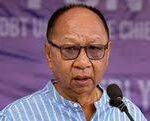




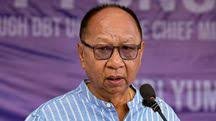
Literacy in Manipur has emerged as an important part of Chief Minister Yumnam Khemchand Singh’s wider focus on education, inclusion and development. His recent remarks on teaching, student welfare and access to learning have placed education at the centre of long-term progress.
Speaking at the State-Level Teachers’ Day Celebration in Imphal on September 5, Khemchand described teaching as a noble responsibility and a national duty. He also stressed that teachers should treat every student with equal care and concern, underlining the importance of an inclusive learning environment.
Literacy in Manipur and inclusive development
The emphasis on education comes as Manipur works to strengthen development across communities and regions. Literacy is linked with access to public services, opportunities and social participation.
Khemchand has repeatedly spoken about balanced development and the need for every community to benefit from growth. In June, while meeting representatives of the Naga Village Headmen Association from Senapati, he reiterated the government’s commitment to inclusive growth and sustainable development, with attention to infrastructure, services and livelihoods.
Education can support these goals by giving people skills needed to participate more effectively in society. Therefore, learning outcomes remain important alongside infrastructure and welfare delivery.
Focus on teachers and students
At the Teachers’ Day event, seven teachers received State Teachers’ Awards 2026 for contributions to student enrolment, preventing school dropouts and innovative teaching methods. Three colleges also received Educational Excellence Awards, while five others received consolation prizes.
The awards highlighted the role of teachers beyond classroom instruction. Moreover, Khemchand said teaching carries a responsibility to care for students as members of one family. Such an approach can create a supportive learning environment.
Education reforms and mother-tongue learning
Khemchand has also linked literacy with reforms under the National Education Policy, or NEP, 2020. At a three-day workshop on school education reforms in June, he highlighted education’s role in transforming society and discussed the policy’s contribution to the goal of a developed India by 2047.
He also supported teaching children in their mother tongue during the early years of schooling. He said using a child’s mother tongue as the medium of instruction up to Class V could help students learn more effectively and quickly.
Early literacy can influence later academic progress. Additionally, Manipur is implementing foundational literacy and numeracy measures under the NIPUN Bharat Mission.
Literacy in Manipur amid wider challenges
The focus comes at a difficult time for the state’s education sector. Khemchand has warned that frequent bandhs, blockades and agitations can disrupt classes and harm students’ academic progress and future career prospects.
On September 1, he appealed to civil society organisations and other stakeholders to avoid shutdowns, saying vulnerable groups and students bear a disproportionate burden from such disruptions. Four days later, he again said bandhs and blockades adversely affect education and the economy.
These concerns underline why continuity in schooling matters. Access to teachers, classrooms and learning materials is essential. As a result, stable education supports human capital.
Building a stronger learning system
Recent initiatives also point to continued investment in education infrastructure. In his Independence Day address in August, Khemchand highlighted the establishment of a District Institute of Education and Training building at Salam and a school library at Heirangoithong High School.
He also referred to digital awareness initiatives, including Yashoda AI, a national campaign focused on AI literacy and digital safety for women. Such efforts show that literacy is increasingly broader than basic reading and writing. Digital skills are becoming important for accessing services, information and economic opportunities.
A long-term path to inclusive growth
For Manipur, literacy can connect education with employment, public participation and social mobility. However, progress will depend on consistent access to schools, trained teachers, learning resources and safe educational spaces.
Khemchand’s recent remarks place teachers and learners at the heart of this effort. The emphasis on literacy, foundational learning and inclusive education reflects a broader goal: ensuring growth reaches communities while building skills for a resilient and sustainable Manipur.
Manipuri Guitarist Chongtham Vikram Singh Dies After Alleged Assault in Delhi