





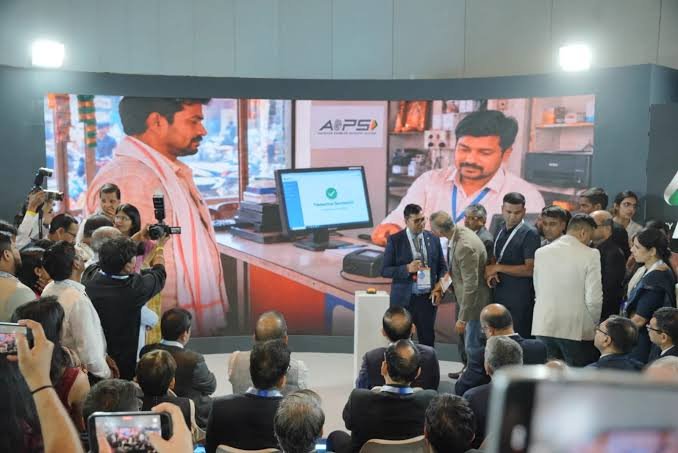
The Department of Financial Services has unveiled a series of fintech innovations aimed at expanding financial inclusion, improving access to digital credit and bringing banking services closer to customers. DFS Secretary Sanjay Lohiya launched an open-source Android ATM for instant RuPay card and merchant UPI QR issuance, along with Credit Line on UPI for selected government-backed credit schemes and an Aadhaar-enabled three-party cash deposit facility. The announcements were made at Global Fintech Fest 2026.
Oiii Police Theatrical Release: Ravi Sarma Film
Fintech Innovations Launched to Expand Banking Access
The latest fintech innovations from the Department of Financial Services aim to extend banking services beyond traditional branches and ATMs. The initiatives focus on three areas. These include instant card and QR-code issuance, digital access to sanctioned credit and easier cash deposits through Aadhaar-enabled services.
The most prominent development is an open-source Android-based ATM. The machine can issue personalised RuPay debit, credit and NCMC cards directly to customers. It can also generate merchant UPI QR codes. This allows businesses to obtain payment-collection facilities through the same platform.
The launch signals a broader role for ATM infrastructure. Traditional ATMs mainly handle cash withdrawals and deposits. The new model aims to turn ATMs into wider banking access points. Customers could use them for additional services without visiting a conventional branch.
However, available reports do not confirm deployment across Tripura. They also do not establish that customers in Agartala can currently obtain cards through these machines. The verified launch took place at Global Fintech Fest 2026. Therefore, this development should be described as a national fintech initiative rather than an operational Agartala service.
Open-Source Android ATM Changes Card Issuance
The open-source Android ATM aims to reduce the time and effort needed to obtain banking cards. Customers can use a self-service process to receive personalised RuPay debit, credit and NCMC cards. Consequently, the system could reduce dependence on branch visits and conventional card delivery.
The machine also supports merchant QR issuance. Merchants can use the ATM to obtain UPI QR codes for payment collection. Moreover, combining customer and merchant services gives the machine a wider role than a conventional cash ATM.
According to information released around the launch, the machines can support other banking services. These may include cheque deposits, account opening and loan applications. This makes the technology closer to a compact banking service point.
Banks are also examining the technology for use as Digital Banking Units. Such units could serve areas with limited access to conventional branches. Reports mention potential locations such as semi-urban and rural areas, transit hubs, airports, educational campuses and corporate parks.
Nine banks were reportedly evaluating the solution with NPCI and ATM manufacturers. Reports named State Bank of India, Bank of Baroda, Union Bank of India and Bank of India. Central Bank of India, UCO Bank, Slice Small Finance Bank and Airtel Payments Bank also featured in the reported evaluation. One additional institution was also reported to be involved.
Credit Line on UPI Extends Digital Credit Access
Another fintech innovation launched at the event involves Credit Line on UPI. The facility applies to selected government-backed credit schemes. Eligible borrowers under schemes such as Kisan Credit Card and PM MUDRA Yojana can use sanctioned credit for merchant payments through UPI.
The development could make formal credit more convenient for farmers and small businesses. Eligible borrowers can use their sanctioned credit through a familiar digital-payment channel. This can simplify merchant payments under participating schemes.
For Kisan Credit Card customers, reports said the facility was available through several banks. These included State Bank of India, Bank of Baroda, Punjab National Bank and Union Bank of India. Indian Bank, Canara Bank, Indian Overseas Bank, IDBI Bank, Bank of Maharashtra and UCO Bank also featured in the reported list.
More banks are expected to participate. Eligible PM MUDRA beneficiaries from participating banks can also use sanctioned credit through UPI for merchant payments.
Therefore, the initiative connects government-backed formal credit with India’s digital-payment infrastructure. It does not create an entirely new credit system.
The Reserve Bank of India established the framework for Credit Line on UPI in September 2023. The latest launch expands its practical use for selected government-backed credit programmes.
Aadhaar-Enabled Cash Deposit Adds Another Banking Option
The third initiative involves an Aadhaar Enabled Payment System three-party cash deposit facility. The service allows a depositor to place cash into another beneficiary’s bank account through participating AePS Touchpoint Operators.
The system could help customers in areas with limited access to branches or cash-deposit machines. Participating touchpoints can extend cash-deposit services into a wider network.
The process uses Aadhaar-based biometric authentication and beneficiary validation. According to reports, the depositor receives confirmation of the beneficiary’s name before completing the transaction. Biometric authentication also helps verify the depositor.
Fourteen banks reportedly supported the service at launch. More institutions are expected to join. Therefore, the system could gradually expand access to assisted cash-deposit services.
Together, the three initiatives address different aspects of financial access. The Android ATM focuses on cards and banking services. Credit Line on UPI focuses on digital use of formal credit. The three-party cash deposit service aims to expand cash-deposit access beyond traditional branches.
Fintech Push Highlights Wider Financial Inclusion Goals
The launch reflects a broader policy objective of expanding financial inclusion through digital infrastructure. Instead of relying only on conventional branches, the initiatives use digital systems and self-service technology to reach customers.
The open-source design of the Android ATM also has wider implications. Banks and technology providers could potentially build services around a common technological framework. However, actual deployment will depend on participating banks, technology providers, regulations and customer adoption.
Furthermore, digital financial services require reliable and secure systems. Customers also need clear transaction information and access to assistance when technology fails. Therefore, successful deployment will depend on both technology and customer support.
The initiatives also show the growing connection between banking, payments and public-sector credit programmes. UPI provides a major digital-payment network. Meanwhile, Aadhaar-enabled systems offer another channel for assisted banking services.
For states such as Tripura, these technologies could eventually support financial access in semi-urban and rural areas. However, banks would first need to deploy the services locally.
No verified source reviewed for this report confirms a specific rollout of the new Android ATMs in Agartala. Therefore, the technology should not yet be presented as an operational Agartala service.
Conclusion
The fintech innovations launched by DFS Secretary Sanjay Lohiya at Global Fintech Fest 2026 mark a push toward wider digital financial inclusion. The open-source Android ATM can issue personalised RuPay cards and merchant UPI QR codes. It can also support services such as account opening, cheque deposits and loan applications.
The launch also introduced Credit Line on UPI for selected government-backed credit schemes. Eligible KCC and PM MUDRA borrowers can use sanctioned credit for merchant payments through UPI.
Alongside these measures, the AePS three-party cash deposit facility aims to expand access to cash deposits through participating touchpoints.
However, the actual impact will depend on deployment by banks and technology providers. The verified launch took place at Global Fintech Fest 2026. Therefore, reports of an operational Agartala rollout should not yet be treated as confirmed.
FAQs
What fintech innovations did Sanjay Lohiya launch?
DFS Secretary Sanjay Lohiya launched an open-source Android ATM for instant RuPay card and merchant UPI QR issuance, Credit Line on UPI for selected government-backed schemes and an AePS three-party cash deposit facility.
What can the open-source Android ATM do?
The ATM can issue personalised RuPay debit, credit and NCMC cards and generate merchant UPI QR codes. It is also designed to support services such as cheque deposits, account opening and loan applications.
Can the ATM issue a RuPay card instantly?
The new system is designed to allow customers to receive personalised RuPay cards directly from the machine through a self-service process, subject to the participating bank’s implementation and applicable requirements.
What is Credit Line on UPI?
Credit Line on UPI allows eligible borrowers under selected schemes, including KCC and PM MUDRA, to use sanctioned credit limits for merchant payments through UPI.
Was the new Android ATM launched specifically in Agartala?
No verified source reviewed for this report confirms a specific Agartala rollout. The verified launch took place at Global Fintech Fest 2026, where the open-source ATMs were demonstrated.