




The Trident drug bust Mizoram case has highlighted the continuing challenge of cross-border narcotics trafficking along the India-Myanmar frontier. Recent enforcement operations in Mizoram have uncovered substantial consignments of illegal drugs and links to organised trafficking networks operating across state and international borders.
In one major August operation, the Directorate of Revenue Intelligence seized 15 kg of methamphetamine tablets from an ambulance travelling through Mizoram. Authorities arrested three people after investigators found the suspected contraband concealed inside the vehicle.
The seizure came amid a wider enforcement drive against trafficking networks using the Mizoram-Myanmar corridor. Moreover, investigations by central agencies have identified organised syndicates that move narcotics from Myanmar into India before routing them towards other parts of the country.
Malem Thongam’s Kashmir-to-Mizoram Peace Ride Gains Local Support
Trident Drug Bust Mizoram Highlights Border Trafficking
The Trident drug bust Mizoram developments underline the strategic importance of the Champhai-Zokhawthar sector along the India-Myanmar border. The area has repeatedly appeared in narcotics investigations because enforcement agencies have detected cross-border movement of synthetic drugs through the region.
In the August operation, DRI officers intercepted an ambulance near Sakei Bangla, around 40 kilometres from Aizawl on the Aizawl-Champhai road. The vehicle appeared to be carrying a patient, but investigators discovered 15 packets containing methamphetamine tablets. The DRI subsequently seized the suspected contraband and the ambulance under the Narcotic Drugs and Psychotropic Substances Act.
The investigation indicated that the drugs had entered Mizoram from Myanmar through the Champhai-Zokhawthar sector. Authorities also found that the consignment was allegedly intended for onward transportation towards Assam. Three people, including the ambulance driver, were arrested in connection with the case.
However, the August seizure should not be treated as proof that every movement through the border region involves organised trafficking. Investigators must establish individual responsibility, the wider network and the financial links through evidence and due legal process.
The latest enforcement activity nevertheless demonstrates why agencies continue to monitor the Mizoram-Myanmar frontier closely. Synthetic drugs remain a major concern for law-enforcement authorities across the Northeast, particularly because trafficking routes can extend well beyond the state where a consignment enters India.
Trident Drug Bust Mizoram Reveals Wider Enforcement Challenge
The Trident drug bust Mizoram case forms part of a much broader series of narcotics seizures recorded across the state during 2026. Mizoram Police reported that authorities seized narcotic drugs and psychotropic substances worth more than ₹414.66 crore during the first six months of the year.
Between January and June, the state recorded 219 cases under the NDPS Act and arrested 312 people, including 57 foreign nationals. Methamphetamine accounted for the largest portion of the reported seizure value, with more than 315 kilograms recovered across 38 cases.
Heroin also featured prominently in the enforcement figures. Police reported the seizure of more than 34 kilograms of heroin during the six-month period, while authorities also recovered other controlled substances in separate cases. The figures demonstrate the scale of the challenge facing enforcement agencies in the state.
More recently, a joint operation by Mizoram Excise and Narcotics officials and Assam Rifles resulted in the seizure of nearly 500 grams of heroin along a road connecting Zote and Bulfek villages in Champhai district. Officials arrested one person in that case and began further investigation.
These cases show that trafficking activity does not follow a single route or depend on one type of vehicle. Consequently, enforcement agencies have continued using intelligence-based operations, inter-agency coordination and road surveillance to identify suspicious consignments.
The pattern also demonstrates the importance of cooperation between state authorities and central agencies. Drug networks can involve suppliers, transporters, facilitators and financial handlers located in different jurisdictions. Therefore, a seizure at one point does not necessarily reveal the full structure of a trafficking organisation.
Trident Drug Bust Mizoram Connects to Major Syndicate Probe
The Trident drug bust Mizoram story also comes against the backdrop of a major investigation into an India-Myanmar narcotics syndicate. The Enforcement Directorate said its investigation arose from an NCB case involving a 2025 seizure of 49.101 kilograms of methamphetamine tablets and 40 grams of heroin in Mizoram.
According to the ED, investigators uncovered an organised interstate and cross-border network that sourced methamphetamine from Myanmar-based suppliers. The agency said the syndicate moved the drugs into India through the Champhai-Zokhawthar sector before routing consignments towards receivers in Tripura.
The financial investigation has added another dimension to the case. The ED reported that suspected proceeds exceeding ₹142 crore had been identified during its probe. Investigators alleged that the network used multiple bank accounts, intermediary entities, cash transactions and hawala channels to obscure the origin and beneficiaries of the money.
The investigation also identified a Myanmar-based supplier and a transportation facilitator who had been arrested by the NCB. The financial probe aims to trace the proceeds generated by the alleged trafficking network and identify assets connected with the activity.
Earlier, the NCB arrested Thancintuang, also known as Chintuang or Tluanga, in Delhi. The agency described him as a key Myanmar-based trafficker linked to a major transnational network operating along the Myanmar-Mizoram-Manipur-Assam-Tripura corridor.
The NCB said the investigation connected the network with multiple seizures and alleged that narcotics were routed through several northeastern states before reaching destinations elsewhere in India and Bangladesh. Authorities have continued examining the roles of other alleged associates and facilitators.
Trident Drug Bust Mizoram Strengthens Focus on Border Security
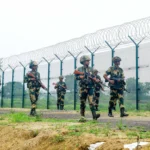
The Trident drug bust Mizoram developments have increased attention on the security challenges surrounding the state’s international border. Mizoram shares a long boundary with Myanmar, and the terrain creates significant challenges for surveillance and enforcement.
Authorities have therefore relied on multiple agencies to combat trafficking. The NCB, DRI, Mizoram Police, Excise and Narcotics Department, Assam Rifles and ED have all been involved in different investigations and enforcement actions connected to narcotics trafficking.
Operation Jericho has also formed part of Mizoram’s broader response. In March, Home Minister K. Sapdanga told the state Assembly that the operation had resulted in drug seizures valued at approximately ₹317.30 crore since September 2025. He also said intelligence inputs indicated the emergence of new trafficking routes in southern Mizoram and areas bordering Manipur.
Such developments make intelligence sharing particularly important. When enforcement agencies share information about suspected networks, they can investigate not only the people transporting consignments but also the financial and logistical structures behind them.
At the same time, authorities face the challenge of preventing trafficking without disrupting legitimate movement and economic activity in border communities. Border districts depend on roads and commercial links that also remain vulnerable to exploitation by criminal networks.
The continuing seizures also show that enforcement success cannot be measured only by the amount of contraband recovered. A sustained response requires investigators to identify the people financing, supplying and distributing illegal drugs. Financial investigations can therefore complement physical seizures by targeting the economic structures that support organised trafficking.
Mizoram’s experience also has implications for neighbouring northeastern states. Routes passing through the region can connect Myanmar with Assam, Tripura, Manipur and other destinations. Consequently, agencies across state boundaries need to maintain coordination when investigating networks that operate across several jurisdictions.
Conclusion
The Trident drug bust Mizoram developments reflect the continuing pressure on enforcement agencies to disrupt cross-border narcotics trafficking. Recent seizures, including the recovery of 15 kg of methamphetamine from an ambulance, demonstrate the scale and changing methods of trafficking networks operating through the region.
At the same time, investigations into larger syndicates indicate that the challenge extends beyond individual seizures. Therefore, coordinated action involving narcotics enforcement, policing, financial investigation and border-security agencies will remain important for dismantling trafficking networks and protecting communities across the Northeast.
FAQs
What is the Trident drug bust Mizoram case?
The Trident drug bust Mizoram refers to the wider recent enforcement developments involving major narcotics seizures and investigations into cross-border trafficking networks operating through Mizoram.
How much methamphetamine was seized in the major DRI operation?
The DRI seized 15 kg of methamphetamine tablets during an August 2026 operation near Sakei Bangla on the Aizawl-Champhai road. Three people were arrested in connection with the seizure.
Why is the Mizoram-Myanmar border important in narcotics investigations?
Investigations have identified the Champhai-Zokhawthar sector as a route used by alleged trafficking networks to move narcotics from Myanmar into India. Agencies have subsequently increased intelligence-led enforcement in the region.
What did Mizoram Police report about drug seizures in 2026?
Mizoram Police reported seizures worth more than ₹414.66 crore during the first six months of 2026. The force registered 219 NDPS cases and arrested 312 people during that period.
Are authorities investigating the financial side of the trafficking networks?
Yes. The Enforcement Directorate has investigated suspected proceeds linked to a cross-border drug-trafficking case and reported identifying more than ₹142 crore in suspect transactions during its investigation.