




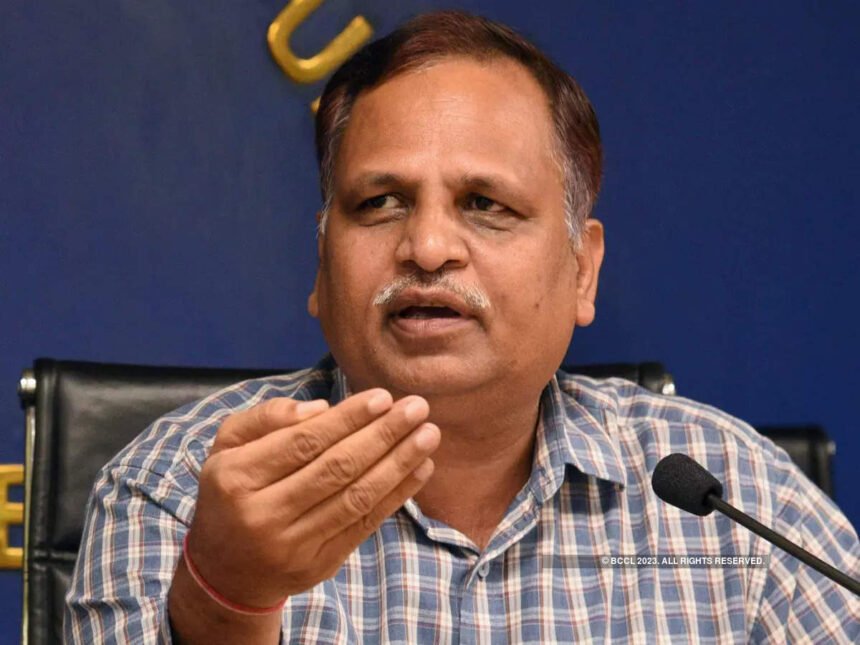
Former Delhi minister and Aam Aadmi Party (AAP) leader, Satyendar Jain, was admitted to Deen Dayal Upadhyay Hospital on Thursday after collapsing in Tihar Jail due to dizziness. Jain has been incarcerated since his arrest by the Enforcement Directorate in May, as part of a money laundering case.
According to the AAP, Jain collapsed in the bathroom of Tihar Jail and had previously suffered a serious spinal injury from a fall in the same location. This incident raises concerns about the conditions in which prisoners are held and the provision of adequate medical care within the prison system.
Satyendar Jain, a prominent member of the AAP and a former minister in the Delhi government, has been embroiled in legal troubles since his arrest. The Enforcement Directorate is investigating allegations of money laundering against him, which has led to his extended detention in Tihar Jail.
The news of Jain’s hospitalization has sparked discussions about the treatment of prisoners and the need for proper healthcare facilities in correctional institutions. The incident highlights the challenges faced by inmates in accessing timely medical assistance and raises questions about the overall well-being of prisoners.
Tihar Jail, located in Delhi, is one of the largest and most high-security prisons in India. It houses a significant number of inmates, including high-profile individuals accused or convicted of various crimes. The facilities and conditions within the prison are a subject of scrutiny, with concerns often raised about overcrowding and the lack of adequate healthcare infrastructure.
The AAP has been vocal about its concerns regarding Jain’s health and the circumstances leading to his collapse. The party has accused the authorities of negligence in providing appropriate medical attention to the incarcerated leader. They claim that Jain’s previous spinal injury, suffered in the same location, should have raised alarm bells and prompted better care and supervision.
The incident also raises broader issues related to the treatment of prisoners in India. There have been numerous instances where prisoners have faced health emergencies or deteriorating conditions without receiving prompt medical attention. Human rights organizations have called for improved healthcare facilities in prisons to ensure the well-being and safety of inmates.
The hospitalization of Satyendar Jain has drawn attention not only to his specific case but also to the larger systemic issues plaguing the prison system. Inadequate medical care, lack of infrastructure, and overcrowding are problems that need urgent attention and resolution.
The Delhi government, responsible for the administration of Tihar Jail, must take immediate steps to investigate the circumstances surrounding Jain’s collapse and address any negligence that may have occurred. Additionally, there is a pressing need for comprehensive prison reforms to ensure that prisoners’ health and well-being are safeguarded.
As the case of Satyendar Jain unfolds, it serves as a reminder of the challenges faced by prisoners in accessing healthcare services and the urgent need for prison reforms. The incident calls for a thorough examination of the conditions prevailing within correctional institutions and a concerted effort to address the deficiencies in the system to ensure the basic human rights of inmates are protected.