





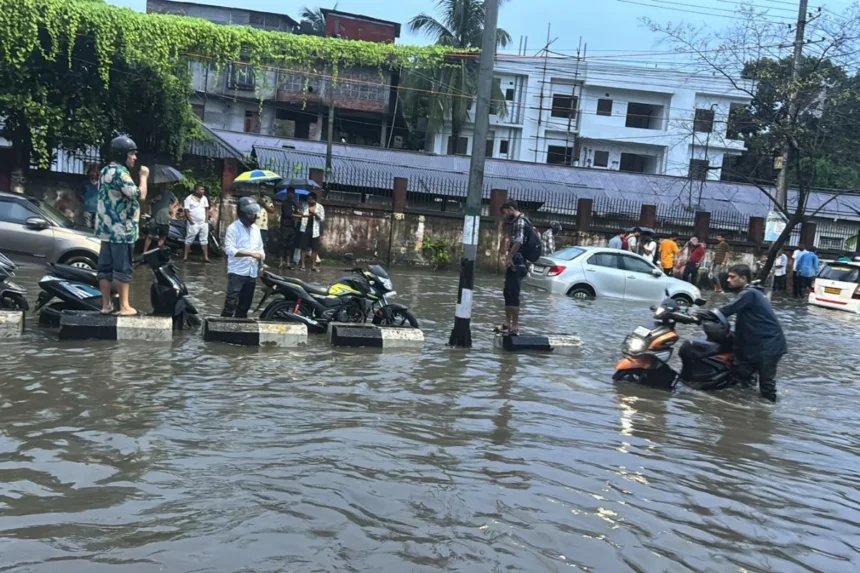
Guwahati Urban Flooding Disruption intensified after continuous rainfall caused severe waterlogging in several low-lying areas of Guwahati, affecting traffic movement and daily life across the city. Heavy downpours over the past several hours led to overflowing drains, submerged roads, and slow vehicle movement in multiple residential and commercial zones.
Local authorities stated that emergency teams were deployed to monitor waterlogged areas and assist commuters facing disruptions. The India Meteorological Department also warned of continued rainfall activity in parts of Assam, raising concerns regarding further flooding in vulnerable locations.
CBI Probe Suvendu Murder Case Intensifies
Manipur U20 Team Storms Into National Championship Semi Finals
Low-Lying Areas Witness Severe Waterlogging
Several areas of Guwahati reported heavy water accumulation after continuous rainfall overwhelmed drainage systems. Residents in low-lying localities experienced flooded streets, traffic congestion, and temporary disruptions in public transport services.
Guwahati Urban Flooding Disruption affected major roads connecting residential zones, markets, and office areas. Vehicles moved slowly through submerged stretches, while some commuters faced delays because of blocked roads and heavy congestion.
Authorities stated that drainage pumps and emergency response teams were activated in sensitive areas to improve water flow and reduce flooding levels. Municipal officials also monitored rainfall intensity and drainage conditions throughout the day.
Traffic Movement Faces Major Delays
Traffic congestion increased across several major routes as waterlogged roads reduced vehicle movement during peak hours. Commuters reported long travel delays in different parts of the city because of flooding near intersections and market areas.
Police personnel were deployed at important junctions to manage traffic flow and divert vehicles from severely affected roads. Public transport services, including buses and shared vehicles, also experienced operational difficulties in some areas.
Guwahati Urban Flooding Disruption further affected school transportation and office commuters as continuous rainfall reduced visibility and slowed movement across the city.
Heavy Rainfall Continues Across Assam
Weather officials stated that persistent rainfall linked to active monsoon conditions and moisture flow from the Bay of Bengal contributed to the flooding situation. The India Meteorological Department predicted additional rainfall activity in several districts of Assam over the coming days.
Authorities warned that more rain could worsen flooding in low-lying sections of Guwahati if drainage systems remain under pressure. Disaster management officials advised residents to avoid unnecessary travel through waterlogged roads during heavy rainfall periods.
Guwahati Urban Flooding Disruption also raised concerns regarding landslide risks in hilly sections surrounding the city, where saturated soil conditions may increase slope instability.
Residents Face Daily Life Disruptions
Citizens in affected neighborhoods reported difficulties in commuting, accessing markets, and carrying out regular activities because of flooded streets. Water entered some residential compounds and roadside shops located in vulnerable areas.
Residents expressed concern regarding recurring urban flooding during heavy rainfall seasons. Many citizens called for long-term drainage improvements and stronger urban planning measures to reduce flooding risks in the rapidly expanding city.
Guwahati Urban Flooding Disruption has once again highlighted infrastructure challenges linked to drainage capacity, encroachment, and rapid urban growth.
Municipal Teams Conduct Relief Measures
Officials from the Guwahati Municipal Corporation and local administration teams inspected affected areas and initiated temporary relief measures. Workers cleared blocked drains and monitored water levels in flood-prone localities.
Emergency services remained on standby in case rainfall intensity increased further. Authorities also coordinated with traffic police, disaster response teams, and weather agencies to manage the situation effectively.
Guwahati Urban Flooding Disruption prompted officials to review drainage conditions and preparedness measures for the remainder of the monsoon season.
Experts Highlight Urban Infrastructure Challenges
Urban planners and environmental experts noted that Guwahati frequently experiences flooding because of rapid urbanization, inadequate drainage infrastructure, and heavy rainfall patterns. Encroachment on wetlands and natural water channels has also contributed to reduced water absorption capacity in several areas.
Experts stated that long-term solutions may require improved stormwater drainage systems, wetland conservation, and stricter urban planning regulations. Environmental specialists also emphasized the need for sustainable infrastructure development to manage increasing rainfall intensity linked to changing climate conditions.
Guwahati Urban Flooding Disruption therefore renewed public discussion regarding flood management and urban resilience in one of Northeast India’s fastest-growing cities.
Authorities Issue Public Advisory
Local administrations advised residents to remain cautious while traveling through flooded roads and low-lying zones. Authorities also warned against driving through deep waterlogged stretches because submerged roads may conceal potholes and damaged surfaces.
Emergency officials urged people to follow weather updates and avoid unnecessary movement during periods of intense rainfall. Residents living near hillside areas were also advised to remain alert for possible landslides or falling debris.
Guwahati Urban Flooding Disruption continues to remain under close monitoring as rainfall activity persists across Assam.
Conclusion
Continuous rainfall and overflowing drainage systems have caused widespread waterlogging and traffic disruption across Guwahati, affecting thousands of commuters and residents. Authorities continue relief and monitoring efforts as weather officials warn of further rainfall in the coming days. Guwahati Urban Flooding Disruption now highlights the urgent need for stronger urban drainage systems, improved infrastructure planning, and effective flood management measures in the city.
FAQs
What caused flooding in Guwahati?
Continuous heavy rainfall and overloaded drainage systems caused severe waterlogging across the city.
Which areas were most affected?
Low-lying residential and commercial areas experienced the worst flooding and traffic congestion.
How did the flooding affect traffic?
Waterlogged roads slowed vehicle movement and caused long traffic delays across major routes.
What actions have authorities taken?
Municipal teams cleared drains, monitored flood-prone zones, and deployed emergency personnel.
Did the weather department issue any warning?
Yes, the IMD warned of continued rainfall activity across parts of Assam.
Why does Guwahati face frequent urban flooding?
Experts cite inadequate drainage systems, rapid urbanization, and wetland encroachment as key reasons.